Premium grade industrial magnets engineered for motor, generator, and consumer electronics applications.
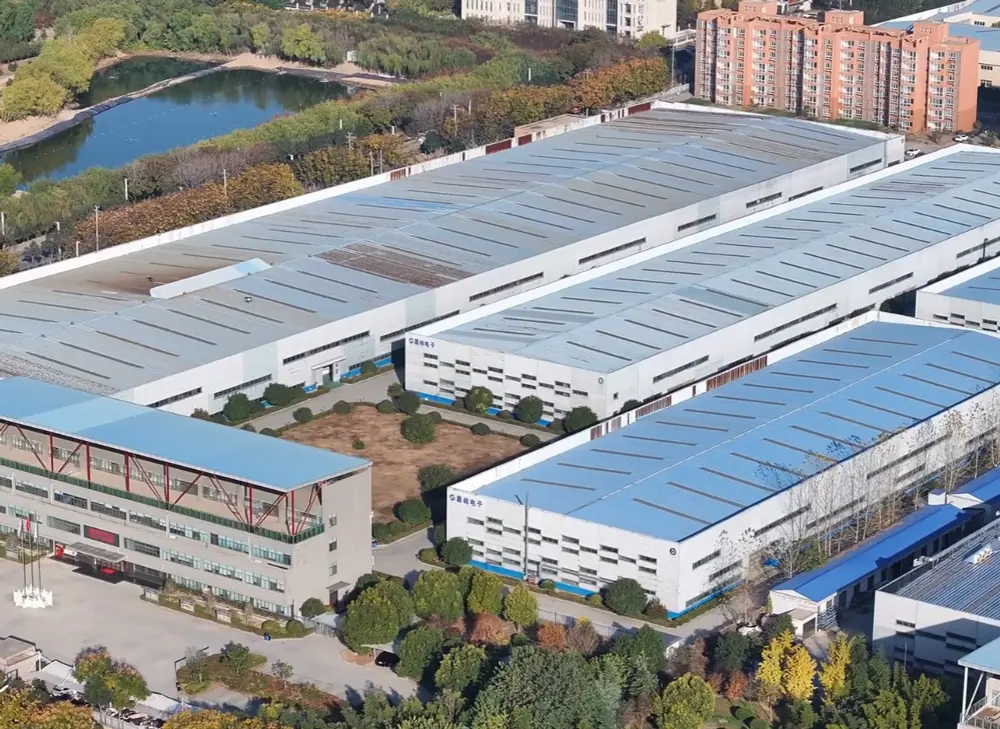
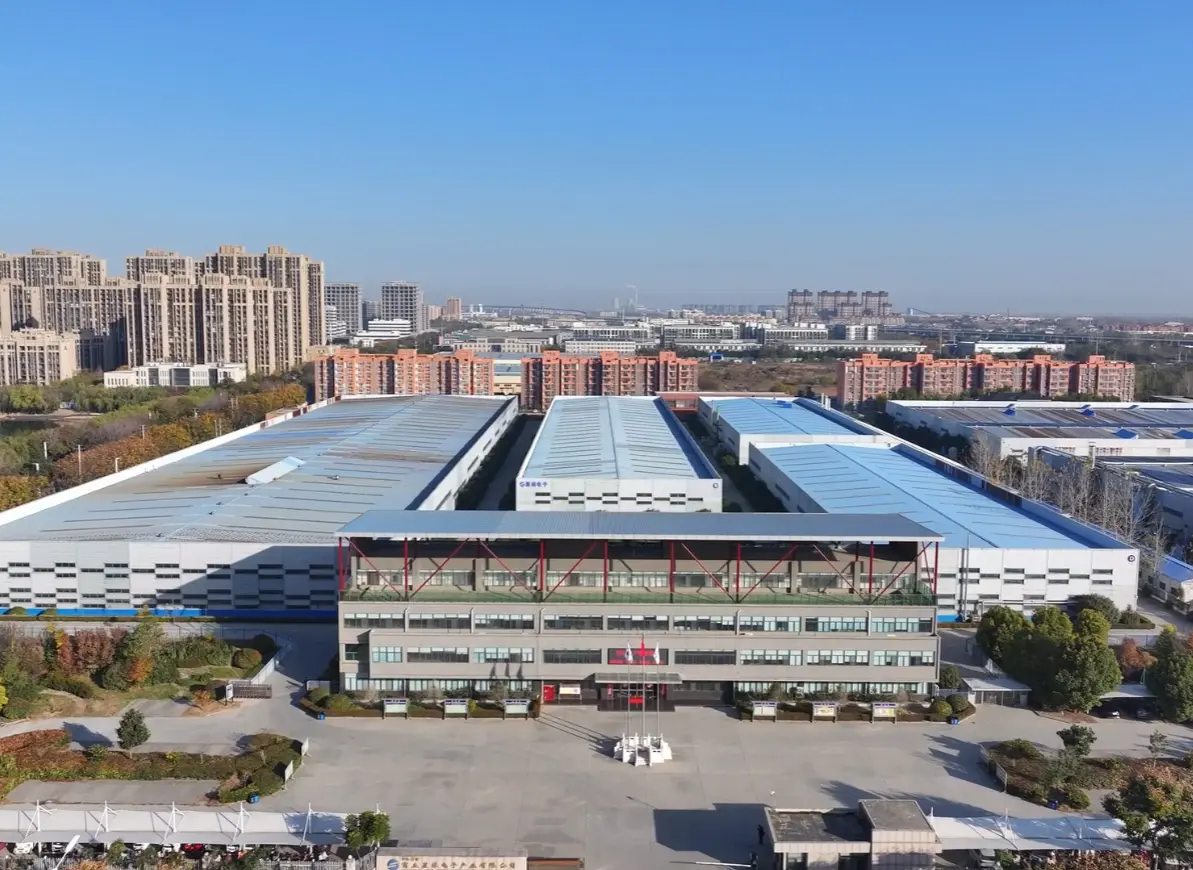
Founded at the turn of the millennium, Zhejiang Laysun Magnetics Ltd. has rapidly evolved from a visionary startup to an industry pacesetter in permanent magnet technology. With a massive 100,000 m² state-of-the-art facility located in Suining, Sichuan, and supported by Hangzhou-based international business offices, we are strategically positioned to supply the global supply chain with exceptional quality rare earth NdFeB permanent magnets.
Our facility houses an expert workforce of over 300 professionals dedicated to ensuring an annual output of 5,000 tons of high-performance rare earth magnetic products. From electric vehicle drivetrains to precision micro-optics and audio systems, our components represent the cutting edge of industrial efficiency and innovation.
Understanding the chemical composition and structural technology that defines modern high-energy-product rare earth magnets.
To understand what a high-performance permanent magnet is made from, one must look closely at the chemical makeup of sintered Neodymium-Iron-Boron (NdFeB). Sintered NdFeB stands as the most commercially potent type of permanent magnet available today. The compound consists primarily of Neodymium (Nd), Iron (Fe), and Boron (B), typically arranged in a tetragonal crystalline structure of Nd₂Fe₁₄B.
However, to meet challenging operational conditions—such as exposure to extreme heat, oxidative environments, and demagnetizing forces—the basic formulation must be heavily customized. At Zhejiang Laysun Magnetics Ltd., we employ advanced alloying practices, integrating heavy rare earth elements (HREEs) such as Dysprosium (Dy) and Terbium (Tb). These elements substitute for Neodymium within the crystal lattice, substantially increasing the magnet's intrinsic coercivity (Hcj) and allowing stable performance at temperatures exceeding 200°C.
Raw elements (Nd, Fe, B, Dy) are melted in a vacuum induction furnace and quickly cooled on a rotating copper wheel to form ultra-thin, highly uniform alloy flakes.
The alloy flakes absorb hydrogen to fracture cleanly along internal grain boundaries, making the coarse powder highly receptive to subsequent high-velocity jet milling.
Ultra-fine particles (approx. 3-5 microns) are created via high-pressure nitrogen jets, then mechanically aligned within a strong magnetic field prior to high-density pressing.
Pressed green compacts undergo precise thermal sintering in vacuum ovens, followed by tempering to achieve full physical density and structural magnetic integrity.
Analyzing the pivotal role of advanced permanent magnets in shaping zero-emission mobility and automated industrial grids.
In drive motors, space and weight constraints demand maximum torque density. Sintered NdFeB magnets offer the highest magnetic flux density per unit weight, directly increasing range and driving dynamics.
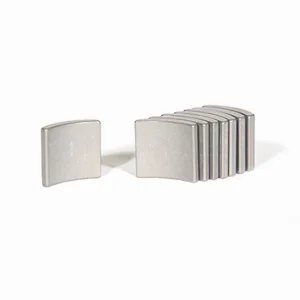
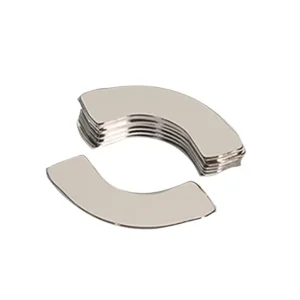
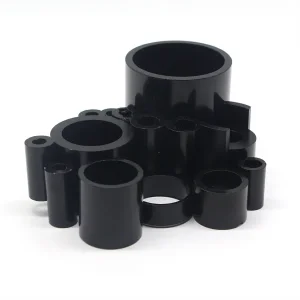
Direct-drive offshore wind generators utilize large arc magnets to eliminate mechanical gearboxes, ensuring exceptional operating life and drastically reduced maintenance under hostile oceanic environments.
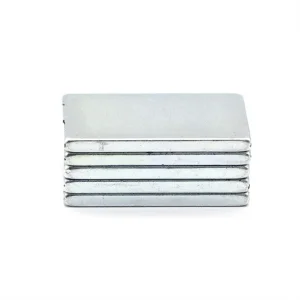
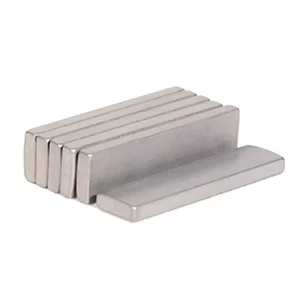
High-dynamic brushless servo motors demand repeatable precision. NdFeB block magnets enable quick starting torque and low cogging torque, which is essential for collaborative robots and high-speed pick-and-place lines.
As an industry-leading manufacturer, Zhejiang Laysun Magnetics Ltd. closely observes global ESG (Environmental, Social, and Governance) targets. Modern supply chain managers are no longer just looking at performance metrics; they demand verified carbon footprints and traceability of rare earth resources. By sourcing our concentrates through compliant, sustainably managed mining operators, we assure Western OEM buyers that their raw material sourcing complies with EU battery passports, REACH, RoHS, and modern labor requirements.
Our production lines maintain ISO 14001 environmental management standards, capturing and recycling over 95% of processing scrap. This circular manufacturing philosophy drastically reduces energy consumption and chemical waste, ensuring your global compliance goals are met.
How we are engineering the future of high-temperature magnetics while optimizing rare earth utilization.
The fundamental technical challenge of NdFeB magnets is the degradation of magnetic flux density at higher temperatures. Historically, engineers resolved this by increasing the percentage of Dysprosium (Dy) throughout the entire alloy. However, this method decreases the remanence (Br) of the magnet and increases material costs.
To overcome this limitation, Zhejiang Laysun Magnetics Ltd. has industrialized Grain Boundary Diffusion (GBD) technology. GBD allows us to selectively diffuse Dy or Tb only along the grain boundaries of the sintered magnet, rather than throughout the grain matrix. This preserves the high remanence (Br) inside the grain while reinforcing the coercivity (Hcj) at the boundaries.
| Metric | Standard NdFeB Alloy | Laysun GBD Technology | Commercial Benefit |
|---|---|---|---|
| Hcj (Coercivity) | Moderate (12-17 kOe) | Ultra-High (25-33 kOe) | Resists demagnetization under heavy load |
| Br (Remanence) | Reduces with Hcj addition | Maintained at Maximum (13.8-14.5 kGs) | Higher initial torque & output capacity |
| HREE Content (Dy/Tb) | High (6% - 10% wt) | Reduced (1% - 3% wt) | Extremely stable, cost-effective raw pricing |
Our future engineering research focuses on heavy rare earth-free (HREE-free) magnets for high-temperature applications. Through ultra-fine grain size control (less than 2 microns) and enhanced alignment technology, we aim to design high-coercivity magnets without relying on volatile rare earth elements, protecting our global partners from market pricing spikes.
Strict quality control processes backed by international manufacturing and engineering accreditations.
At Zhejiang Laysun Magnetics Ltd., we subject every production run to rigorous quality audits, ensuring compliance with global specifications. Our production standards meet API 6D, API 607, CE, ISO9001, ISO14001, ISO18001, and TS/IATF 16949 guidelines. Whether you are engineering valves for petrochemical fluid handling, high-performance EV drivetrains, or aerospace equipment, our products undergo non-destructive ultrasonic testing, flux metric validation, and salt-spray testing to confirm long-term anti-corrosive performance.
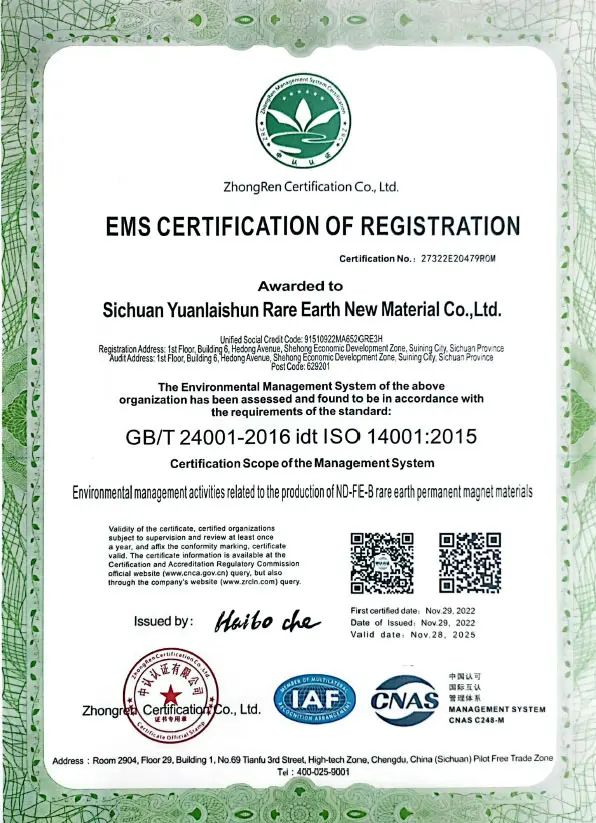
ISO Quality Management
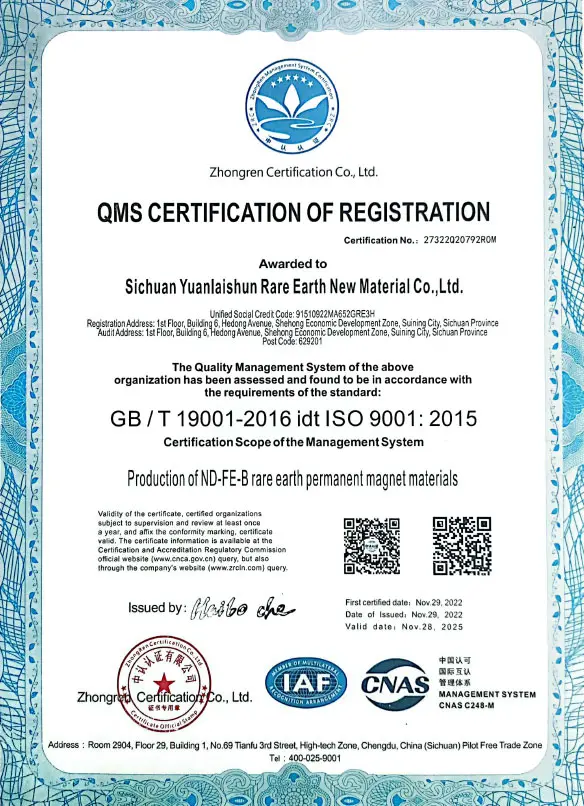
Environmental System Certification
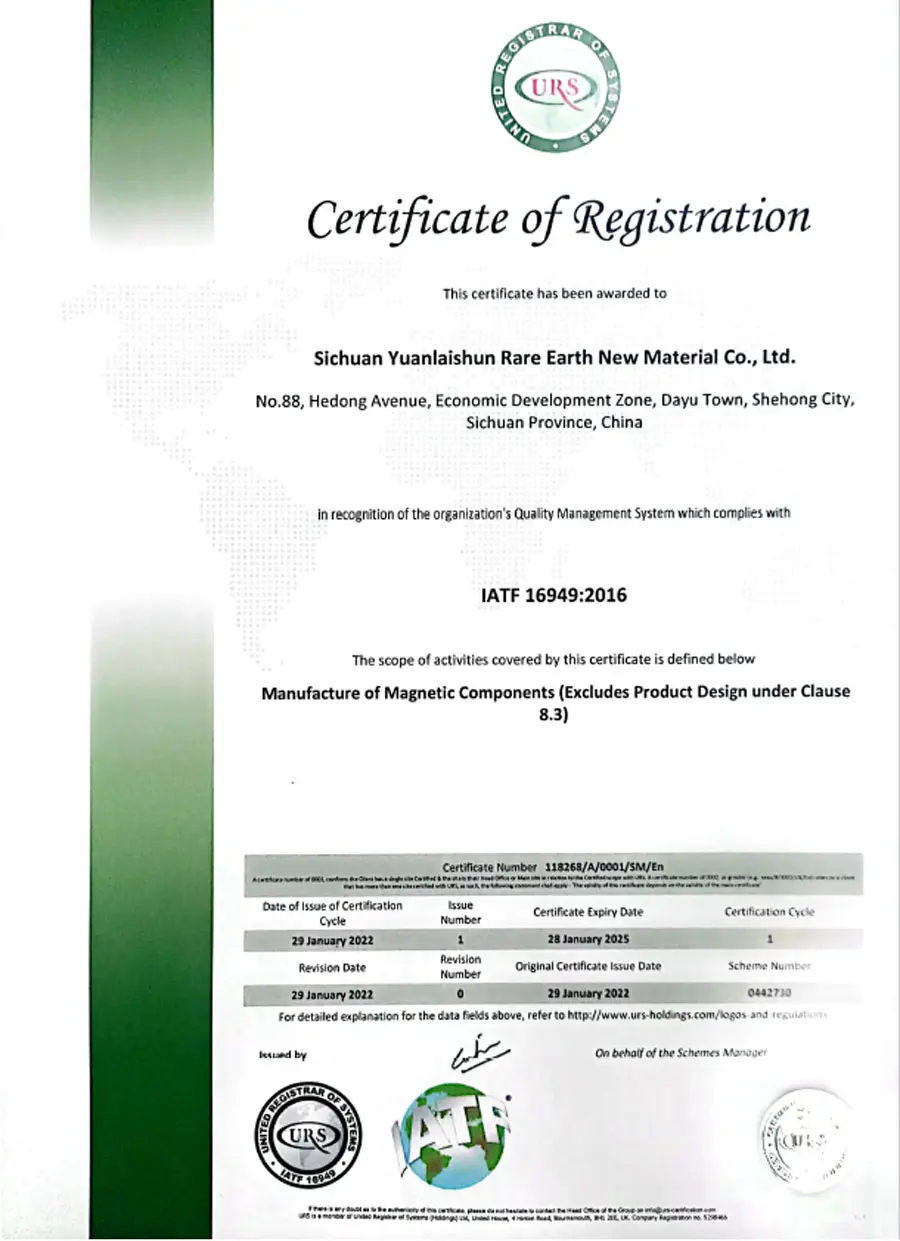
Occupational Health & Safety
Get technical insights from our senior material science engineers and product development leads.
A: Sintered NdFeB magnets are primarily made from Neodymium (about 29%-32%), Iron (about 64%-68%), and Boron (about 1%-1.2%). To enhance performance in hostile environments, specific amounts of other metals such as Dysprosium (Dy), Terbium (Tb), Cobalt (Co), Aluminum (Al), Copper (Cu), and Gallium (Ga) are alloyed to improve thermal limits, coercivity, and resistance to oxidation.
A: Uncoated NdFeB is highly susceptible to corrosion. Standard coatings include Ni-Cu-Ni (nickel-copper-nickel), Epoxy, and Zinc, typically measuring between 10 to 30 microns thick. Specialty coatings like Rubber, Parylene, and Gold are also available. Coating thickness must be factored into air-gap design calculations, as it marginally increases the physical dimensions without contributing to magnetic output.
A: We address irreversible loss by optimizing the intrinsic coercivity (Hcj) of the alloy. Utilizing Grain Boundary Diffusion (GBD) allows us to introduce Terbium (Tb) or Dysprosium (Dy) directly into the grain boundary junctions, shifting the knee of the demagnetization curve into the second quadrant for stable performance up to 220°C.
A: Sintered NdFeB magnets are manufactured by pressing fine powders and sintering them under high temperature, delivering maximum magnetic power (up to 52 MGOe). Bonded magnets mix magnetic powder with thermoset plastic resins to allow complex injection-molded geometries with thin walls, though they offer a lower energy product (typically 5 to 12 MGOe).
A: We run automated Closed-Loop Control (CLC) systems spanning alloy melt analysis, particle-size monitoring during jet milling, and computer-controlled sintering schedules. Every batch undergoes automatic magnetic property testing (hysteresigraph testing) to guarantee batch-to-batch variation in remanence (Br) and coercivity (Hcj) remains under ±2.0%.
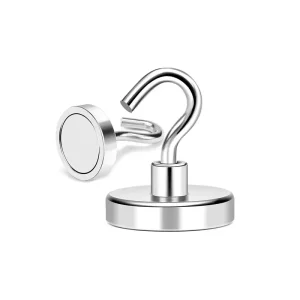
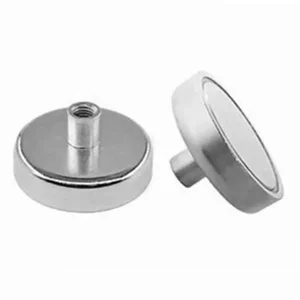
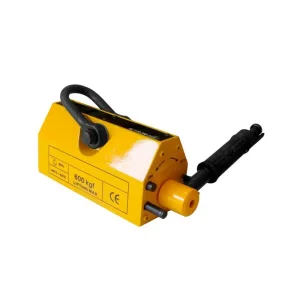
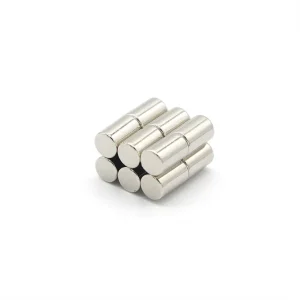
Explore our industrial range of high-remanence cylinders, block magnets, lifters, and custom assemblies.
Partner with Zhejiang Laysun Magnetics Ltd. to access high-performance rare earth components tailored to your project. Our engineers are ready to support you with advanced simulation data, demagnetization curves, and commercial pricing schedules.
 Laysun Magnetics