Explore our diverse portfolio of high-grade permanent neodymium magnets certified for international distribution.
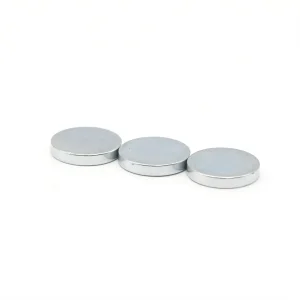
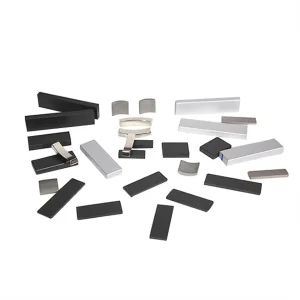
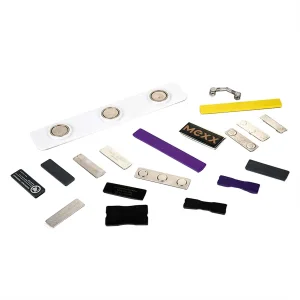
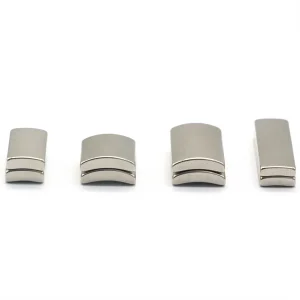
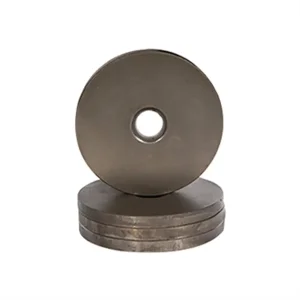
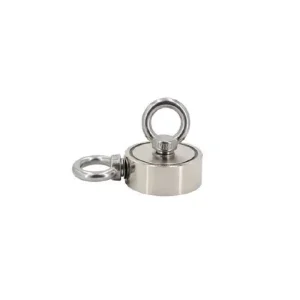
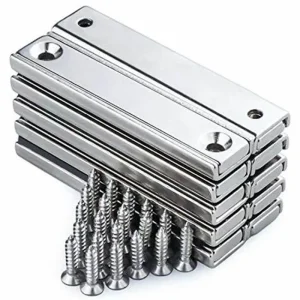
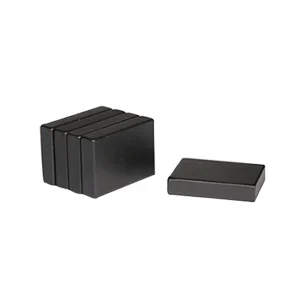
In high-torque powertrain systems, heavy industrial filtration, and magnetic resonance imaging (MRI) equipment, the physical volume and spatial density of magnetic energy dictate total operational efficiency. The 50x50x30 mm Neodymium Block Magnet represents a cornerstone specification in heavy-duty design. Having a volume of 75,000 mm³ and utilizing the tetragonal $Nd_2Fe_{14}B$ crystal structure, this specific geometry delivers extreme clamping forces and field projection profiles that make it indispensable to engineers globally.
Technical Insight: A standard N52 grade 50x50x30 mm block magnet can project a surface field of over 4,500 Gauss and generate a vertical pull force exceeding 150 kg (330 lbs) under optimized testing conditions against a low-carbon steel plate.
Sintered Neodymium Iron Boron block magnets are classified according to their Maximum Energy Product ($BH_{max}$), ranging from N35 up to N52, as well as their intrinsic coercivity ($H_{cj}$), indicated by suffixes such as M, H, SH, UH, EH, or AH. For the 50x50x30 mm dimension, choosing the appropriate grade determines performance envelope limitations:
Founded in 1999, Zhejiang Laysun Magnetics Ltd. has built an international reputation as a leading national high-tech enterprise. Our operations specialize in the research, development, metallurgical synthesis, and large-scale precision processing of permanent rare earth magnets. Over more than 25 years of active market presence, we have scaled our production capacity to meet the demands of global supply chains while maintaining strict alignment with aerospace, automotive, and industrial electronics compliance criteria.
Our core manufacturing hub, located in Suining, Sichuan, is equipped with vacuum induction melting (VIM) furnaces, hydrogen decrepitation reactors, jet milling chambers, and inert-gas powder processing units. This level of vertical integration allows us to achieve strict consistency in magnetic orientation, grain boundaries, and physical tolerance control. Our dedicated team of engineers actively optimizes sintered NdFeB formulations to reduce dependency on volatile heavy rare earth elements (HREEs) like Dysprosium (Dy) and Terbium (Tb), passing down significant cost advantages and risk mitigation strategies to our OEM partners.
We operate in strict adherence to our core organizational pillars: Quality, Credibility, Technology, and Innovation. By controlling raw materials sourcing and post-sintering surface treatments, we guarantee that our high-power block magnets maintain high resistance to corrosion and structural fatigue over decades of continuous operation.
The industrial landscape for 50x50x30 mm neodymium magnets is expanding due to global trends in automation and sustainability. In the manufacturing sector, these large block magnets serve as the driving core of industrial magnetic separators, which remove microscopic iron particles from chemical, food-grade, and mining process streams. In the wind power industry, direct-drive turbines rely on dense neodymium blocks to generate electricity from low wind speeds without mechanical gearboxes, minimizing maintenance costs and downtime.
Concurrently, the global push toward high-efficiency industrial motors (IE3 and IE4 standards) has led system integrators to specify larger magnet configurations. By scaling physical block dimensions to 50x50x30 mm, designers can reduce the total component count in large motor rotors, simplifying assembly and improving structural integrity at high rotations. As a primary exporter, Zhejiang Laysun Magnetics Ltd. services critical distribution channels across North America, the European Union, and the Asia-Pacific region, meeting industrial standards for logistics, customs documentation, and magnetic shielding for air freight.
To optimize performance at high operating temperatures, the industry is transitioning away from standard alloying techniques toward Grain Boundary Diffusion (GBD) technology. Historically, increasing thermal stability required adding heavy rare earths (Tb or Dy) to the raw melt, which reduced the magnet’s overall remanence ($B_r$) and increased production costs. Our advanced GBD processing lines selectively deposit Tb or Dy vapors onto the sintered block surface before heat treatment. These elements diffuse along the grain boundaries rather than entering the primary $Nd_2Fe_{14}B$ crystal matrix.
For large-scale projects, utilizing a single 50x50x30 mm magnet may not be sufficient. In these cases, engineers design modular magnetic assemblies, placing multiple blocks within structural steel matrices. This approach allows for the creation of customized field profiles, such as Halbach Arrays, which focus magnetic flux on one side of the assembly while reducing the field on the opposite side to near zero. These assemblies are crucial for high-speed maglev transportation systems, linear actuators, and high-energy physics experiments.
Additionally, our engineering department provides finite element analysis (FEA) modeling to simulate flux distribution, demagnetization thresholds, and mechanical stress profiles. This support ensures that the 50x50x30 mm magnet integrates into your design with the appropriate backing plate materials, air gaps, and fastening mechanisms, preventing mechanical failures or premature magnetic degradation.
Our production facility operates under recognized management protocols, including API 6D, API 607, CE, ISO9001, ISO14001, ISO18001, and IATF 16949 (TS).
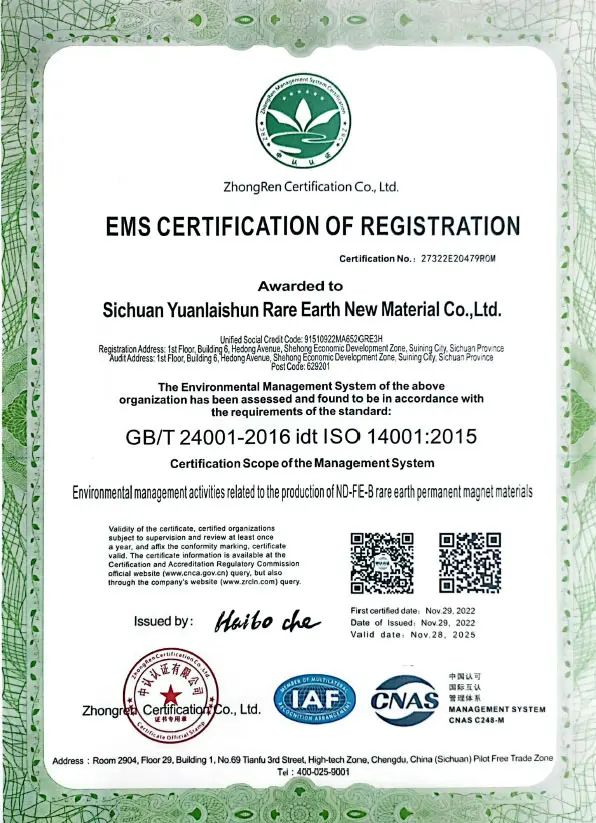
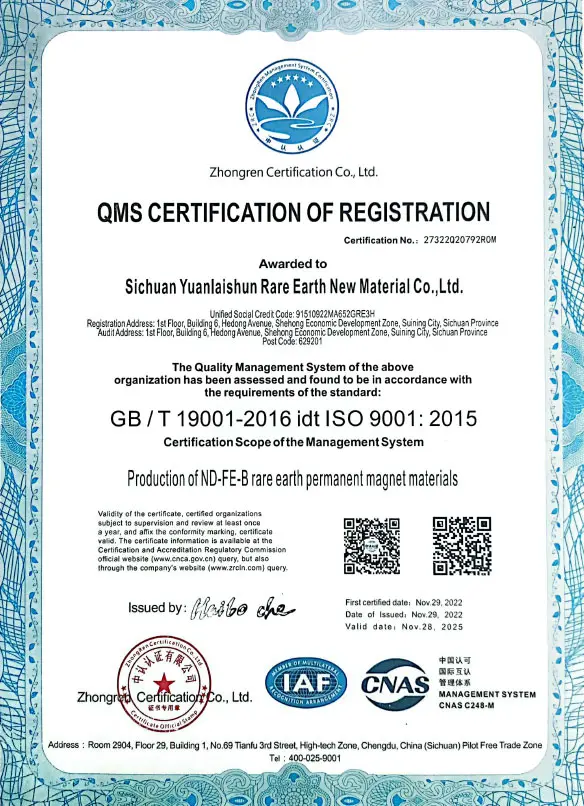
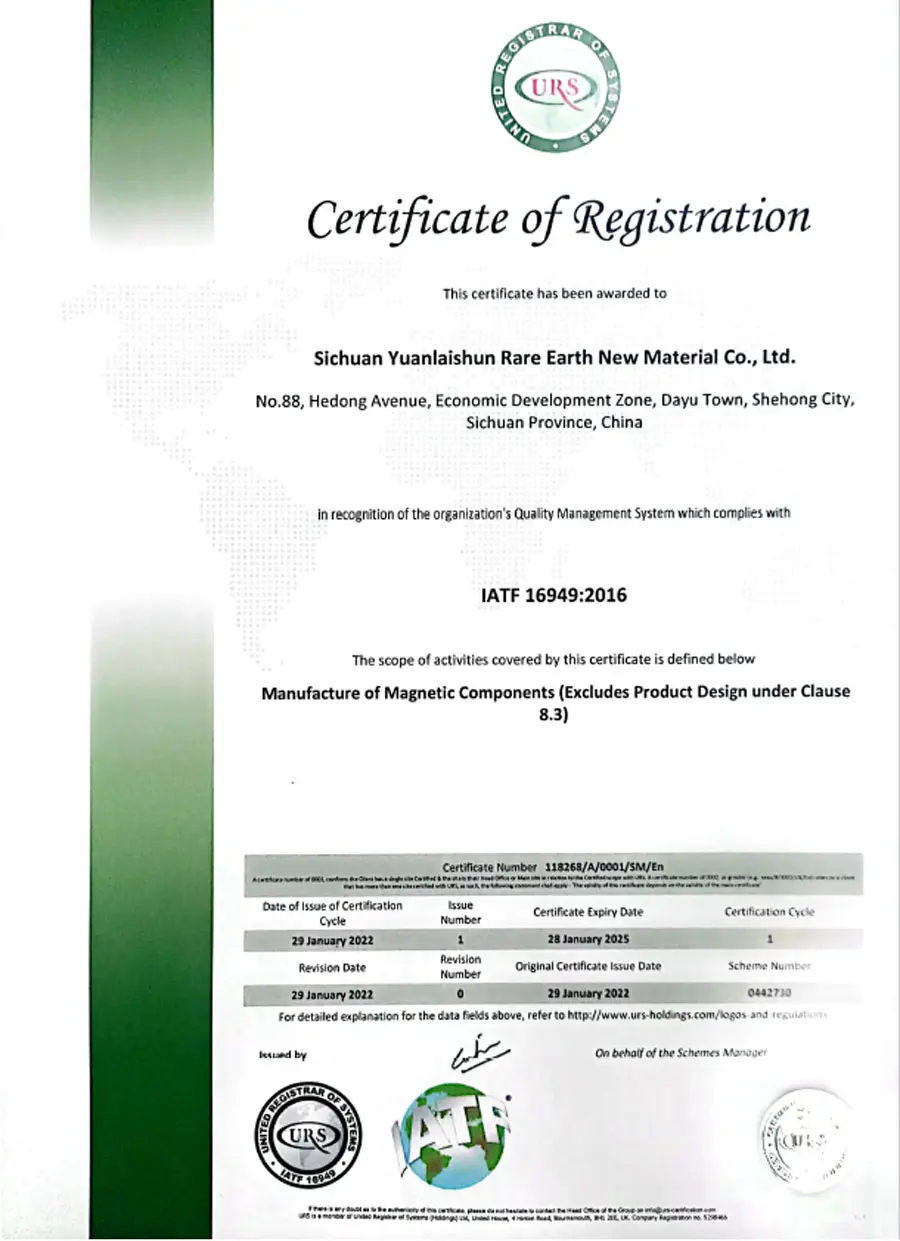
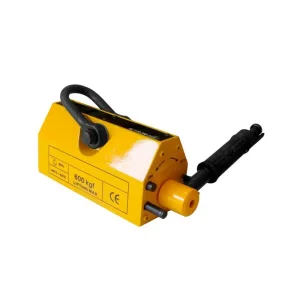
Heavy-duty industrial lifters, precision VCM motors, and custom magnetic assemblies engineered for extreme environments.
 Laysun Magnetics