Engineered to interact with complex magnetic systems and optimized graphite structures
Anisotropic Diamagnetism, Quantum Mechanical States, and Passive Magnetic Levitation
Graphite exhibits one of the strongest diamagnetic properties of any room-temperature material. Unlike paramagnetic or ferromagnetic substances which are attracted to magnetic fields, diamagnetic materials are weakly repelled. In graphite, this phenomenon is heavily anisotropic due to its hexagonal layered crystalline structure ($sp^2$ hybridization). The magnetic susceptibility ($\chi$) along the c-axis (perpendicular to the graphene layers) is approximately $\chi_{\perp} = -400 \times 10^{-6}$, whereas along the basal plane, it is only $\chi_{\parallel} = -85 \times 10^{-6}$.
This vast anisotropy arises from the behavior of delocalized $\pi$-electrons. When an external magnetic field is applied perpendicular to the basal plane, these free-roaming electrons are induced to circulate within the rings of carbon atoms, creating a microscopic orbital current that generates an opposing magnetic field in strict accordance with Lenz's Law. This exceptional diamagnetic property is the physical foundation behind passive magnetic levitation systems, precise eddy-current damping, and non-contact mechanical linkages.
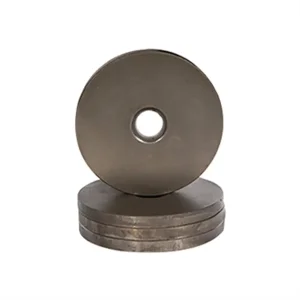
Specifically manufactured via chemical vapor deposition (CVD), PG features highly aligned crystal planes. Its extreme diamagnetic repulsion allows it to levitate stably above high-flux NdFeB arrays without power input.
Graphite maintains its diamagnetic characteristics across a vast temperature range. Its structural integrity and electrical conductivity make it highly applicable in extreme environments where metallic counterparts fail.
Fusing advanced carbon structures with rare-earth magnetic circuits for optimized OEM assemblies
To fully exploit graphite's unique magnetic properties, designers must pair them with optimal permanent magnetic circuits. Utilizing high-remanence ($B_r$) NdFeB magnets, such as N52 or high-temperature SH, UH, and EH grades, is critical. The magnetic levitation force is proportional to the gradient of the magnetic field square ($\nabla B^2$). Consequently, alternating polarity pole configurations (e.g., checkerboard arrays or Halbach arrays) are engineered to maximize the magnetic field gradient directly at the interface with the graphite substrate.
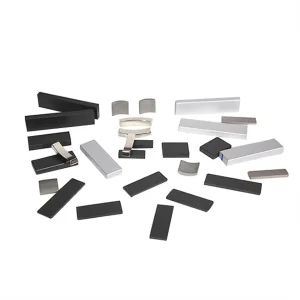
Our team at Zhejiang Laysun Magnetics Ltd. works alongside global aerospace, semiconductor, and robotics OEMs. We engineer the rare-earth magnetic arrays that yield the exact magnetic field profiles required to interface with pyrolytic and isotropic graphite components, delivering precise mechanical damping, frictionless bearings, and non-contact transfer systems.
By arranging permanent magnet segments in a spatially rotating pattern, the magnetic field is concentrated on one side of the array while cancelling out the other, dramatically enhancing the levitation distance of graphite plates.
OEM graphite-magnet assemblies demand sub-micron tolerances. Our NdFeB magnets are finished with advanced Ni-Cu-Ni or Epoxy coatings to prevent oxidation, ensuring lasting reliability in demanding industrial cleanrooms.
How global high-tech industries deploy graphite-magnet systems to overcome traditional physical limitations
As industrial automation and high-precision scientific instruments advance, the demands placed on mechanical linkages become increasingly severe. Contact-based bearings generate friction, wear, particulate contamination, and heat, making them unsuitable for cleanroom environments or vacuum conditions. Fusing the magnetic field of custom NdFeB rare-earth magnets with the high diamagnetism of pyrolytic graphite offers a completely passive, maintenance-free, contactless solution.
In lithography and deposition systems, wafer transport must happen in high vacuum with zero dust particles. Magnetically levitated graphite platforms offer frictionless, grease-free transport, preventing contamination.
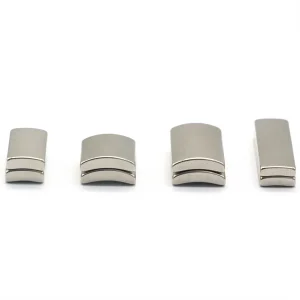
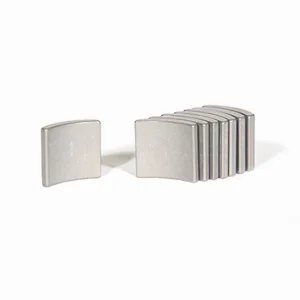
Miniature gyroscopes utilize levitated pyrolytic graphite micro-rotors to isolate external mechanical vibrations. Our custom arc-segment magnets and micro-cylinders provide the balanced magnetic core required for stable rotations.
By placing graphite blocks over specialized NdFeB tracks, engineering firms design ultra-low frequency passive vibration isolators. These systems protect high-precision optical tables and laser interferometers.
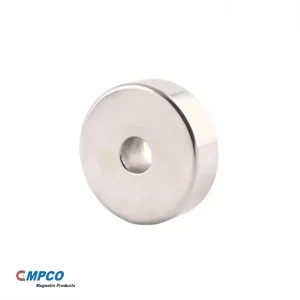
Utilizing multipolar NdFeB rings with precise angular magnetization characteristics ensures that electronic power steering (EPS) and torque sensors function with zero latency under critical safety limits.
Leveraging over two decades of high-tech permanent magnet production and global commercial supply
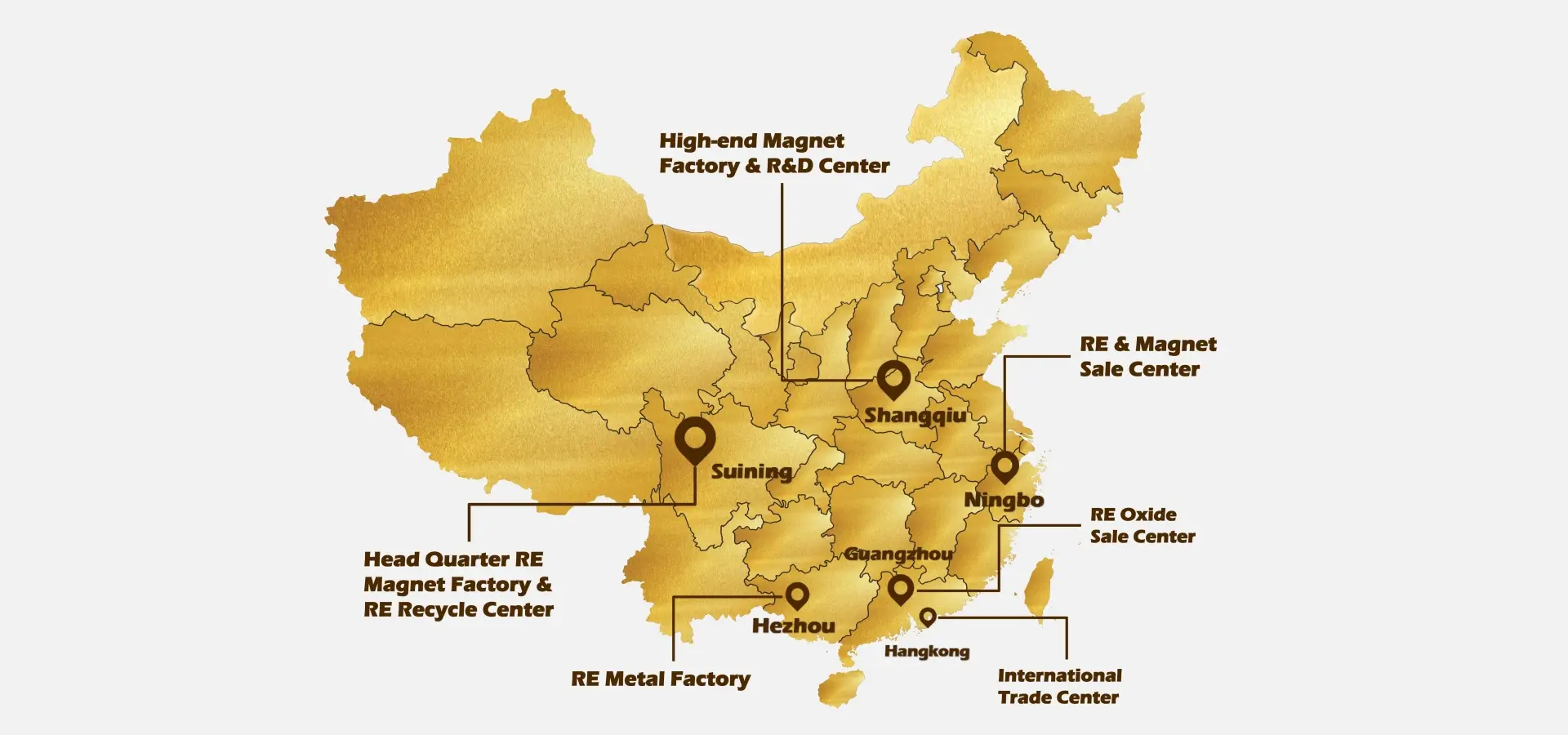
Founded in 1999, Zhejiang Laysun Magnetics Ltd. has evolved into an industry-leading developer and manufacturer of high-performance sintered and bonded NdFeB magnets. Headquartered in Hangzhou, China, with a massive production facility in Suining, Sichuan, we serve global technology supply chains with custom magnetic solutions.
A rigorous engineering process from concept validation to mass delivery and localization support
Automotive, aerospace, and medical device manufacturing require absolute tracking and compliance. Our production lines conform to the most demanding international criteria, including API 6D, API 607, CE, ISO9001, ISO14001, and IATF 16949 (TS). We supply comprehensive materials reports (RoHS, REACH) and provide physical inspection data (hysteresis graph testing, salt spray resistance, flux mapping) with every batch.
OEMs procuring graphite magnetic properties products can leverage our custom quotation service. We assist your engineering team in choosing the exact magnetic grade, geometry, and plating options to optimize performance while minimizing raw material costs.
With our primary production bases in Hangzhou and Sichuan, China, Laysun is establishing dedicated worldwide subsidiaries and localized offices to serve global customers quickly. Whether you need initial rapid prototyping or multi-ton continuous delivery schedules, our engineering and logistics teams provide 24/7 technical and compliance support.
Zhejiang Laysun Magnetics Ltd. is your reliable long-term partner in advanced magnetic engineering.
Answers to critical engineering queries regarding diamagnetism, custom magnetic assemblies, and procurement
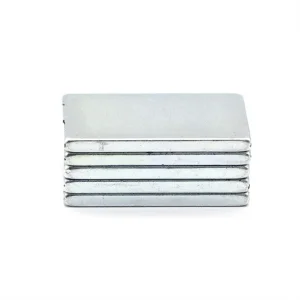
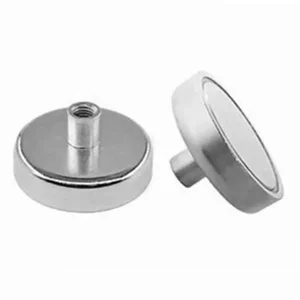
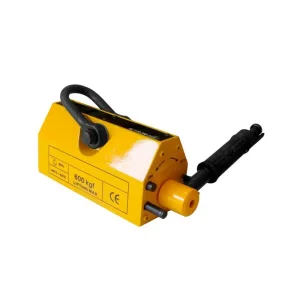
Explore our industrial-grade sintered NdFeB blocks, custom segments, and magnetic lifters
 Laysun Magnetics