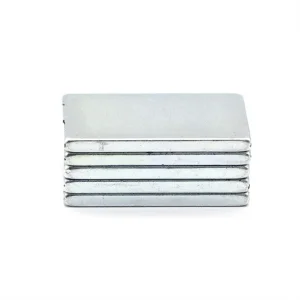
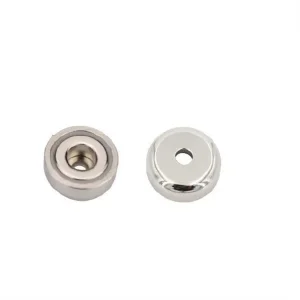
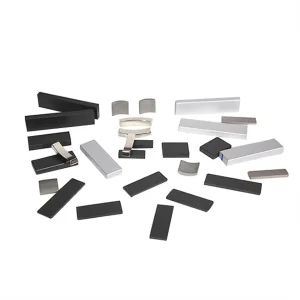
Engineered for maximum stability, advanced magnetic performance, and superior oxidation prevention.
Modern industrial applications require rare-earth magnets to deliver peak performance under highly challenging parameters. Sintered Neodymium-Iron-Boron (NdFeB) magnets provide the highest energy product of any commercially available material. However, they are naturally susceptible to chemical oxidation and electrochemical corrosion due to their unique, multi-phase microstructure—specifically, the presence of the highly reactive neodymium-rich grain boundary phase.
When left unprotected, moisture and industrial atmospheric pollutants penetrate the crystalline matrix, resulting in rapid mechanical disintegration (commonly termed "magnet crumbling" or "decay") and corresponding magnetic field loss. To overcome this critical limitation, Zhejiang Laysun Magnetics Ltd. has spent over two decades engineering advanced nickel alloy electroplating and composite barrier coatings. By utilizing precise multi-layer electrochemistry, we provide custom nickel alloy corrosion-resistant solutions that extend component lifespans in marine systems, electric vehicles, industrial servo motors, and automated aerospace actuators.
SEO Technical Insight: The degradation of NdFeB magnets occurs because the neodymium-rich phase is highly anodic compared to the matrix phase. Custom nickel alloy coatings establish a robust physical barrier and sacrificial cathodic protection layer, keeping the corrosion current density within negligible micro-amperes per square centimeter.
In response to global decarbonization mandates and extreme-environment engineering, the specifications for permanent magnet coatings have become increasingly demanding. The global supply chain has shifted focus from simple cosmetic electroplating to functional, ultra-thin, highly dense alloy films. The primary trends driving current metallurgical engineering include:
For multinational procurement leads sourcing rare earth components, initial unit cost is no longer the sole purchasing metric. Quality directors calculate procurement risk based on the Total Cost of Ownership (TCO), focusing on product longevity, system downtime protection, and field reliability. Standardizing on custom nickel-alloy corrosion-resistant magnets helps manufacturers prevent field failures that can lead to expensive product recalls.
Industrial buying behaviors show a strong focus on verified metallurgical testing standards, including ASTM B117 salt spray testing and highly accelerated stress testing (HAST/PCT). By specifying precise coating compositions and thicknesses, global buyers ensure their magnets can withstand demanding environments, such as offshore wind generator chambers or oil extraction drill heads. Partnering with a fully certified Chinese exporter like Zhejiang Laysun Magnetics Ltd. provides enterprises with comprehensive quality documentation (including IATF 16949 and ISO 9001 certifications) along with significant cost efficiencies.
To help engineers and procurement specialists select the optimal surface protection, we have compiled a comparison matrix outlining standard coating performance data:
| Coating Type | Layer Configuration | Thickness Range (μm) | Salt Spray Test (SST) Durability | Max Operating Temp (°C) | Key Industrial Applications |
|---|---|---|---|---|---|
| Standard Ni-Cu-Ni | Nickel - Copper - Nickel | 15 - 25 | 24 to 96 Hours | 220°C | Voice Coil Motors, Sensors, Consumer Devices |
| Electroless Nickel (Ni-P) | High-Phosphorus Nickel Alloy | 10 - 20 | 120 to 240 Hours | 250°C | Precision Instruments, Chemical Pumps, Automotive Sensors |
| Ni-Cu-Ni + Epoxy | Metallic Base + Cathodic Epoxy Resin | 20 - 35 | 240 to 1000+ Hours | 150°C | Offshore Wind, Marine Instruments, EV Traction Motors |
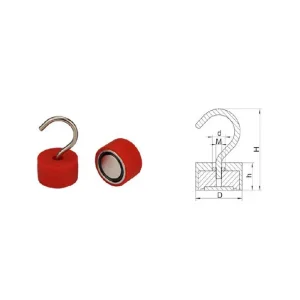
| Zinc Plating (Zn) | Acidic or Alkaline Zinc + Passivation | 8 - 15 | 12 to 48 Hours | 120°C | Industrial Fasteners, General Assemblies, Hook Magnets |
The global magnetic materials supply chain requires high agility, consistent quality control, and scalable capacity. Sourcing from our Factory 4.0 facility in Suining, Sichuan, allows enterprise clients to leverage advanced Chinese manufacturing infrastructure. Combining specialized metallurgical expertise with modern automation allows us to produce high volumes without compromising dimensional tolerances or coating integrity.
Our facility uses automated, computer-monitored plating lines. This system provides real-time control over plating bath chemistry, current densities, and temperature parameters. By limiting human error, we achieve exceptional batch-to-batch uniformity—a key requirement for precision industries like automotive steering systems and magnetic sensors. Furthermore, by managing the complete production cycle in-house (from raw material processing to final testing), we mitigate supply chain disruptions and guarantee on-time shipping schedules.
Founded in 1999, Zhejiang Laysun Magnetics Ltd. has grown from a specialized manufacturer into a globally recognized producer of rare earth magnetic solutions. Our operations are centered at our modern production base, which spans 100,000 square meters. Backed by a team of 300 experienced professionals, we maintain an annual production capacity of 5,000 tons of high-performance NdFeB magnets, serving industrial partners across North America, Europe, and Asia.
We build long-term value for our clients on four core principles: Quality, Credibility, Technology, and Innovation. Our advanced manufacturing capabilities allow us to supply magnets to leading brands in the electric vehicle, industrial automation, robotics, and consumer electronics sectors. We continue to invest in clean energy production processes, optimizing material yields and lowering environmental impact to align with global corporate sustainability goals.
Material Certification Note: All products comply with RoHS, REACH, and WEEE directives, ensuring smooth integration into international markets.
Our chemical baths utilize advanced automatic monitoring systems to ensure uniform coating thickness and eliminate surface pitting.
Every production batch undergoes strict ASTM-compliant validation tests, including salt spray chamber exposure, PCT adhesion checks, and magnetic flux mapping.
Our large-scale Sichuan facility guarantees stable product delivery times, protecting clients from raw material shortages and logistics delays.
Industrial demands differ significantly across global economic corridors. To support regional engineering practices, Laysun Magnetics customizes its product configurations to align with regional standards:
Direct technical answers from our engineering team regarding magnet life, surface finishes, and quality control.
Single nickel plating layers contain micro-pores that develop during electroplating, creating direct paths for moisture to reach the raw NdFeB magnet material. A multi-layer Ni-Cu-Ni coating uses an intermediate copper layer. Copper is highly ductile and fills the micro-pores in the initial nickel layer, providing a secondary barrier that significantly improves corrosion protection and salt spray resistance.
Electroless nickel (Ni-P) plating utilizes a chemical reduction process rather than electrical current to deposit the coating. This produces an extremely uniform layer thickness across the entire magnet surface, including sharp corners, internal bores, and complex geometries. The resulting phosphorus alloy layer is amorphous, providing excellent wear resistance and protection against chemical attack by acids or bases.
We evaluate coating adhesion using cross-cut tape tests, thermal shock cycle testing (rapid cycling between -40°C and +120°C), and mechanical shear testing. These methods confirm that our coatings will not peel, bubble, or detach from the magnet substrate under harsh operating conditions.
Our manufacturing lines are fully compliant with ISO 9001 quality management, ISO 14001 environmental management, and OHSAS 18001 standards. We also adhere to strict automotive industry requirements, providing full material traceability, process capability assessments, and PPAP documentation when required.
Yes. For direct fluid contact, we recommend our specialized high-phosphorus electroless nickel or custom epoxy-sealed nickel coatings. For extremely corrosive or marine environments, we recommend hermetic encapsulation or stainless-steel canning options to protect the magnet core.
Providing high magnetic density, mechanical durability, and customized shapes for global buyers.
 Laysun Magnetics