Explore our core product lineup of premium custom neodymium assemblies and rare earth magnets.
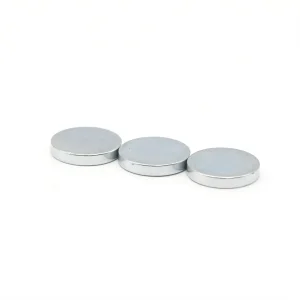
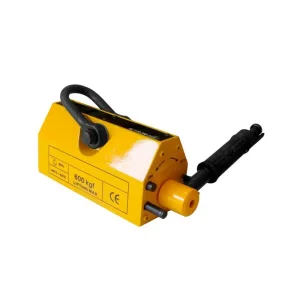
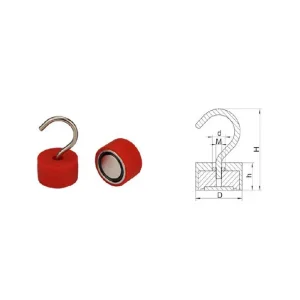
Founded at the turn of the millennium in 1999, Zhejiang Laysun Magnetics Ltd. has rapidly evolved from a visionary startup into an industry pacesetter and a national high-tech leader. We specialize in the R&D, manufacturing, and global supply of advanced permanent magnets and custom magnetic materials designed to power the next generation of industrial and consumer technologies.
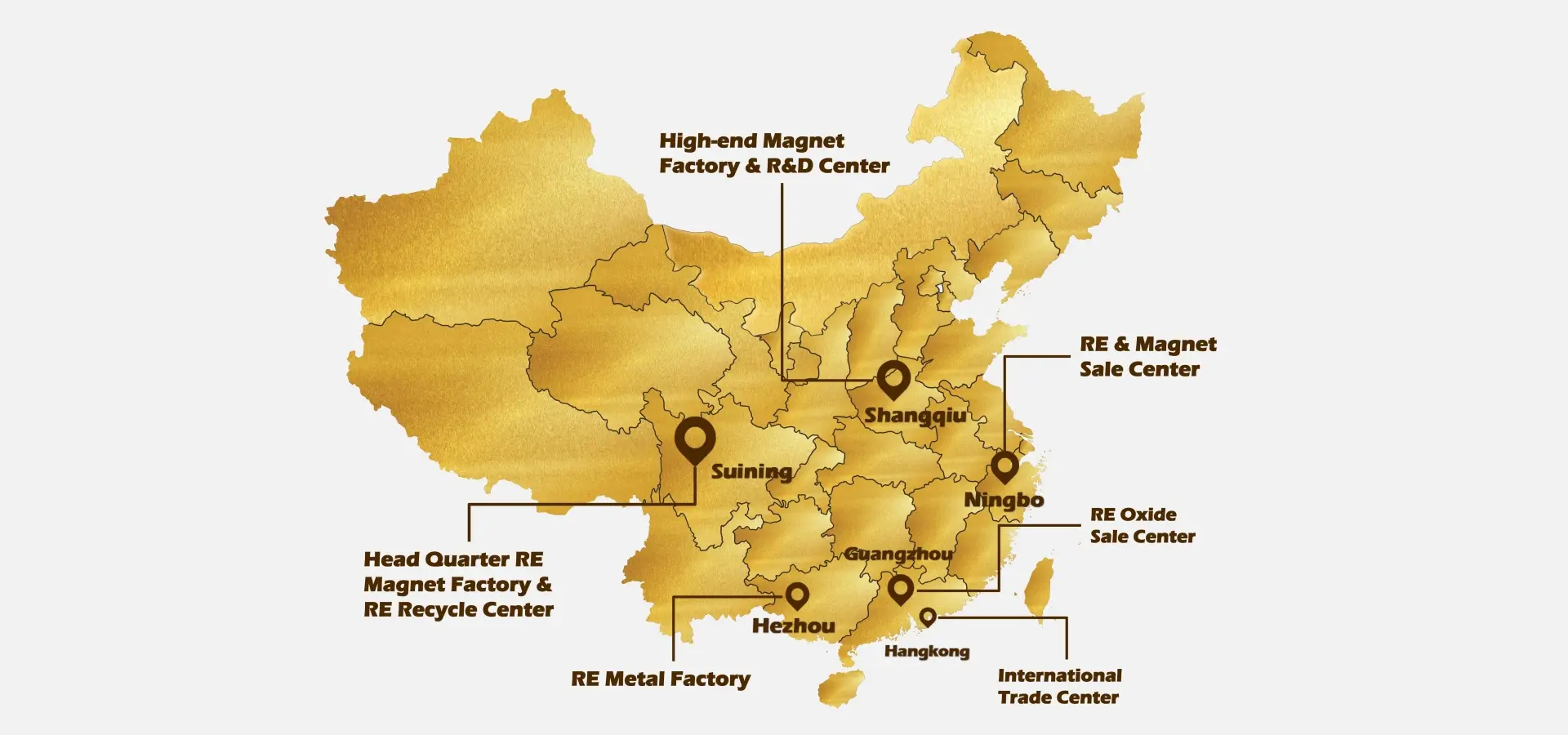
Our operational headquarters in Hangzhou and our state-of-the-art manufacturing factory spanning over 100,000 square meters in Suining, Sichuan, enable us to maintain vertical integration and deliver unmatched product consistency. With a robust workforce of 300+ professionals and scientists, we achieve an annual output of 5,000 tons of high-grade rare earth magnets.
A deep technical analysis of magnetic characteristics, synthetic methodologies, and industrial customization pathways.
Information Gain Perspective: Understanding iron nanoparticles ($Fe, Fe_3O_4, \gamma-Fe_2O_3$) at the nanoscale requires looking beyond bulk magnetic parameters. By tailoring particle size, surface coating, and crystal phases, engineers can unlock superparamagnetic behaviors vital for biomedical target delivery, magnetic sealing fluidics, and high-frequency microwave applications.
When bulk ferromagnetic or ferrimagnetic iron elements are reduced below a critical size threshold (typically under 20 nanometers depending on the material phase), they undergo a transition from multi-domain structures to single-domain systems. Under these conditions, the thermal energy ($k_B T$) within the nanoparticle can overcome the magnetic anisotropy energy barrier ($K_u V$). This phenomenon results in spontaneous magnetization fluctuations, rendering the particles superparamagnetic in the absence of an external magnetic field.
This zero-remanence and zero-coercivity state prevents spontaneous agglomeration, making superparamagnetic iron nanoparticles exceptionally stable in liquid suspensions (ferrofluids). Once an external magnetic field is applied, these nanoparticles respond rapidly, exhibiting high saturation magnetization values ($M_s$) comparable to bulk material values. For design engineers, specifying these thresholds is vital for determining field response times and dispersion stability.
As a leading supplier, Zhejiang Laysun Magnetics Ltd. collaborates with industrial R&D divisions to modify and optimize the following mechanical and magnetic properties:
Highly customized Superparamagnetic Iron Oxide Nanoparticles (SPIONs) used as Contrast Agents in MRI, targeted drug delivery vehicles, and local hyperthermia therapy for oncological treatments.
Iron nanoparticles suspended in carrier solvents. Designed for vacuum rotary feedthrough seals, acoustic speaker cooling dampers, and mechanical vibration absorption systems.
Zero-valent nanoscale iron (nZVI) utilized to neutralize chlorinated organic solvents, heavy metal ions, and toxic organophosphate compounds within groundwater matrices.
Achieving structural uniformity is the primary hurdle in manufacturing nanostructured iron. At our state-of-the-art facilities, we employ chemical co-precipitation, thermal decomposition of organometallic precursors, and high-energy bead milling methods. The synthetic route directly correlates to structural phase purity and monodisperse size distribution.
Using X-ray Diffraction (XRD) and Transmission Electron Microscopy (TEM), our material engineers verify structural phase composition and verify the tight size tolerance ($\pm 1.5\text{ nm}$). Vibrating Sample Magnetometry (VSM) testing curves are subsequently supplied with every industrial batch to document precise magnetic behaviors ($M_s, H_c$) and assure reliability before global shipment.
Watch our plant processes and review our international quality compliance documentation.
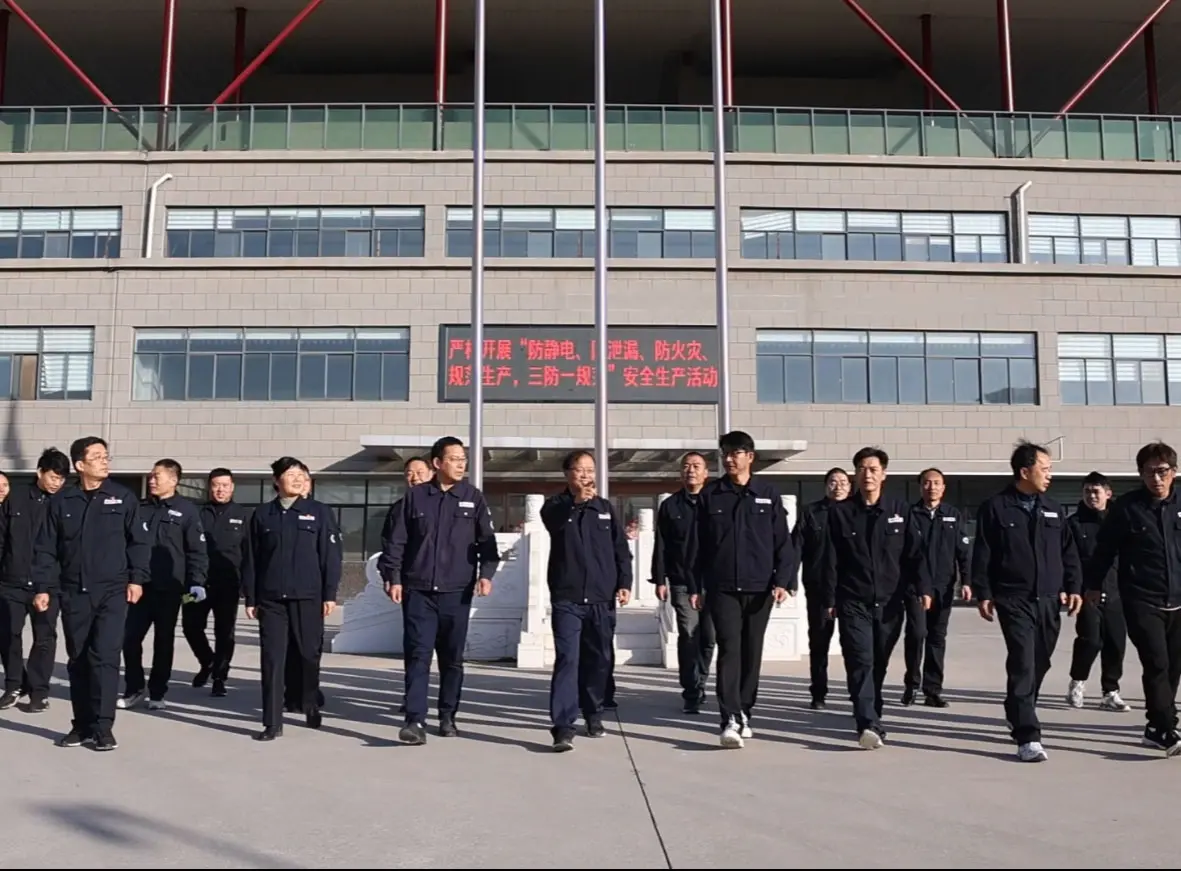
We conform to rigorous international processing norms, including API 6D, API 607, CE, ISO9001, ISO14001, ISO18001, and IATF 16949 automotive quality standards.
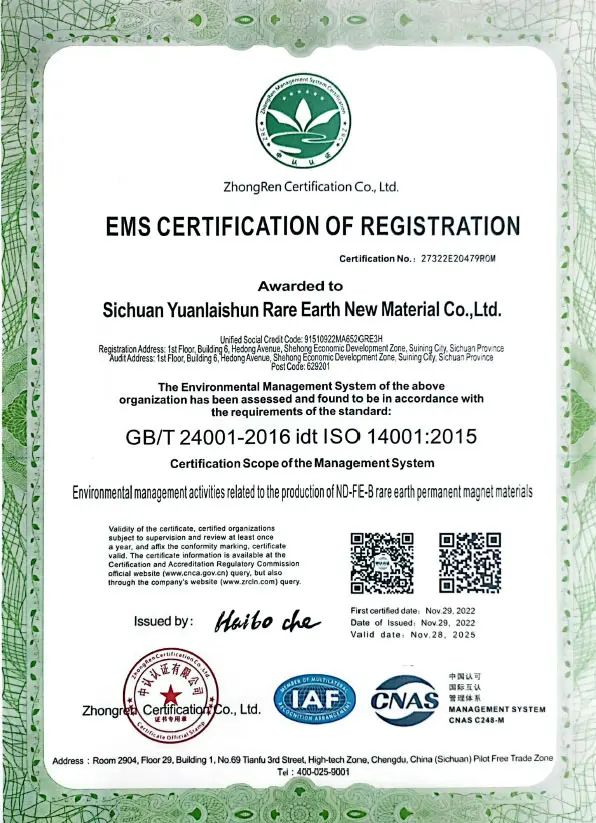
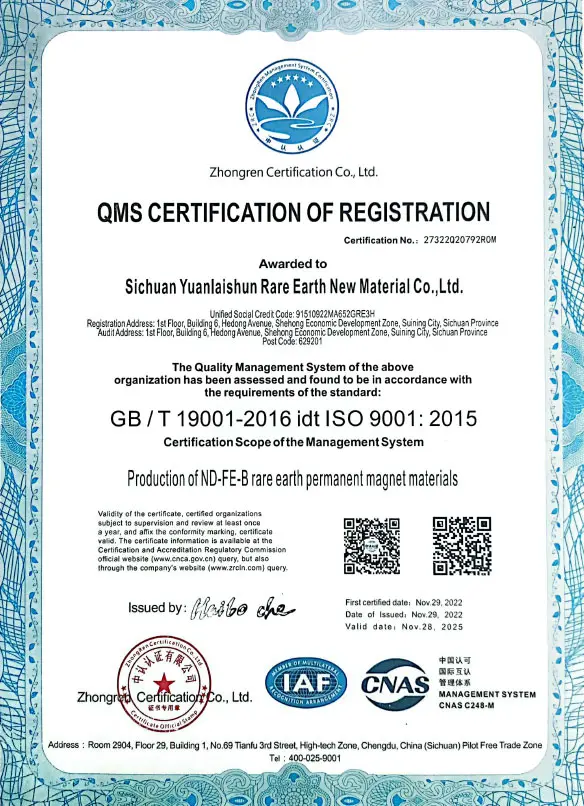
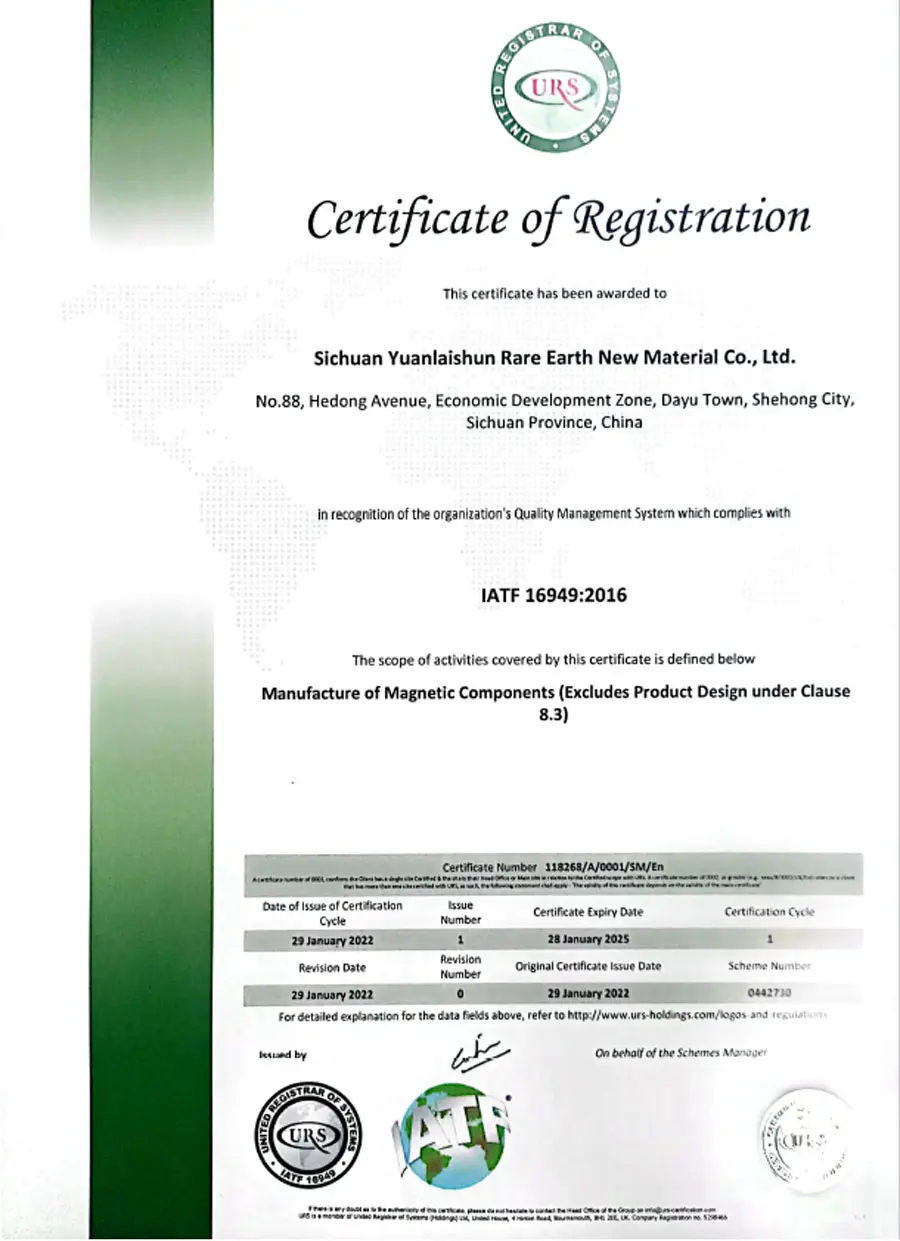
Operating a 100,000 m² primary manufacturing facility in Suining, Sichuan, provides Zhejiang Laysun Magnetics Ltd. with direct access to regional raw material smelting centers, securing an uninterrupted supply of heavy and light rare earth oxides. This vertical supply structure protects our international clients from material scarcity risks and fluctuating market pricing.
Our localized facility relies on automation across the sintering, cutting, electroplating, and magnetization stages. This ensures that every bulk order exhibits structural reliability and dimensional accuracy. Our location in Hangzhou, Zhejiang, acts as a primary export and logistics hub, streamlining transport networks to major international ocean ports like Shanghai and Ningbo.
By optimizing trans-oceanic freight schedules and maintaining strategic distribution hubs, Laysun Magnetics guarantees prompt delivery to European, American, and Asia-Pacific industrial sectors. We provide comprehensive import-export clearing paperwork, regulatory certifications, and customs handling to facilitate smooth border entry.
We are actively shifting the frontiers of magnetic material engineering. Our R&D team works closely with partner universities to evaluate zero-cobalt/zero-dysprosium magnetic formulations. Through this roadmap, we aim to offer green-energy certified alternatives that meet modern sustainability requirements while maintaining the high magnetic force requirements of EV motors and heavy robotics.
Through our localized sales and technical support desks in key global hubs, Laysun offers real-time assistance. Engineers can request bespoke physical shape profiling (such as high-aspect ratio discs, complex blocks, or custom ring parameters) or request customized surface passivation properties to protect raw materials against demanding marine or chemical plant operating conditions.
Get clear answers regarding the procurement, customization, and physical properties of iron nanoparticles.
Order precision-engineered sintered blocks, motors, and magnetic rings.
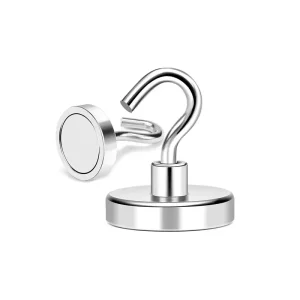
Looking for custom iron nanoparticles with tailored magnetic properties, or high-coercivity NdFeB assemblies? Send us your technical specifications and receive a customized quote within 24 hours.
 Laysun Magnetics