Explore our core engineered magnetic solutions, combining optimized magnetic soft iron properties with peak permanent magnet configurations.
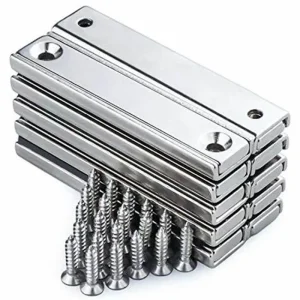
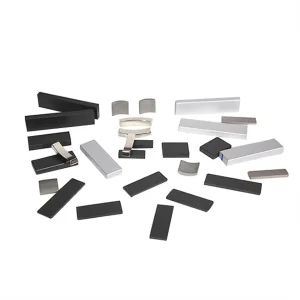
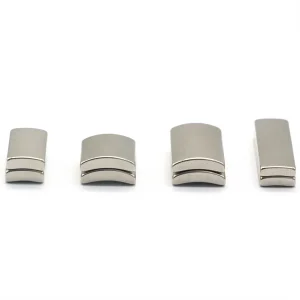
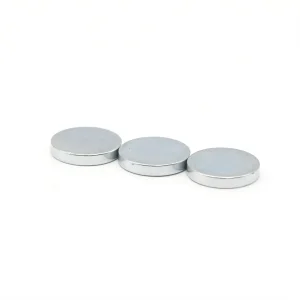
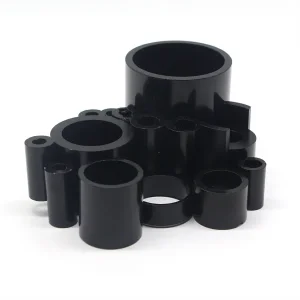
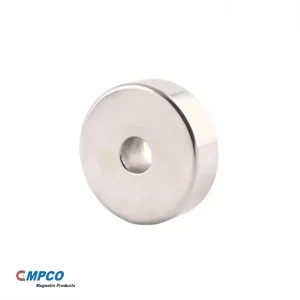
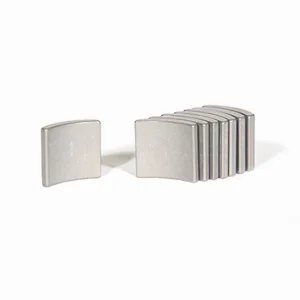
An expert analysis of soft magnetic alloys, hysteresis optimization, and magnetic circuit design dynamics.
In contemporary electromagnetism and motor topology, the choice of magnetic materials determines the ultimate efficiency boundary of the system. While permanent magnets like Neodymium (NdFeB) generate the primary magnetic flux, soft iron components act as the critical conduits that route, concentrate, and shape this flux. Understanding the magnetic properties of soft iron—specifically pure iron, electrical steel, and carbon-controlled soft alloys—is essential for engineering high-efficiency actuators, transformers, relays, and voice coil motors (VCMs).
Soft iron is characterized by its high magnetic susceptibility and extremely low coercivity ($H_c$). Coercivity measures the resistance of a ferromagnetic material to changes in magnetization. In soft iron, this value is kept as low as possible (typically $< 80 \text{ A/m}$), allowing the material to magnetize and demagnetize rapidly in response to alternating external magnetic fields. This minimizes hysteresis loss—the energy dissipated as heat during each magnetic cycle.
Another fundamental metric is the saturation magnetization ($B_s$). High-purity soft iron boasts one of the highest saturation flux densities among all magnetic materials, reaching up to $2.15 \text{ Tesla}$. This high limit enables designers to shrink the cross-sectional area of cores without risking premature magnetic saturation, allowing for more compact and lightweight motor and actuator designs.
| Property | High-Purity Soft Iron (e.g., DT4C) | Sintered NdFeB (Permanent) | Silicon Steel (Fe-Si Alloy) |
|---|---|---|---|
| Initial Permeability ($\mu_i$) | ~5,000 - 10,000 | ~1.05 | ~8,000 - 15,000 |
| Coercivity ($H_c$) | < 50 A/m | > 950,000 A/m | < 30 A/m |
| Saturation Induction ($B_s$) | 2.15 T | 1.2 - 1.45 T | 2.0 T |
| Electrical Resistivity ($\rho$) | ~10 $\mu\Omega\cdot\text{cm}$ | ~140 $\mu\Omega\cdot\text{cm}$ | ~50 $\mu\Omega\cdot\text{cm}$ |
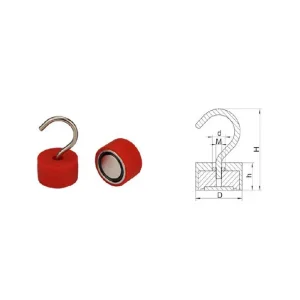
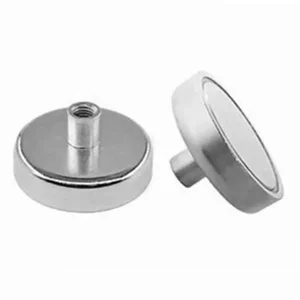
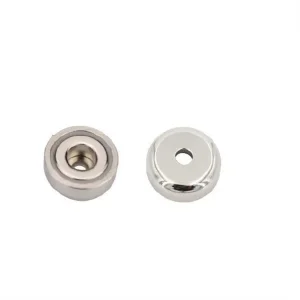
Without high-quality soft iron to close the magnetic circuit, the magnetic field lines of an NdFeB magnet disperse wildly into the surrounding air, creating high reluctance. Integrating soft iron pole pieces, housings, or cups (as seen in Pot Magnets and VCM structures) provides a low-reluctance pathway. This concentrates the magnetic flux lines onto the target workspace, multiplying the holding force or torque output by factors of up to 400% compared to a bare magnet.
Your trusted national high-tech manufacturing leader in rare earth and magnetic circuit solutions since 1999.
Zhejiang Laysun Magnetics Ltd. has evolved from a visionary startup to an industry-leading manufacturer of high-performance rare earth NdFeB magnets and integrated magnetic assemblies. Spanning a state-of-the-art facility of 100,000 square meters in Sichuan, we handle the entire production flow—from raw materials sintering to precision CNC machining of soft iron cups, housings, and pole components.
Our dedication to quality, credibility, and technological innovation enables us to serve demanding industrial sectors globally, including automotive EPS, high-efficiency generators, robotics, and consumer electronics.
Analyzing supply chain optimization, vertical integration, and metallurgy quality controls.
China controls over 80% of the global rare earth mining and refining capacity. By matching rare earth magnets with localized high-grade steel and soft iron supply lines in Sichuan and Zhejiang, we maintain cost structures and lead times that cannot be replicated elsewhere.
Achieving optimum soft iron magnetic properties requires strict vacuum decarburization and magnetic shielding annealing. Our facilities utilize advanced vacuum heat-treatment furnaces to control carbon content below 0.005%, achieving peak initial permeability.
Soft iron is highly susceptible to corrosion. We offer proprietary multi-layer plating, including Ni-Cu-Ni, Zinc, Everlube, Epoxy, and chemical passivation coatings, to satisfy 48 to 96-hour salt spray testing environments required by automotive and marine clients.
How our combined soft iron and permanent magnet assemblies drive key forward-looking industries.
High-efficiency Electric Power Steering (EPS) systems require permanent magnets combined with optimized soft iron armatures. The low-coercivity soft iron housing ensures high response speeds, eliminating torque ripple and ensuring seamless driver feedback.

Precision brushless DC (BLDC) motors and robotic joint actuators depend heavily on magnetic flux guides. Minimizing core losses in these soft iron components directly translates to longer battery runtimes and higher torque density in modern robotic joints.
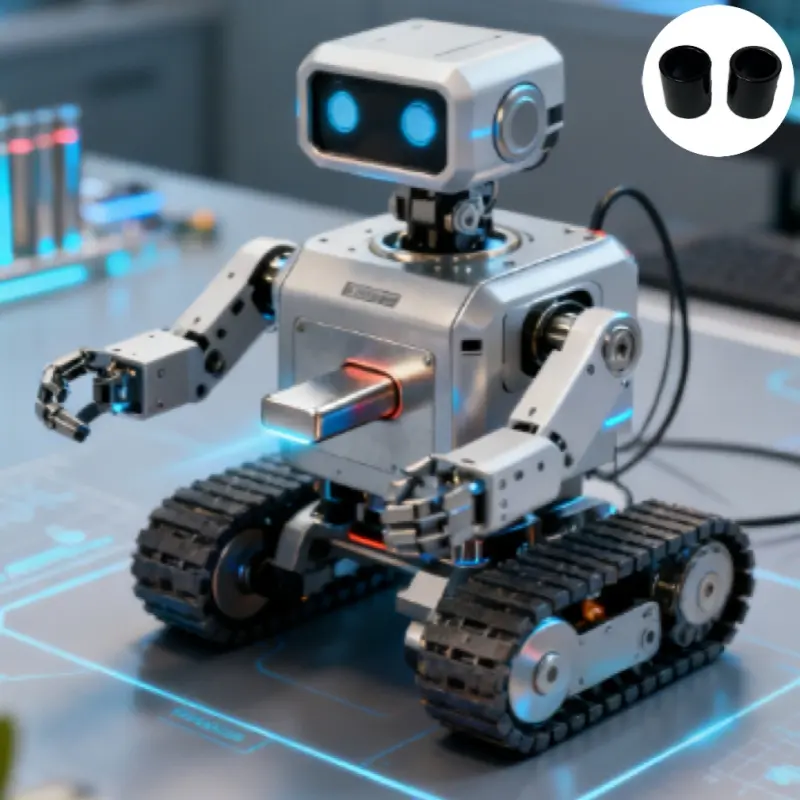
Miniature voice coil motors (VCMs) for camera autofocusing and haptic response systems require ultra-thin soft iron shields. These components guide magnetic fields to target micro-coils while preventing stray magnetic fields from interfering with nearby circuitry.

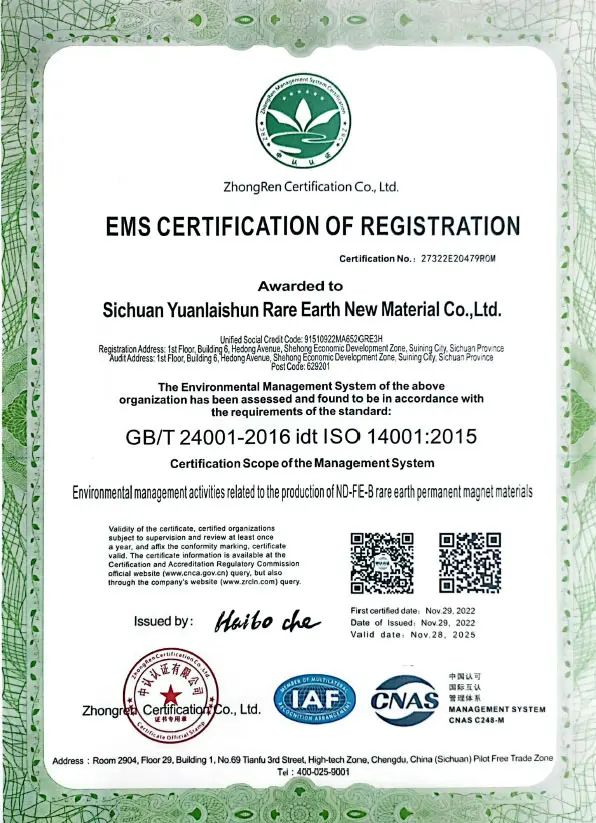
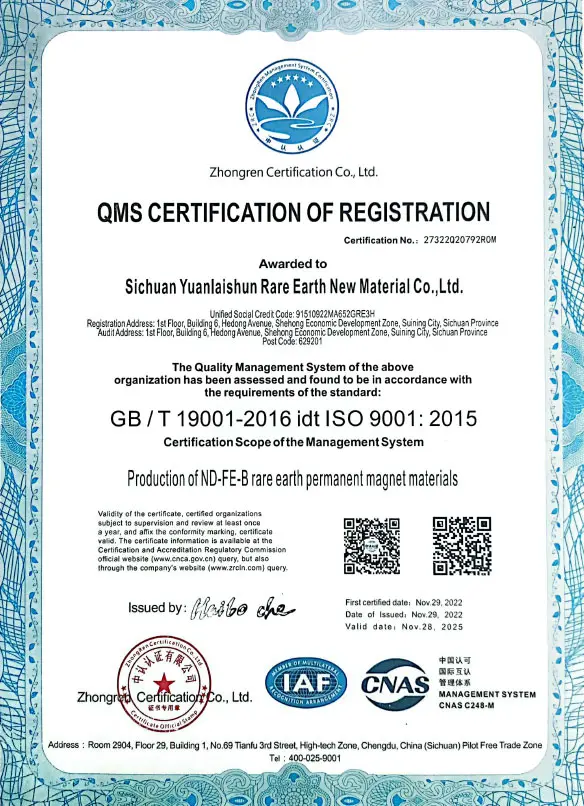
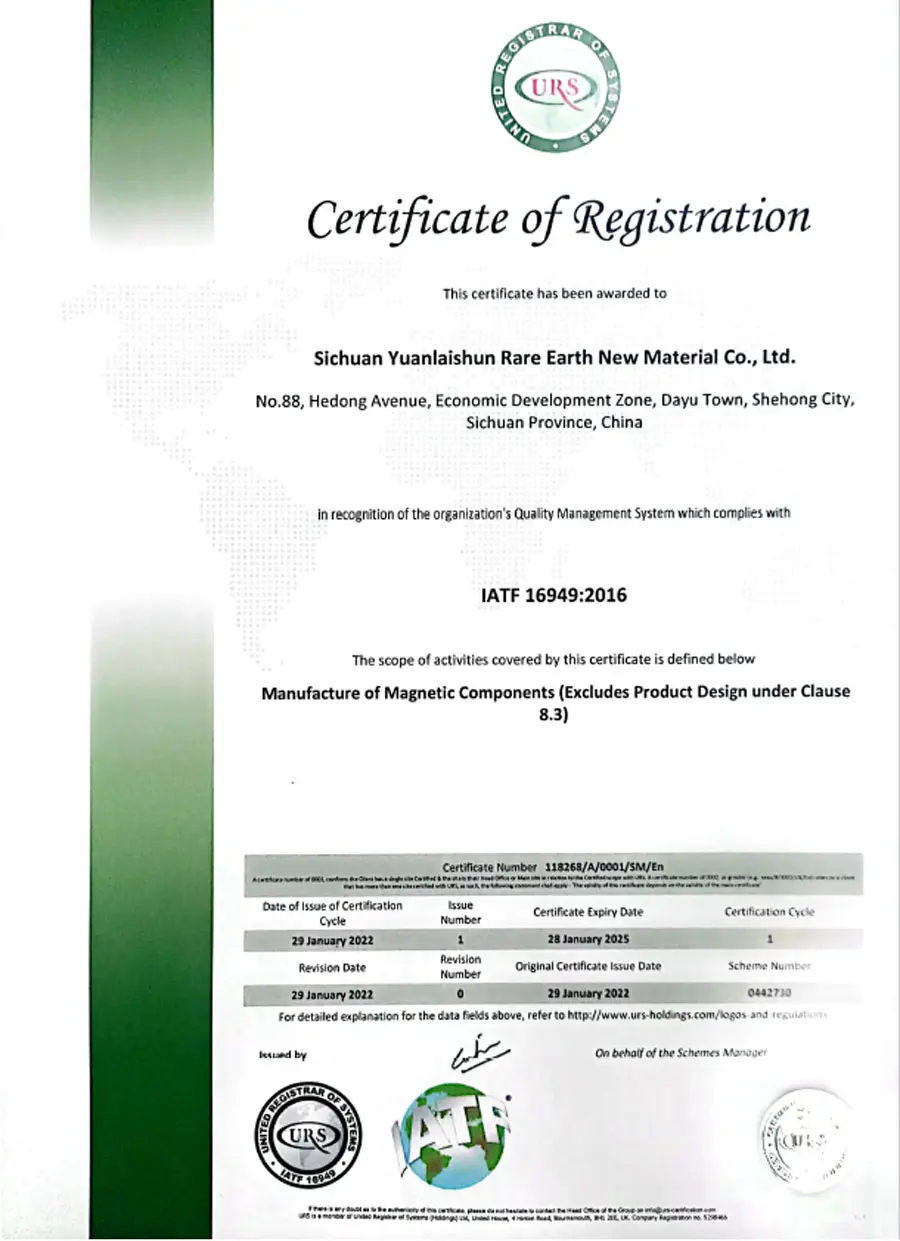
Our facilities are certified under strict international manufacturing frameworks to guarantee repeatability and component trust.
Comprehensive quality management system covering R&D, manufacturing, and shipping.
Strict production lines qualification to deliver automotive-grade permanent magnet assemblies.
Ensuring environmentally conscious production, safe chemical disposal, and worker safety.
Expert answers to the technical questions engineers and global buyers ask during sourcing cycles.
Review our extended product portfolio engineered for high-durability applications in demanding operating environments.
 Laysun Magnetics