Explore our leading catalog of engineered rare earth NdFeB permanent magnets, custom-designed for heavy industrial and high-tech consumer applications.
A technical whitepaper examining the intersection of magneto-optical behavior, glass-metal interface mechanics, and high-coercivity rare earth magnetic arrays.
While conventional oxide glass is inherently diamagnetic due to its fully paired electronic shells, the introduction of transition metal ions (such as $Fe^{2+}$, $Fe^{3+}$, $Mn^{2+}$) or rare-earth lanthanide ions (such as Terbium $Tb^{3+}$, Dysprosium $Dy^{3+}$, Praseodymium $Pr^{3+}$) fundamentally alters the glass matrix. These dopants impart substantial paramagnetic and magneto-optical properties, most notably the Faraday rotation effect. The Faraday effect describes the rotation of the polarization plane of light when propagating through glass in the direction of an applied static magnetic field.
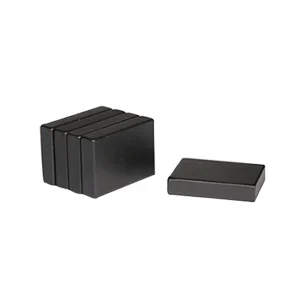
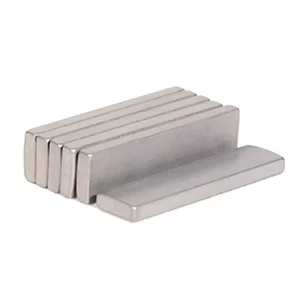
To activate and control this phenomenon, high-intensity external magnetic field generators are critical. Sintered Neodymium-Iron-Boron (NdFeB) magnets, engineered with maximum energy products ($BH_{max}$) exceeding 50 MGOe, provide the uniform flux density required to achieve measurable Faraday rotation angles in magneto-optical isolators, optical modulators, and industrial current sensors. Under severe ambient temperatures, these NdFeB blocks must maintain high thermal stability to ensure consistent polarization control across the glass substrate.
From smart infrastructure to consumer electronics, exploring where magnetic fields and glass technologies converge.
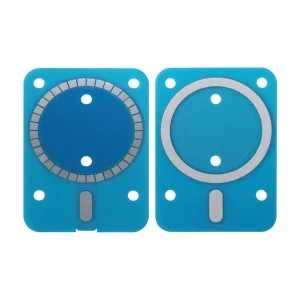
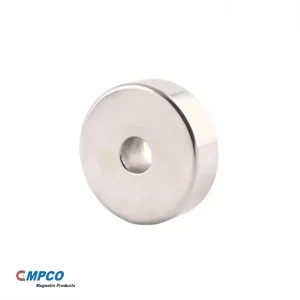
The integration of high-flux ring magnets (like the MagSafe format) behind structural mobile back-cover glass requires extreme precision. The magnetic flux must pass cleanly through the glass cover without causing mechanical stress, micro-fracturing, or optical distortion.
Advanced driver-assistance systems (ADAS) utilize magneto-resistive sensors aligned through protective windshield glass. Precision NdFeB magnets generate the stable biasing fields required for position tracking, rain detection, and integrated heads-up display (HUD) alignments.
Industrial smart window panels utilize magnetic coupling drives. In hermetically sealed glass panes, powerful NdFeB magnets transmit rotational or linear motion across the glass boundary without breaking the seal, driving integrated blinds or electrochromic controls.
As technology advances toward hyper-connectivity, the integration of magnets and structural glass demands new material engineering standards. The technical roadmap for Zhejiang Laysun Magnetics focus on:
By designing and testing these materials at our state-of-the-art facilities, we ensure our global partners remain ahead of the curve as they transition to next-generation electronic and energy systems.
A National High-Tech Leader in Manufacturing Rare Earth Permanent Magnets Since 1999
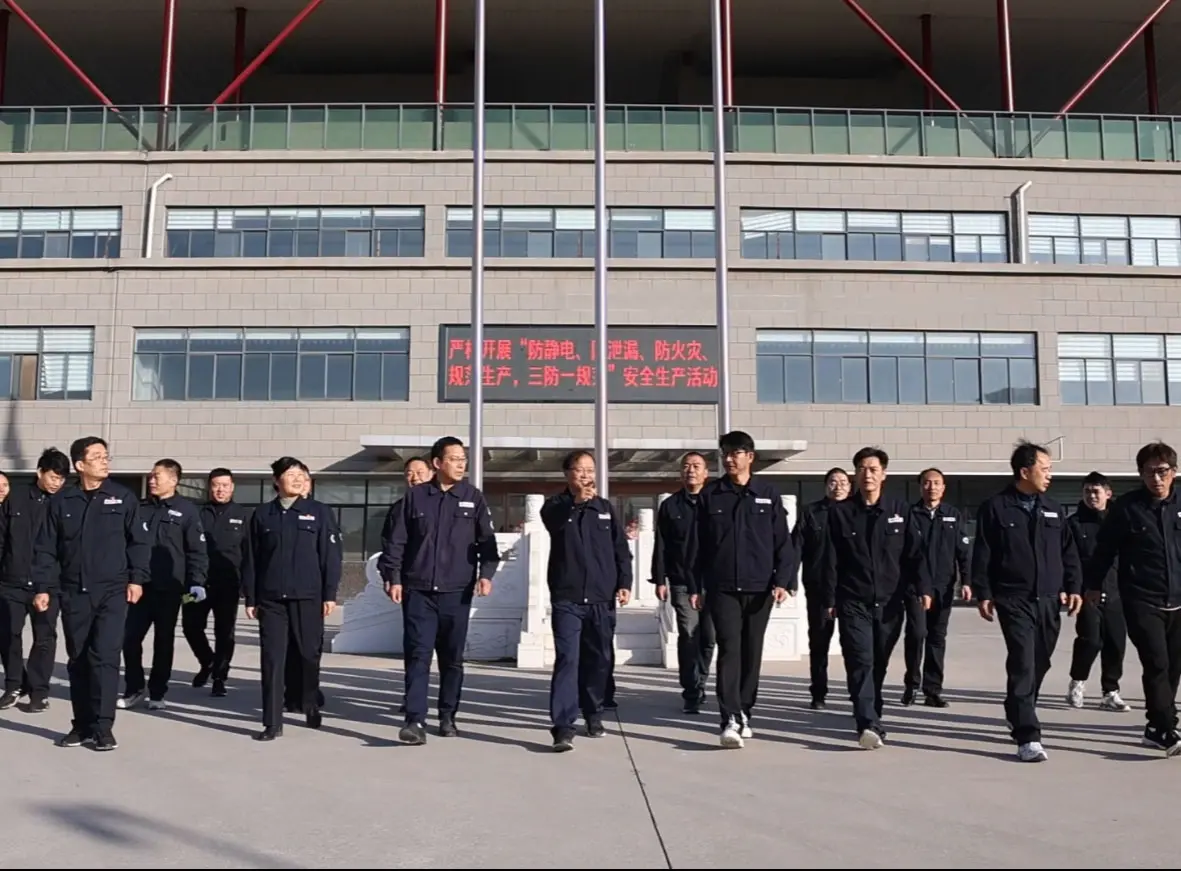
Founded at the turn of the millennium, Zhejiang Laysun Magnetics Ltd. has rapidly evolved from a visionary startup to an industry pacesetter. Our state-of-the-art factory, sprawling across 100,000 square meters in the vibrant city of Suining, Sichuan, is the heart of our operations. Here, our dedicated team of 300 employees works tirelessly to produce an impressive 5,000 tons of rare earth magnets annually.
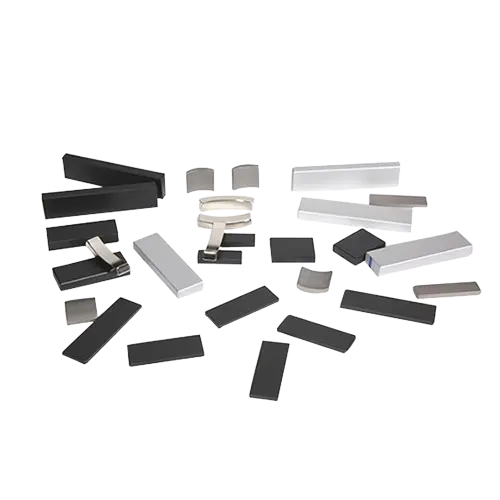
Specializing in the development, research, production, and sales of high-performance rare earth NdFeB magnets, we cater to a diverse range of applications. Our magnets are integral to various sectors, including electric vehicles, industrial motors, computers, and consumer electronics, enhancing the efficiency and performance of these technologies.
Why sourcing NdFeB magnet systems from Zhejiang Laysun Magnetics ensures operational stability and competitive advantage.
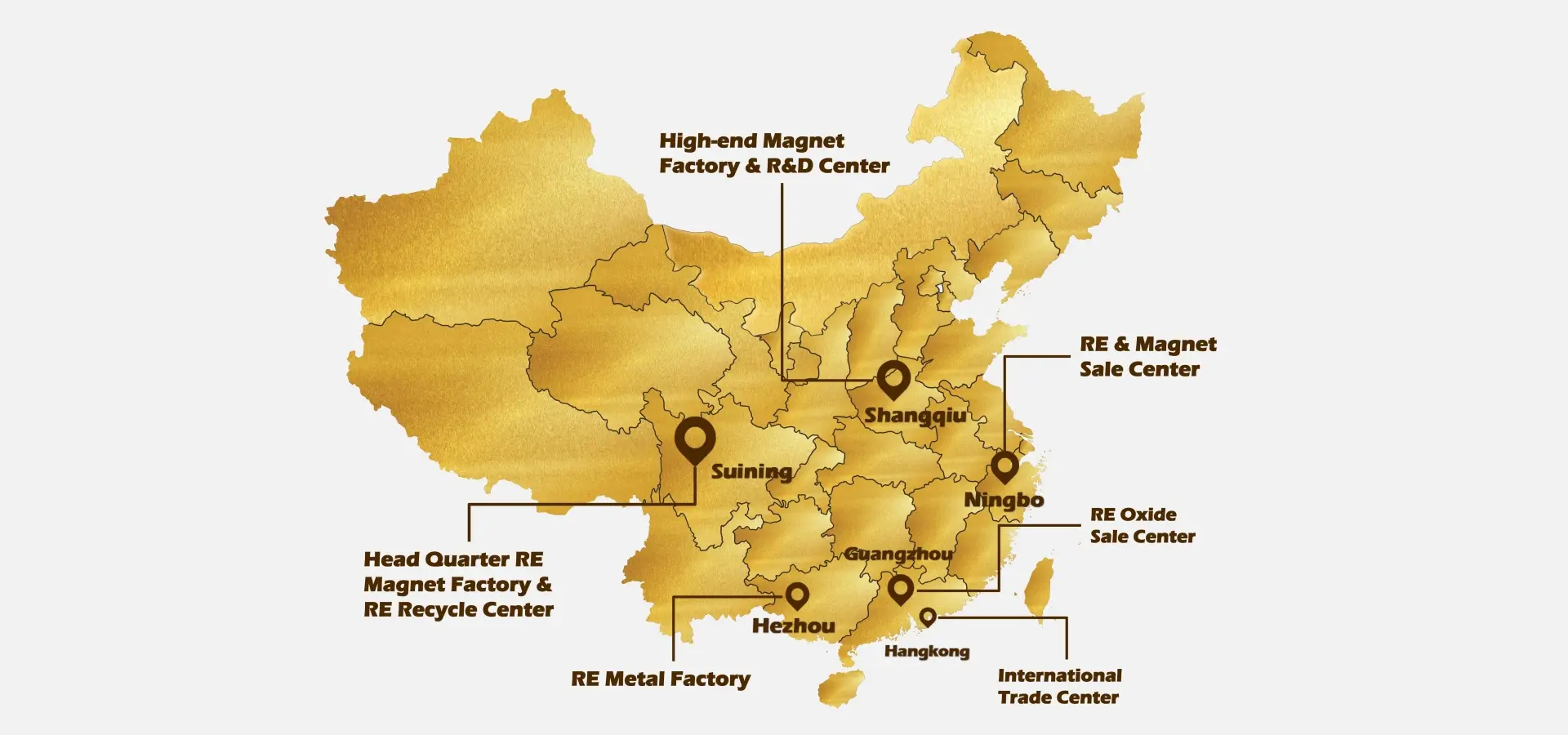
China is home to the world's largest rare earth reserves and processing infrastructure. Located close to key raw material suppliers, Laysun Magnetics maintains consistent access to essential elements like Neodymium, Dysprosium, and Terbium, shielding clients from supply disruptions.
From raw materials and melting/sintering to final machining, plating, and testing, all stages are managed in-house. This closed-loop process speeds up production and ensures precise control over magnetic specifications.
With offices in Hangzhou and production bases in Sichuan, we leverage China's comprehensive infrastructure network. This allows for fast domestic freight and efficient international shipping from key maritime ports.
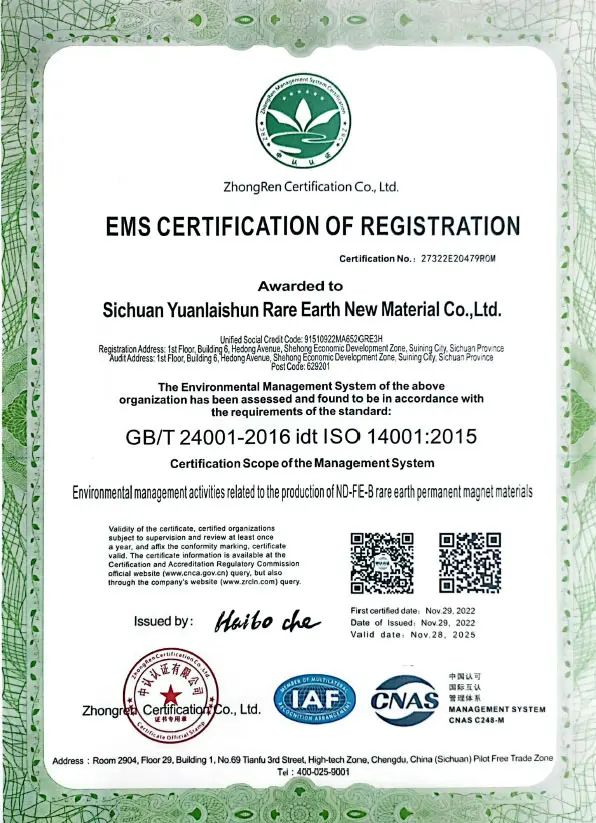
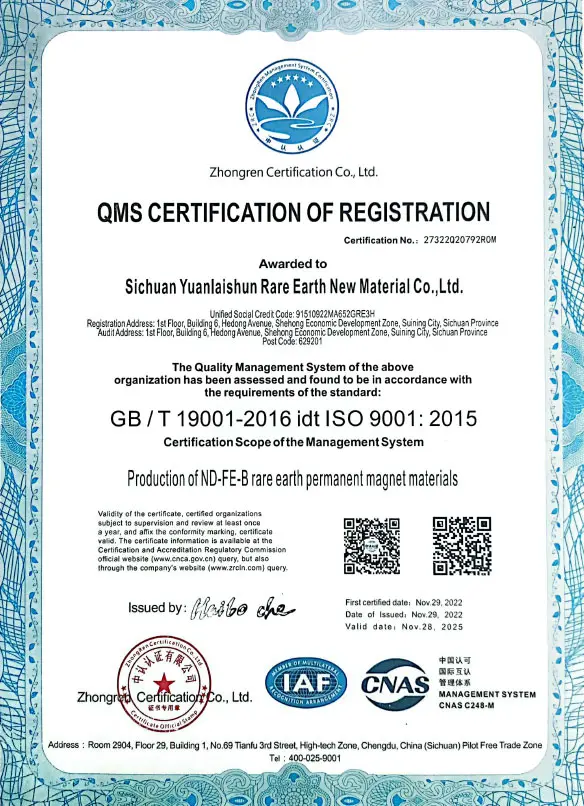
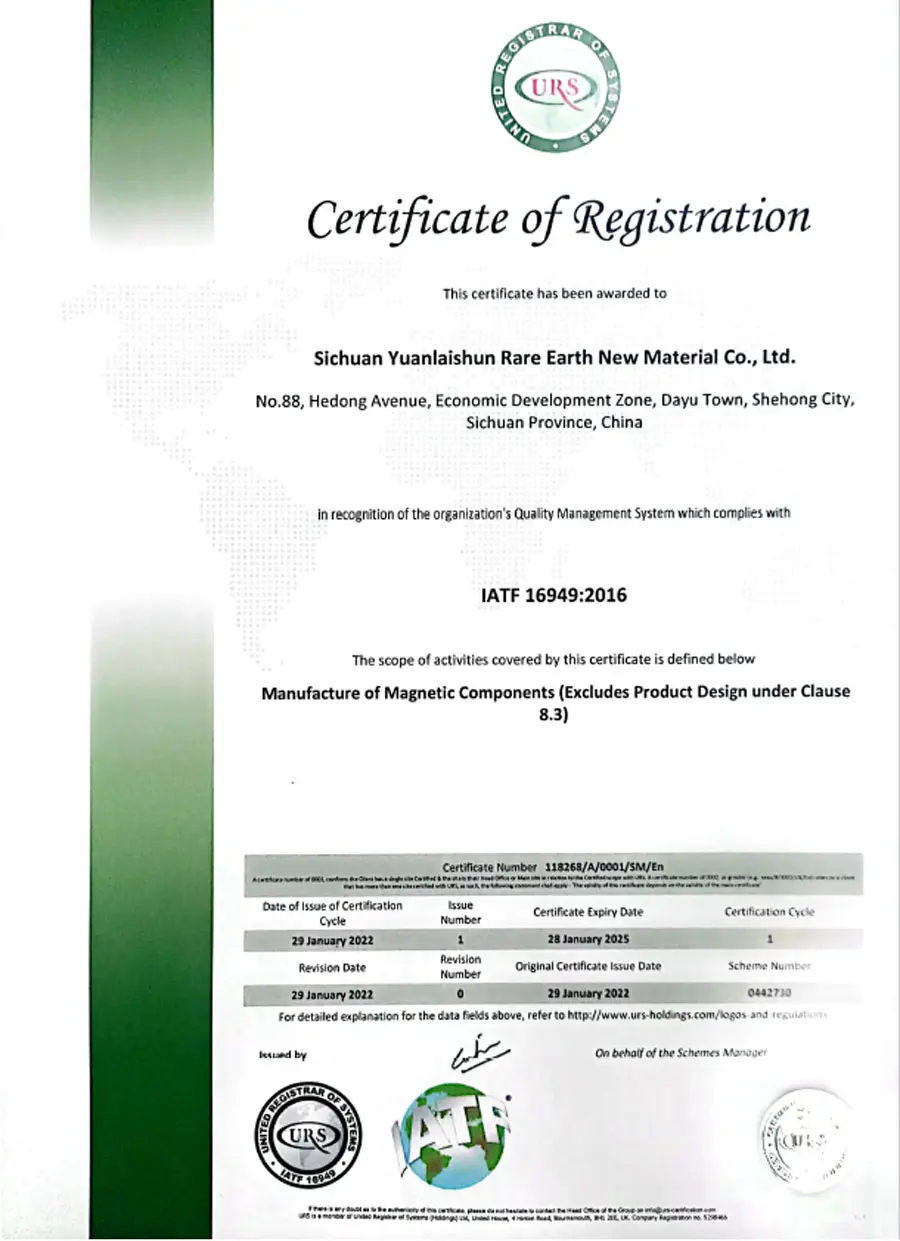
As a global exporter, we align our processes with the industry's highest international standards. We hold certifications for API 6D, API 607, CE, ISO9001, ISO14001, and ISO18001, ensuring our magnets perform reliably under demanding operation conditions.
Every production batch undergoes strict quality control, including demagnetization curve analysis, salt spray corrosion testing, and magnetic flux mapping. Our commitment to these standards ensures our products perform reliably in mission-critical applications.
Expert insights on integrating high-performance permanent magnets with advanced glass components.
Pure silicate glass is diamagnetic, meaning it repels magnetic fields. However, glass can be made paramagnetic by doping it with transition metal or rare-earth oxides (such as terbium oxide). This modification is key for magneto-optical devices like Faraday isolators, where strong external NdFeB fields rotate the polarization plane of light passing through the glass.
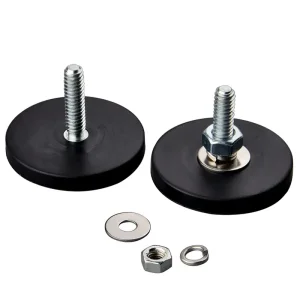
Rubber-coated NdFeB magnets are ideal for mounting on glass. The rubber layer increases friction to prevent slipping while acting as a cushion. This buffers impact force, protecting brittle glass panels from cracking or scratching.
We provide multiple coating options, including nickel-copper-nickel (Ni-Cu-Ni), epoxy, zinc, and custom rubber/plastic layers. For harsh environments, our multi-layer nickel coatings provide excellent salt spray protection, preventing moisture intrusion and subsequent oxidation.
Standard NdFeB magnets operate up to 80°C. For higher-temperature environments, we manufacture high-coercivity grades (such as EH, AH, or UH series) that maintain their magnetic properties up to 220°C. For temperatures beyond this, Samarium Cobalt (SmCo) magnets are recommended.
Our ISO9001 certified QA processes include automatic optical inspection, flux testing, and thermal testing. This strict protocol ensures our annual output of 5,000 tons maintains a low defect rate and remains highly consistent from batch to batch.
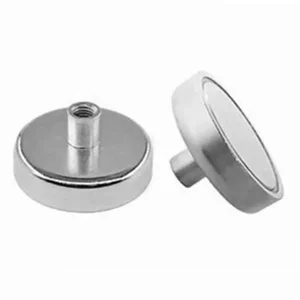
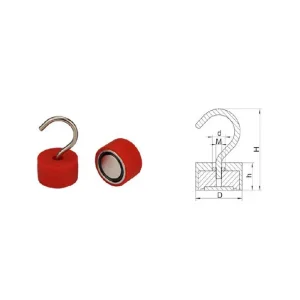
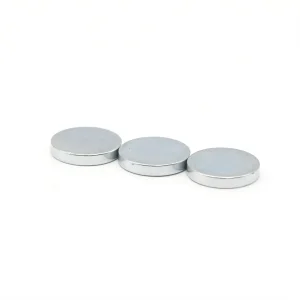
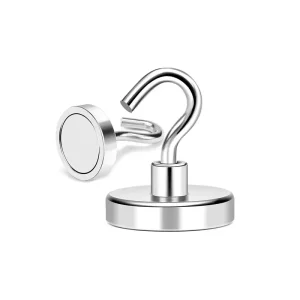
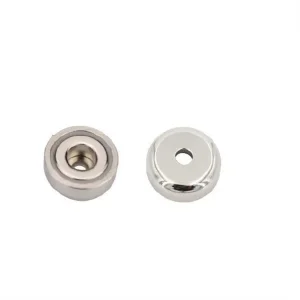
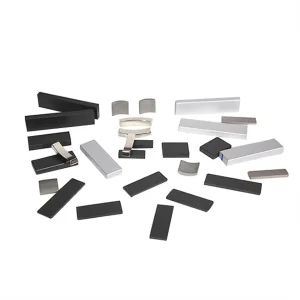
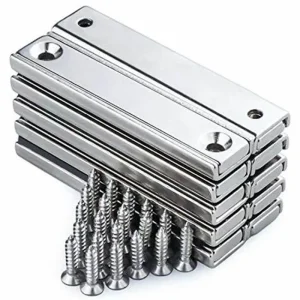
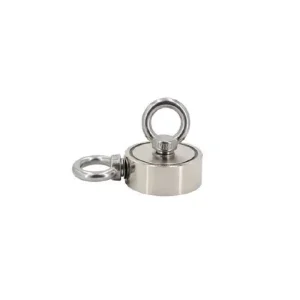
Explore our specialized range of rare earth magnet assemblies, including hook magnets, pot assemblies, and MagSafe ring components.
 Laysun Magnetics