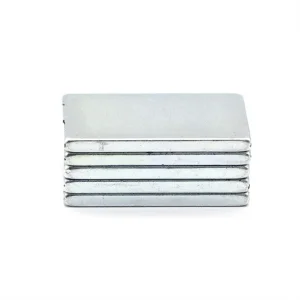
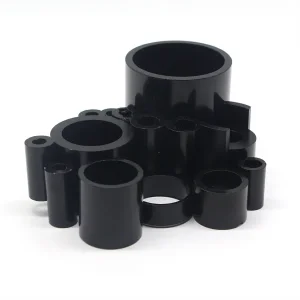
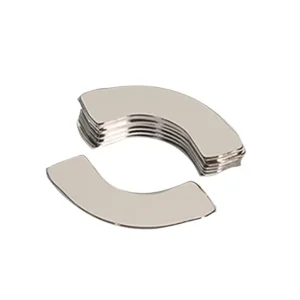
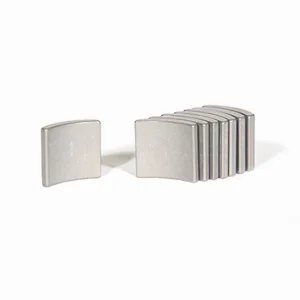
Explore our high-performance NdFeB assemblies engineered for maximum magnetic flux concentration, durability, and reliable mechanical interface holding capacity.
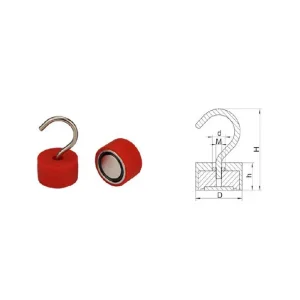
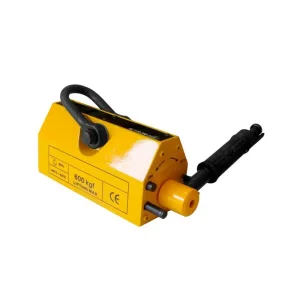
In modern manufacturing, warehousing, and robotic assembly, the demand for high-density, reliable magnetic clamping and manual positioning tools has seen exponential growth. Neodymium (NdFeB) magnets with handle systems represent an advanced category of magnetic workholding and extraction equipment. By housing high-performance sintered NdFeB blocks or discs inside a protective steel cup or channel—often referred to as a pot magnet or magnetic assembly—and configuring it with a robust handle, engineers can safely harness up to 1000kg of linear pull force.
This whitepaper, prepared by Zhejiang Laysun Magnetics Ltd., analyzes the metallurgical composition, flux path engineering (including the implementation of Halbach and magnetic circuit shunts), pricing matrices, global supply considerations, and technical trajectories of these high-performance components. We explore why integrating NdFeB permanent magnetic systems with structural handles has become a global standard for optimizing operational speed and ensuring structural safety in workspace environments.
"The critical variable in designing high-force magnetic handling systems is not merely the grade of the NdFeB core, but the optimization of the steel housing geometry. By redirecting flux lines that would otherwise escape into the atmosphere back down to the contact surface, we achieve holding forces up to four times greater than a bare magnet alone."
Founded in 1999, Zhejiang Laysun Magnetics Ltd. has established itself as a national high-tech leader in the rare earth magnet industry. From our state-of-the-art 100,000 m² factory in Suining, Sichuan, we employ a dedicated workforce of 300+ engineers, researchers, and manufacturing specialists. Our annual production capacity has surpassed 5,000 tons of high-performance NdFeB magnets, serving critical industrial sectors globally including electric vehicles (EV), industrial automation, wind turbines, acoustic systems, and precision consumer electronics.
The magnetic core of a neodymium handle magnet is typically composed of sintered Nd2Fe14B (Neodymium-Iron-Boron) alloy. Bare neodymium magnets exhibit high remanence (Br) and coercive force (Hc), but are structurally brittle and sensitive to high temperatures and corrosion. To convert these materials into heavy-duty lifting and holding tools, we enclose the core within a steel shell (often referred to as a cup or casing). This creates a closed magnetic circuit.
When the magnet is placed on a thick, clean ferromagnetic plate (such as low-carbon structural steel), the magnetic flux loops from the north pole of the magnet, through the steel housing, into the target plate, and back to the south pole. This configuration minimizes the air gap and maximizes the magnetic flux density within the contact zone, drastically increasing the vertical breakaway force (pull force) while preventing lateral shifting.
| Magnet Grade | Remanence (Br) | Coercivity (Hcb) | Max Energy Product (BH max) | Max Operating Temp |
|---|---|---|---|---|
| N35 | 1.17 - 1.21 T | ≥ 868 kA/m | 263 - 287 kJ/m³ | 80 °C (176 °F) |
| N45 | 1.32 - 1.38 T | ≥ 876 kA/m | 342 - 366 kJ/m³ | 80 °C (176 °F) |
| N52 | 1.42 - 1.47 T | ≥ 876 kA/m | 398 - 422 kJ/m³ | 80 °C (176 °F) |
| N35SH | 1.17 - 1.21 T | ≥ 876 kA/m | 263 - 287 kJ/m³ | 150 °C (302 °F) |
| N42UH | 1.28 - 1.32 T | ≥ 876 kA/m | 318 - 342 kJ/m³ | 180 °C (356 °F) |
B2B sourcing agents looking for "cheap neodymium magnet with handle" products must look beyond unit price to calculate Total Cost of Ownership (TCO). Sintered NdFeB prices are structurally tied to raw material markets, specifically the cost of Neodymium (Nd), Praseodymium (Pr), and Dysprosium (Dy) metals.
At Laysun Magnetics, we leverage our integrated supply chain in China and massive 5,000-ton annual output to secure bulk materials at discounted rates, passing those savings directly to our partners. By choosing the correct pot magnet configuration (such as Style A, B, or C), companies can significantly reduce their component costs without sacrificing raw magnetic strength. For example, Style B pot magnets (with threaded necks) can be directly integrated with custom handle bars, reducing assembly costs at the end-user facility.
From heavy manufacturing to micro-robotics, neodymium magnets with handles are utilized to improve ergonomic flow, secure workpieces during cutting and welding, and support quick assembly tasks. The protective casings and handle designs are tailored to the environment:

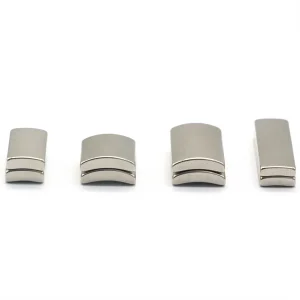
End-of-arm tooling (EOAT) utilizing custom NdFeB magnet segments to pick, place, and transport structural sheet metal parts rapidly.

High-temperature NdFeB blocks and segments optimized for drive train motors, EPS (Electric Power Steering), and cabin sensor feedback loops.

Miniature ring and disc magnets optimized for MagSafe systems, haptic feedback modules, and voice coil motors (VCM) in camera systems.
The next generation of neodymium handle magnets is focused on two vectors: environmental sustainability and high-temperature stability.
First, Zhejiang Laysun Magnetics is pioneering grain boundary diffusion (GBD) technology. GBD allows us to concentrate heavy rare earth metals (Dysprosium and Terbium) only at the grain boundaries rather than throughout the entire magnet lattice. This dramatically reduces the cost and dependence on volatile raw materials while enabling operation at temperatures up to 220°C (N45EH and N38AH grades).
Second, advanced composite coatings are replacing traditional electroplating. In wet or chemically corrosive environments, standard Ni-Cu-Ni (Nickel-Copper-Nickel) can degrade. Laysun’s research division has developed specialized rubber-coated magnet lines and dual-stage epoxy coatings that protect the internal sintered block from oxidation while protecting sensitive surface materials from scratches.
For international sourcing partners, regulatory compliance is paramount. All Laysun Magnetics products adhere to strict international production standards. Our facilities are certified under ISO 9001 for quality management, ISO 14001 for environmental protection, and ISO 45001 / OHSAS 18001 for occupational health and safety. Furthermore, to support industrial valve, piping, and chemical equipment markets, we provide API 6D and API 607 certified solutions when required.
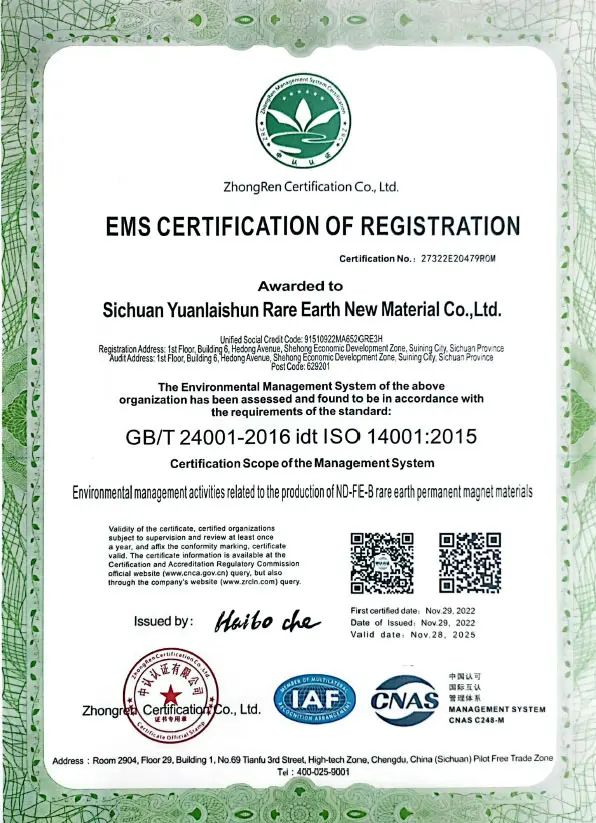 ISO 9001 Quality Certified
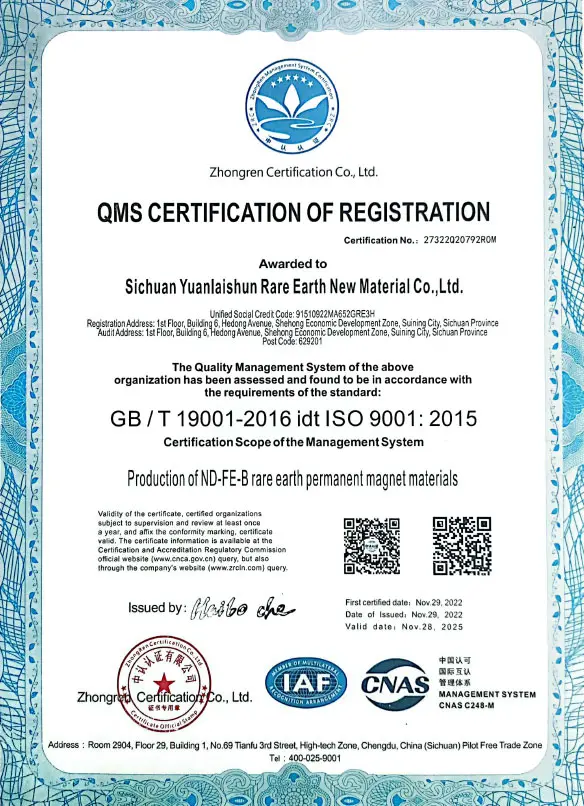 ISO 14001 Compliant
 CE Safety Directives
Expert insights on selecting, installing, and maintaining industrial-grade Neodymium handle magnets.
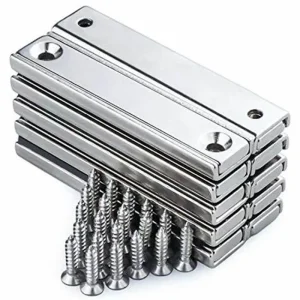
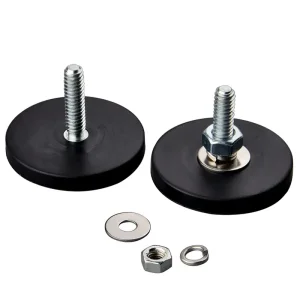
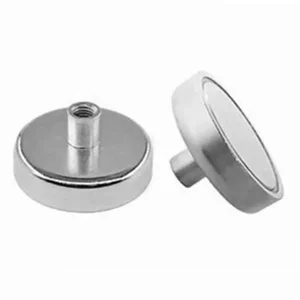
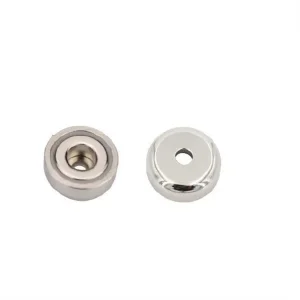
Style A features an internal countersunk screw hole, enabling direct face-mounting. Style B uses a threaded neck (male stud or female collar) designed to hold external eyebolts or custom handles. Style C features a flat configuration with a threaded stud extending from the center rear of the steel housing. Selecting the right style depends on how the handle will be mounted to the magnet structure.
Vertical breakaway force is the pull required to lift a magnet straight up off a clean plate. Shear force is the lateral sliding force. In general, the shear force limit of a magnet assembly on a smooth steel surface is approximately 15% to 20% of its rated vertical holding capacity. Incorporating a rubber coating can increase the friction coefficient and improve shear resistance.
Standard Neodymium magnets (N grade) lose their permanent magnetism if heated past 80°C. For industrial environments, we alloy the magnets with Dysprosium, producing M, H, SH, UH, EH, or AH grades, which can survive temperatures up to 220°C.
If the metal plate is too thin, it becomes magnetically saturated. The excess magnetic field lines bypass the steel plate and escape, reducing the holding power of the magnet assembly. Full rated capacity requires target steel plates to be at least 10mm to 20mm thick.
We offer thick elastomer (rubber) coatings, polyimide sprays, and triple Ni-Cu-Ni coatings topped with water-resistant black epoxy. Rubber and epoxy provide the best barrier protection against saltwater and chemical exposure.
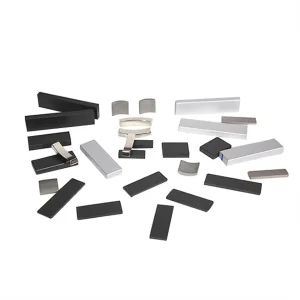
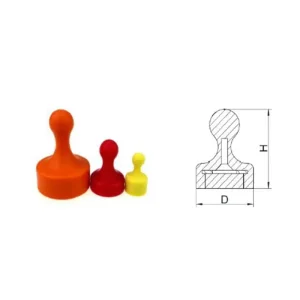
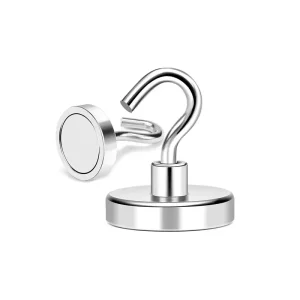
Select the optimal configuration to match your interface requirements. Standard structures include rubber-coated series, threaded studs, and customizable hooks.
 Laysun Magnetics