 Laysun Magnetics
Whitepaper: Industrial Optimization of 316L Stainless Steel Magnetic Properties
When engineering high-integrity components for harsh environments, 316L stainless steel is widely selected due to its superb corrosion resistance, biocompatibility, and nominal lack of magnetic response. However, procurement managers, mechanical engineers, and QA specialists often face critical issues where 316L shows unexpected magnetic behavior. Understanding the core physics, metallurgical transformations, and processing impacts is essential for precise industrial applications.
True 316L (UNS S31603) exhibits a fully austenitic microstructure at annealed state, providing a relative magnetic permeability ($\mu_r$) of approximately 1.005 to 1.015. Under deformation-induced martensitic transformation (DIMT), plastic cold working destabilizes the austenite matrix, converting it into ferromagnetic α'-martensite. This increases magnetic susceptibility, which can disrupt highly sensitive instrumentation or magnet-coupling efficiency.
Theoretical Foundation: Why Austenitic 316L Acquires Magnetism
At the atomic level, the magnetic configuration of stainless steel is governed by its phase structure. While ferritic and martensitic steels are ferromagnetic, austenitic grades are paramagnetic. The addition of Nickel (10-14%), Chromium (16-18%), and Molybdenum (2-3%) in 316L is calculated using the Schaeffler Diagram to stabilize the face-centered cubic (FCC) crystal lattice. Despite this structural stabilization, mechanical deformation (such as drawing, stamping, bending, or machining) stretches the FCC lattice, facilitating a phase transition into the body-centered tetragonal (BCT) martensitic phase.
The degree of magnetic susceptibility after processing is governed by the alloy's chemical formula, specifically characterized by the $Md_{30}$ temperature, defined as the temperature at which a true strain of 0.30 produces 50% martensite:
For procurement, buying from a factory that controls the chemical margins within ASTM specifications ensures that elements like Nickel and Nitrogen are kept at the higher limit, minimizing magnetic risks during custom fabrication.
Technological Solutions: Restoring Paramagnetism in 316L
When parts must remain completely non-magnetic, industrial solution annealing is mandatory. The process involves heating the fabricated 316L components to temperatures between 1,040°C and 1,120°C (1,900°F - 2,050°F), followed by rapid quenching in water or air. This high-temperature exposure dissolves any deformation-induced martensite back into a homogeneous austenitic structure and prevents chromium carbide precipitation, safeguarding corrosion resistance.
| Processing State | Microstructure Phase | Relative Magnetic Permeability ($\mu_r$) | Corrosion Behavior |
|---|---|---|---|
| Fully Solution Annealed | Austenite (FCC) | 1.003 - 1.008 | Maximum Resistance |
| Mild Cold Worked (10%) | Austenite + trace α'-Martensite | 1.020 - 1.080 | Slightly Reduced |
| Severe Cold Worked (>30%) | Austenite + significant Martensite | 1.100 - 1.800+ | Reduced (Anisotropic Corrosion) |
| Sensitized at 650°C | Austenite + Chromium Carbides | 1.008 - 1.015 | Intergranular attack susceptibility |
Global Industrial Status & Macro Sourcing Challenges
As advanced automation and electrification expand worldwide, components utilizing magnetic coupling assemblies—such as cleanroom linear actuators, hermetic canned motor pumps, and MRI scanner frameworks—require strict magnetic shielding. The supply of 316L componentry with certified, verifiable magnetic profiles is highly centralized. Engineers must navigate the global supply chain, verifying that steel mills provide both raw material Mill Test Reports (MTR) and post-processing magnetism certification.
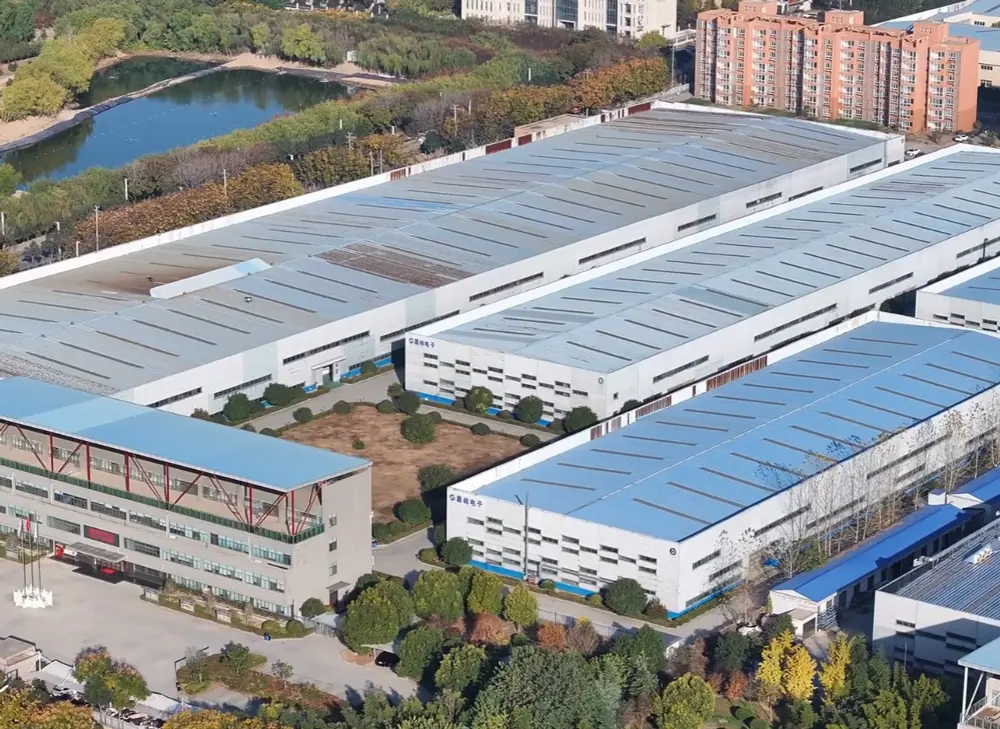
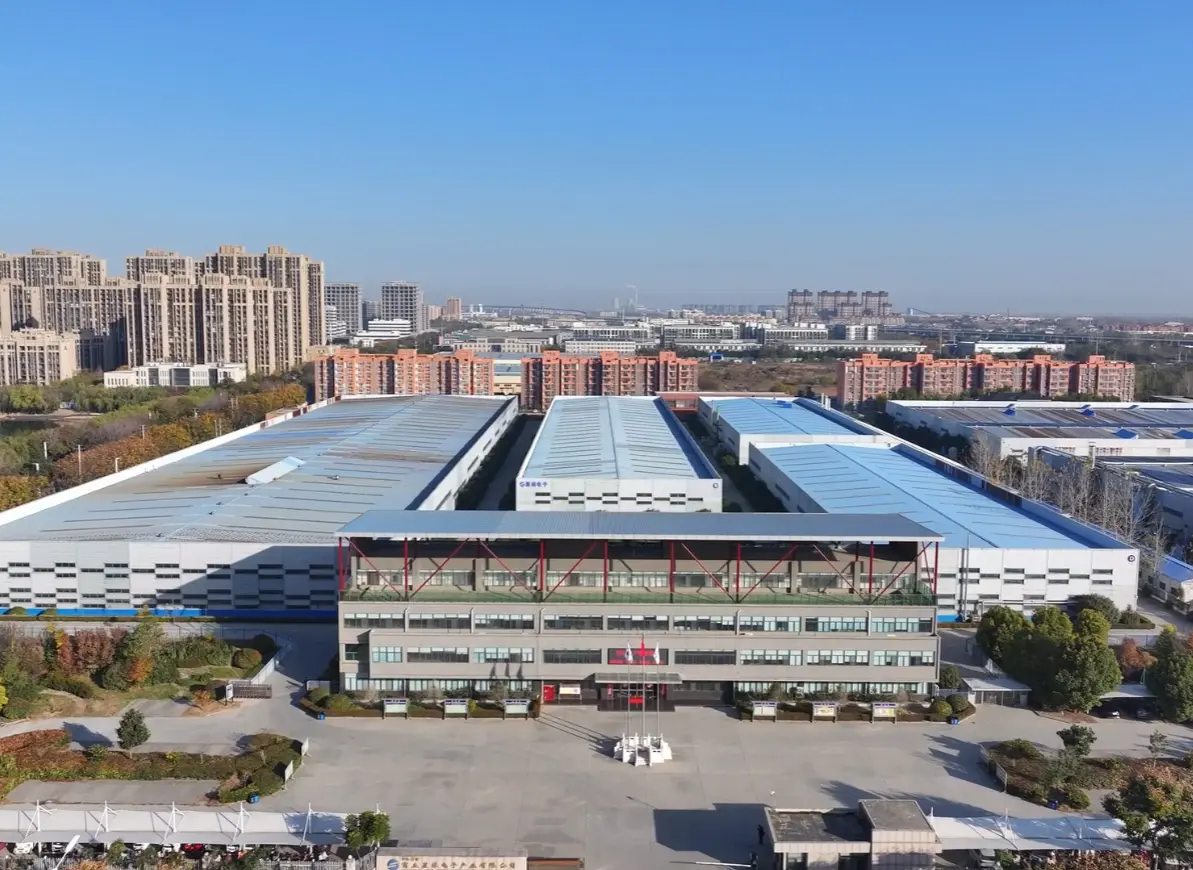
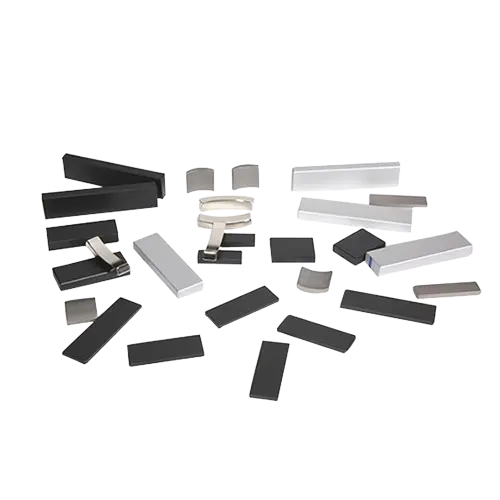
At Zhejiang Laysun Magnetics, we manage this interplay. As a national high-tech manufacturing leader producing over 5,000 tons of rare earth magnets annually, we supply not only the permanent NdFeB magnet structures but also design the integration interfaces where magnetics encounter passive metal alloys like 316L. This holistic approach eliminates galvanic corrosion risks and maintains precise magnetic vector alignments.
Localized Applications and Compliance Standards
Ensuring compliance is crucial for localized integration. Depending on the target industry, different standards regulate the allowable magnetic signature:
- Medical Sector (MRI & Implants): Systems operating within strong static fields must conform to ASTM F138 (Standard Specification for Wrought 18Cr-14Ni-2.5Mo Stainless Steel Bar and Wire for Surgical Implants) where relative magnetic permeability is strictly constrained to prevent tissue heating or implant displacement.
- Petrochemical & Marine (NACE MR0175/ISO 15156): Under high-pressure sour gas scenarios, local stress and deformation-induced martensite in 316L can accelerate stress corrosion cracking (SCC). Our factory testing verifies that the magnetic properties remain under threshold levels to confirm low-martensite content.
- Precision Defense & Space Systems: Electromagnetic compatibility (EMC) regulations require components to have zero stray dipole fields. We use advanced fluxgate sensors to document remnant field levels before export.
Technological Roadmap & Next-Generation Integrations
The convergence of magnetic systems and metallurgical substrates points to several long-term development vectors:
- High-Entropy Soft Magnetic Composites: Replacing traditional 316L in dynamic magnetic field boundaries with nitrogen-atomized high-entropy alloys that maintain high electrical resistivity and low coercivity.
- Smart Magnetic Coatings: Electrodepositing specialized nickel-cobalt or copper-phosphorus barrier layers over machined 316L interfaces to shield residual localized magnetic poles.
- Sustainable Circular Manufacturing: Implementing direct metal laser sintering (3D printing) using recycled 316L powder, paired with inline induction annealing, ensuring zero magnetic variance in complex internal-channel manifolds.