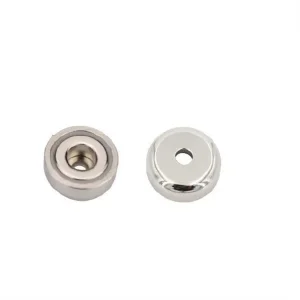
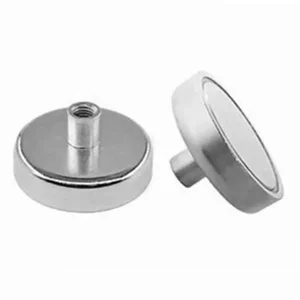
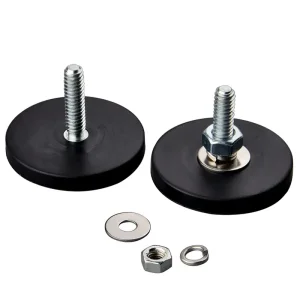
Explore our premium grade NdFeB magnetic assemblies engineered to withstand rigorous Dutch industrial conditions.
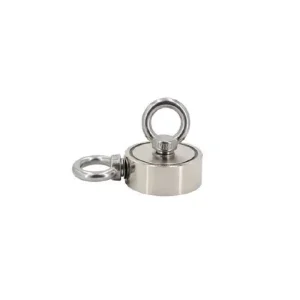
The Netherlands stands as a pioneering hub for high-technology engineering, offshore wind energy infrastructure, and precision agriculture. In environments where automation, micro-positioning, and extreme environmental durability are required, high-precision magnet assemblies play an indispensable role. Whether integrated within the lithography systems of the Eindhoven Brainport region or deployed in North Sea turbine generators, custom NdFeB and SmCo magnet assemblies must meet rigorous mechanical, magnetic, and environmental criteria.
Our engineering services cater specifically to the dominant industrial clusters within the Dutch economy:
In humid coastal and offshore Dutch environments, raw NdFeB is highly susceptible to oxidation. Our factory executes comprehensive corrosion protection schemes tailored to specific application classes:
| Coating Type | Salt Spray Test Resistance (SST) | Operating Temperature Limits | Key Recommended Dutch Sectors |
|---|---|---|---|
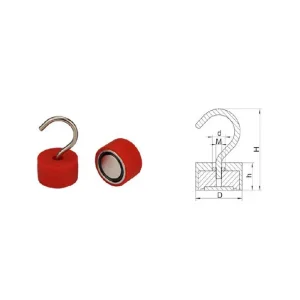
| Rubber Coated (TPE/EPDM) | > 500 Hours | -40°C to 120°C | Offshore Wind, Marine Salvage, Coastal Structural Mounts |
| Nickel-Copper-Nickel (Ni-Cu-Ni) | 48 - 96 Hours | Up to 220°C (Based on Grade) | Electronics, Indoor Industrial Actuators, VCM Motors |
| Epoxy Coating (Black/Grey) | 120 - 240 Hours | Up to 150°C | Automotive Sensors, AGV Sensors, Agricultural Automations |
| Everlube / Teflon Coating | > 240 Hours | Up to 250°C | High-Vacuum Semiconductor Chambers, Chemical Pumps |
Founded in 1999, Zhejiang Laysun Magnetics Ltd. has built a reputable position in the global rare earth market as a national high-tech enterprise. Our operation bridges the gap between raw material refining and high-level assembly fabrication:
Our production workflow manages rare-earth alloy formulation, vacuum induction melting, jet milling, and magnetic-field alignment pressing, ensuring full batch traceability.
Using electromagnetic 3D simulation tools, we design Halbach arrays, sensor target rings, and steel-jacketed pot magnets to maximize flux density and mechanical shear strength.
Our plants operate under ISO 9001 and ISO 14001, executing 100% magnetic flux sorting, dimensional laser scanning, and rigorous environmental stress tests.
We are fully compliant with RoHS and REACH regulations, facilitating seamless import clearance, logistics handling, and immediate integration into European manufacturing production lines.
High-reliability Neodymium and Rare-Earth assemblies optimized for European industrial systems, material handling, and consumer electronics.
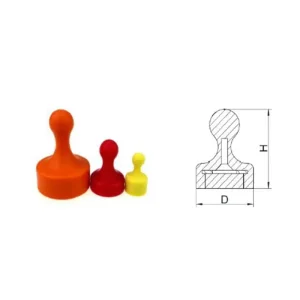
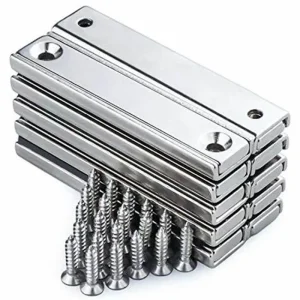
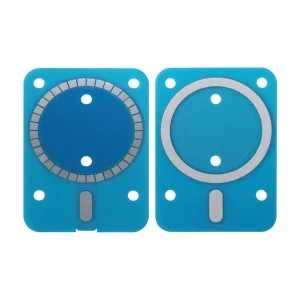
Creating functional magnet assemblies involves much more than simple magnetization. The process requires precise metal machining, clean adhesive bonding, and rigorous post-assembly verification to prevent structural collapse under dynamic operational loads.
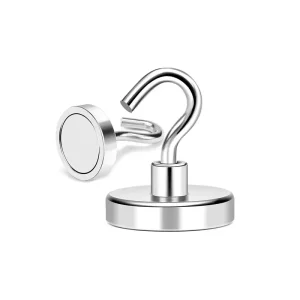
By enclosing a neodymium block or ring inside a ferromagnetic housing (such as low-carbon steel), the magnetic flux loops are redirected. This architectural configuration (known as a magnetic circuit or Pot Magnet system) significantly increases holding forces on contact surfaces. Our engineering teams perform Finite Element Analysis (FEA) to determine optimal casing thicknesses and prevent saturation in the steel return path.
In high-vibration applications, mechanical interference fits are coupled with structural anaerobic adhesives or high-grade epoxies. For marine or oil-and-gas applications in the Dutch energy sector, laser welding, mechanical potting, and specialized overmolding (using high-density polyethylene or polyurethane) prevent humidity ingress and ensure consistent shear strength over decadal lifespans.
Key technical answers regarding magnet assemblies, logistics, and material performance for engineers and procurement managers.
Leverage our 25+ years of metallurgical expertise, FEA engineering capabilities, and high-volume manufacturing strength. Get in touch with our design engineers for detailed drawings, custom prototypes, and competitive price quotes.
Send Inquiry Now Laysun Magnetics