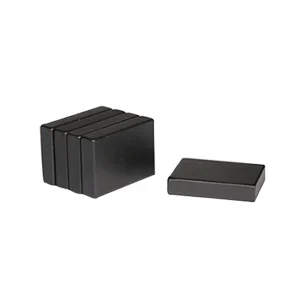
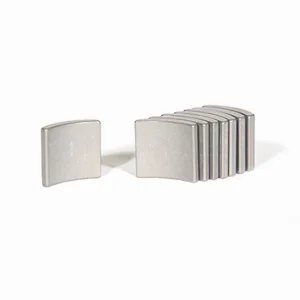
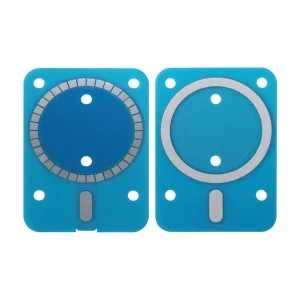
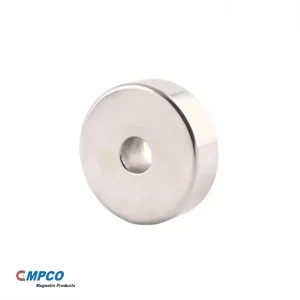
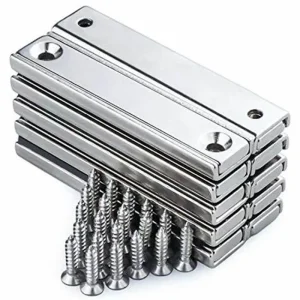
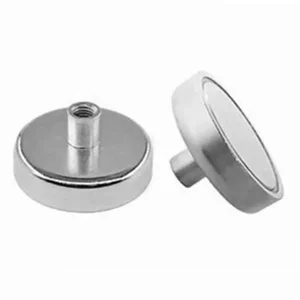
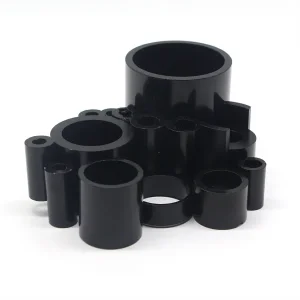
In the arena of advanced material science, the phrase “Titanium Magnetic Properties” points to a highly specialized technological sub-discipline. By nature, elemental titanium (Ti) is classified as paramagnetic. Unlike ferromagnetic metals (such as iron, cobalt, and nickel) that exhibit strong, permanent magnetic attraction, titanium exhibits a very weak magnetic susceptibility ($\chi_m \approx 1.8 \times 10^{-4}$ at room temperature). In the presence of an externally applied magnetic field, titanium is attracted, but with a force so minimal that it is virtually imperceptible under conventional industrial conditions.
However, when titanium is alloyed with ferromagnetic elements, or when used as a structural casing/doping agent for high-intensity rare-earth permanent magnets (such as Neodymium Iron Boron, or NdFeB), the mechanical and magnetic synergy becomes a cornerstone of modern aerospace, biomedical engineering, and automotive systems. Understanding the microstructural physics of titanium in magnetic fields is essential for engineering components designed for extreme, high-reliability environments.
Under standard operating conditions, titanium's crystal structures—specifically Alpha (hcp) and Beta (bcc) phases—maintain a low, temperature-independent Pauli paramagnetism. This property ensures that titanium remains non-magnetic in medical diagnostic systems like Magnetic Resonance Imaging (MRI), eliminating the risk of projectile hazards or image artifacts.
In industrial engineering, however, titanium's interaction with magnetic flux is leveraged in unique ways:
| Material Type | Magnetic Classification | Magnetic Susceptibility ($\chi_m$) / Max Product ($BH_{max}$) | Corrosion Resistance | Primary Engineering Application |
|---|---|---|---|---|
| Pure Titanium (Grade 1-4) | Paramagnetic | $+1.8 \times 10^{-4}$ | Outstanding (Oxide Passive Film) | Biomedical implants, chemical processing piping |
| Ti-6Al-4V (Grade 5) | Paramagnetic | $+1.5 \times 10^{-4}$ | Excellent | Aerospace structural frames, deep-sea exploration housings |
| Titanium-Doped NdFeB | Ferromagnetic | 35 to 52 MGOe | Moderate (Significantly improved via Ti-doping) | High-temperature industrial motors, automotive EPS systems |
| Titanium Nitride (TiN) Coated NdFeB | Ferromagnetic (Shielded) | 38 to 50 MGOe | Extreme Chemical Barrier | Medical instrumentation, marine sensors, food-grade processing |
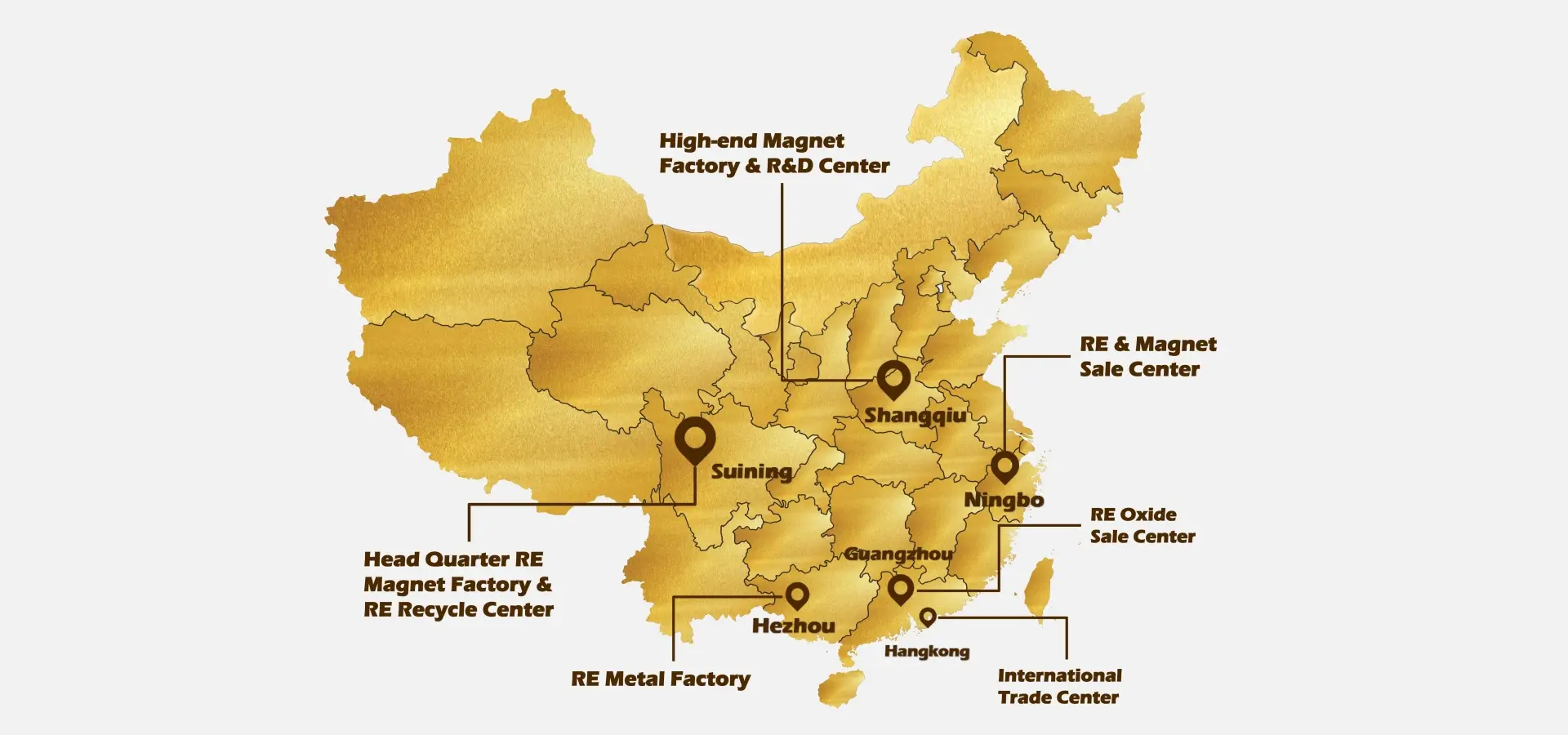
Established in 1999, Zhejiang Laysun Magnetics Ltd. has established itself as a national high-tech enterprise at the forefront of the design, manufacture, and global supply of high-performance rare earth permanent magnets. Our engineering team specializes in NdFeB sintering technologies and custom magnetic assemblies designed to perform under demanding industrial conditions.
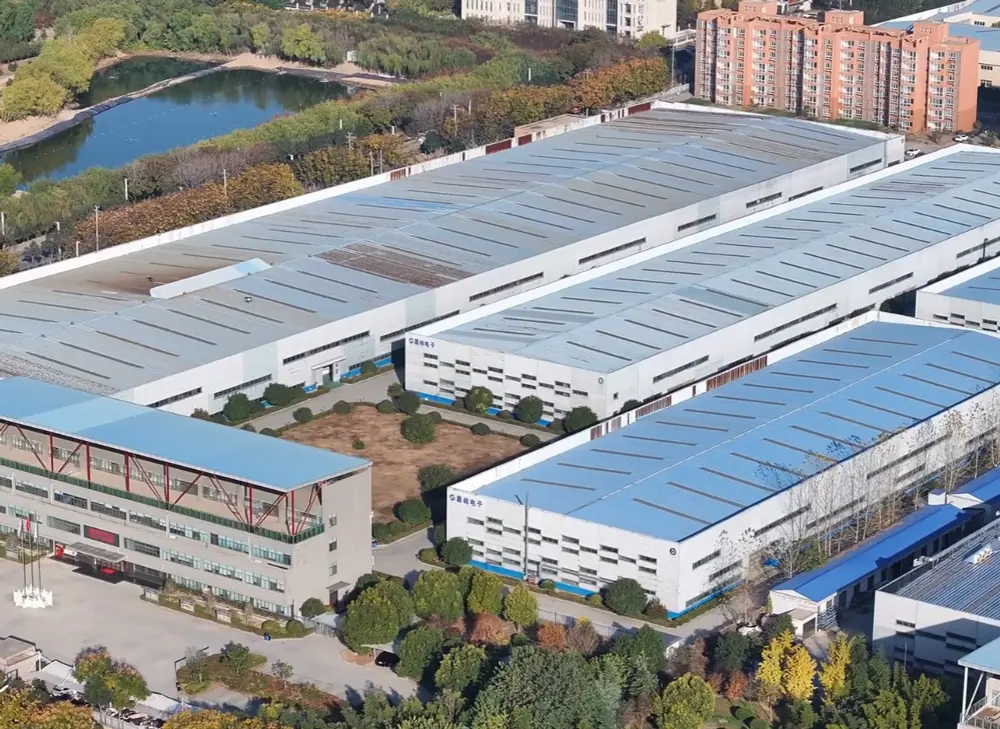
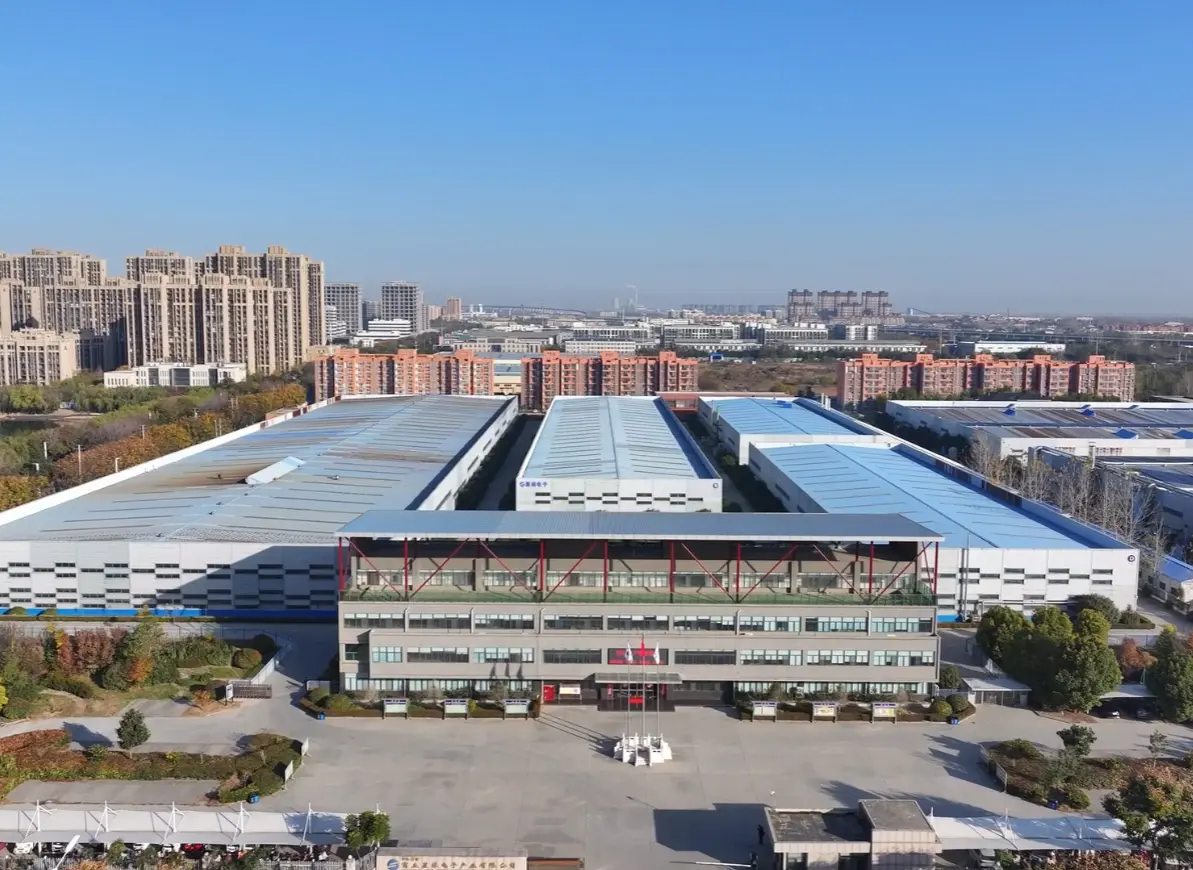
Operating from our state-of-the-art 100,000-square-meter manufacturing facility in Sichuan, we manage a vertically integrated production line—ranging from raw material vacuum induction melting to precision slicing, wire-cutting, advanced coating, and automated magnetic characterization.
Our core operating values—Quality, Credibility, Technology, and Innovation—guide our design teams to produce rare-earth systems that enhance power density, thermal stability, and efficiency for global tier-1 industrial clients.
With the rapid expansion of clean energy and electric mobility markets, the demand for high-coercivity rare earth magnets continues to increase. The integration of structural materials like titanium with NdFeB systems addresses key challenges in modern motor design, particularly the reduction of eddy-current losses at high rotational speeds.
Our current R&D focuses on Grain Boundary Diffusion (GBD) technology utilizing titanium and heavy rare-earth elements (Dysprosium/Terbium). This process significantly improves coercivity ($H_{cj}$) without reducing remanence ($B_r$), helping to optimize magnet performance in high-temperature environments.
We supply customized magnetic solutions tailored to regional regulatory and technical standards. Whether providing titanium-clad magnetic components for North American deep-sea extraction systems or high-grade NdFeB rings for European automotive EPS motors, our products are engineered to meet specific localized requirements.
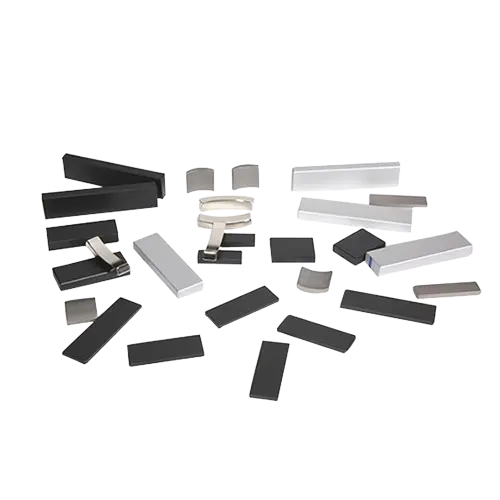
Managing magnetic circuits in demanding environments requires precise mechanical design and specialized material science. Our facility integrates precision machining with electromagnetic testing, ensuring that we deliver consistent, reliable magnetic assemblies.
By combining titanium structural sleeves with high-remanence NdFeB magnets, we create robust assemblies capable of withstanding extreme centrifugal forces in high-speed brushless motors without distorting the active magnetic field.
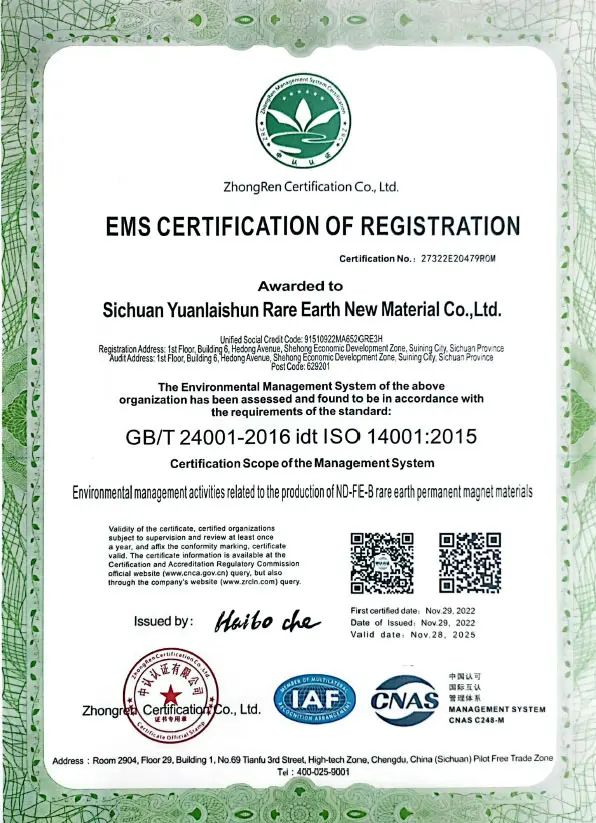
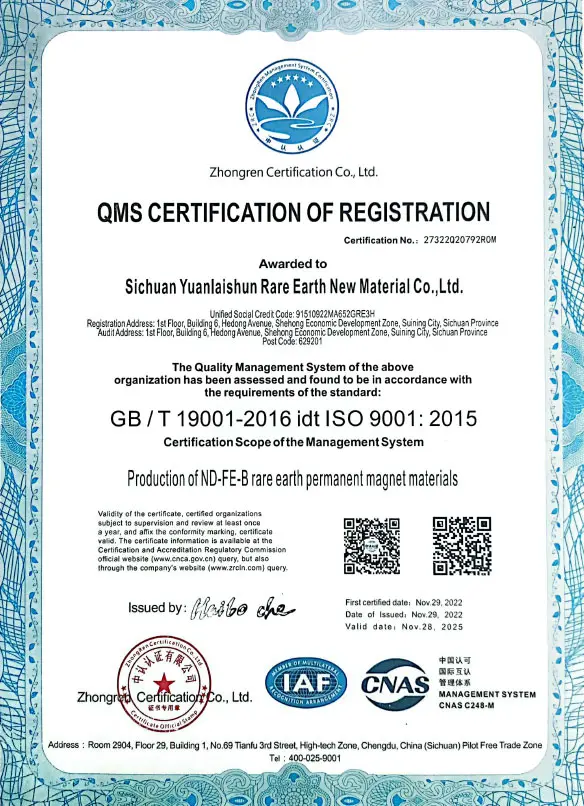
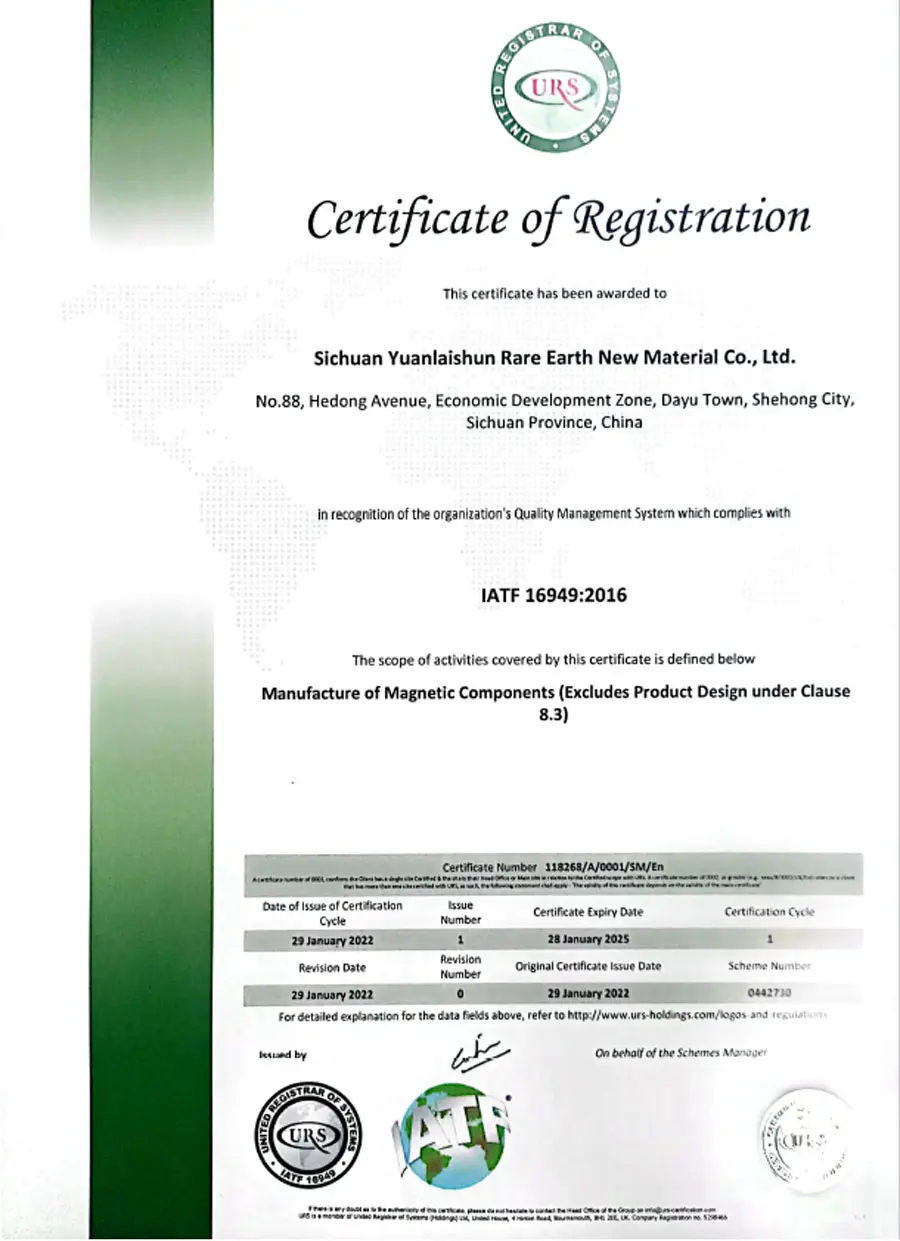
Our ISO-certified manufacturing facility implements strict quality controls at every production stage, from raw materials to final dimensional inspection and surface treatment checking.
Our rare-earth materials and assemblies are manufactured in compliance with international quality systems. We maintain comprehensive certifications to meet the requirements of demanding global supply chains.
Certified Systems:
 Laysun Magnetics