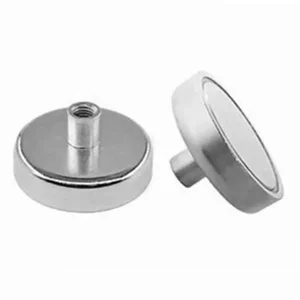
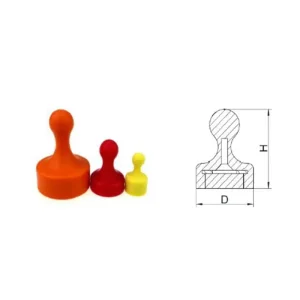
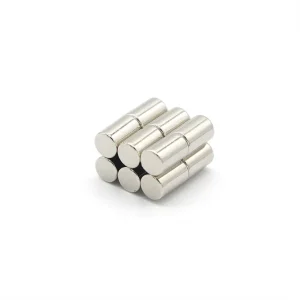
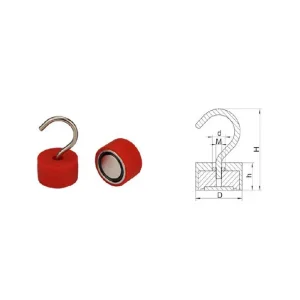
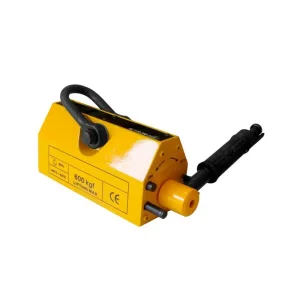
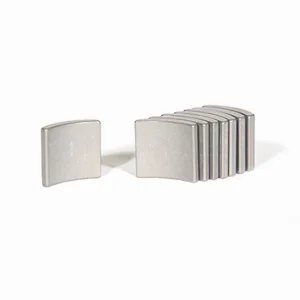
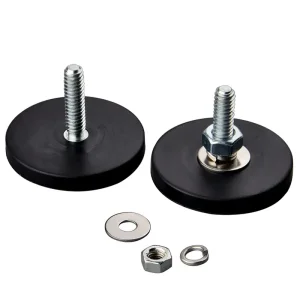
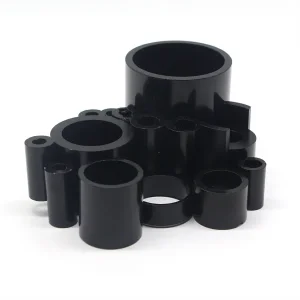
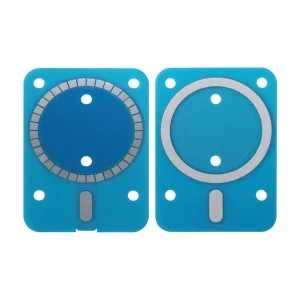
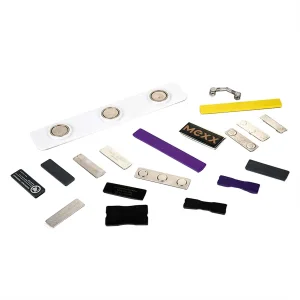
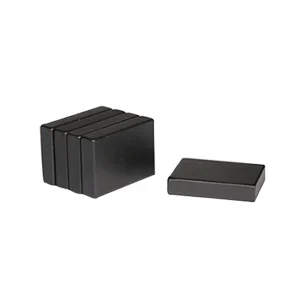
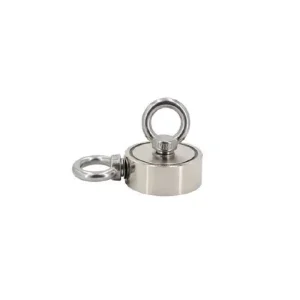
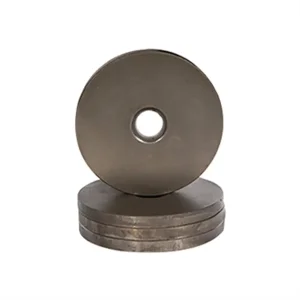
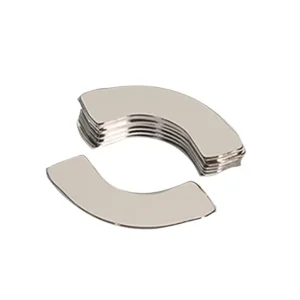
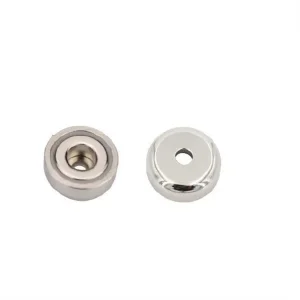
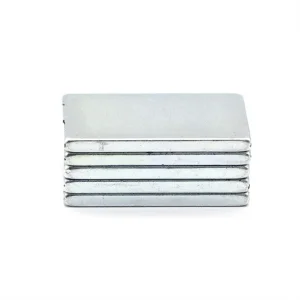
Explore our foundational range of NdFeB, custom assemblies, pot magnets, and specialized magnetic lifters engineered for ultimate hold and precision performance.
A comprehensive examination of physical metrics, chemical configurations, and design factors for high-performance rare-earth materials.
Modern industrial applications require a granular understanding of different types of magnetic properties. Magnetism is categorized based on the behavior of electron spins and domains in response to external fields. In the industrial rare-earth sector, we focus primarily on ferromagnetism and its engineered manifestations—specifically in sintered Neodymium-Iron-Boron (NdFeB).
Engineers evaluate magnetic materials using four key parameters derived from the magnetic hysteresis ($B$-$H$) loop: Remanence ($B_r$), Coercivity ($H_c$), Intrinsic Coercivity ($H_{cj}$), and Maximum Energy Product ($(BH)_{max}$). When custom designing components, optimizing one property often requires trade-offs in others, especially at elevated operational temperatures.
At Zhejiang Laysun Magnetics Ltd., we utilize custom-formulated alloys to strike the exact balance needed for specific applications, whether maximizing flux density in electric vehicle traction motors or optimizing stability in high-frequency sensors.
Measured in Tesla (T) or Gauss (G), Remanence represents the residual magnetic flux density left in the magnet after the magnetizing field is removed. Highly critical for applications requiring strong, stable magnetic fields in tight spaces, such as thin-profile smartphone rings.
Indicates a magnet's resistance to demagnetization from external fields or thermal loads. Sintered NdFeB magnets are classified into temperature grades (N, M, H, SH, UH, EH, AH) based on this property, with AH grades operating up to 240°C.
Represented in Mega-Gauss-Oersteds (MGOe) or kJ/m³, this is the peak energy density that a magnetic material can supply. It directly correlates with the physical volume of magnet required: higher (BH)max allows for extreme miniaturization.
The rate at which magnetic properties decrease as temperature rises. Custom alloying using Dysprosium (Dy) or Terbium (Tb) through grain boundary diffusion (GBD) minimizes thermal degradation, securing reliability in automotive steering gearboxes.
Analyzing global supply patterns, green-energy initiatives, and the changing demands of industrial buyers.
The global demand for high-performance magnets is experiencing unprecedented growth. This shift is driven by the transition to electric vehicles (EVs), advancements in industrial automation, robotics, and the modernization of renewable energy grids. A modern EV motor, for example, requires several kilograms of highly optimized sintered NdFeB magnets with high intrinsic coercivity to withstand the severe thermal stresses of regenerative braking.
For global procurement departments, securing reliable, high-purity rare-earth magnetic solutions goes beyond finding a low unit cost. Today's sourcing decisions focus on: Supply Chain Transparency, Dimensional Consistency, and Corrosion Protection. Because neodymium magnets are highly susceptible to oxidation, selecting the proper coating (such as Ni-Cu-Ni, epoxy, Zn, or heavy-duty rubber encapsulations) is critical to the lifespan of the end-product.
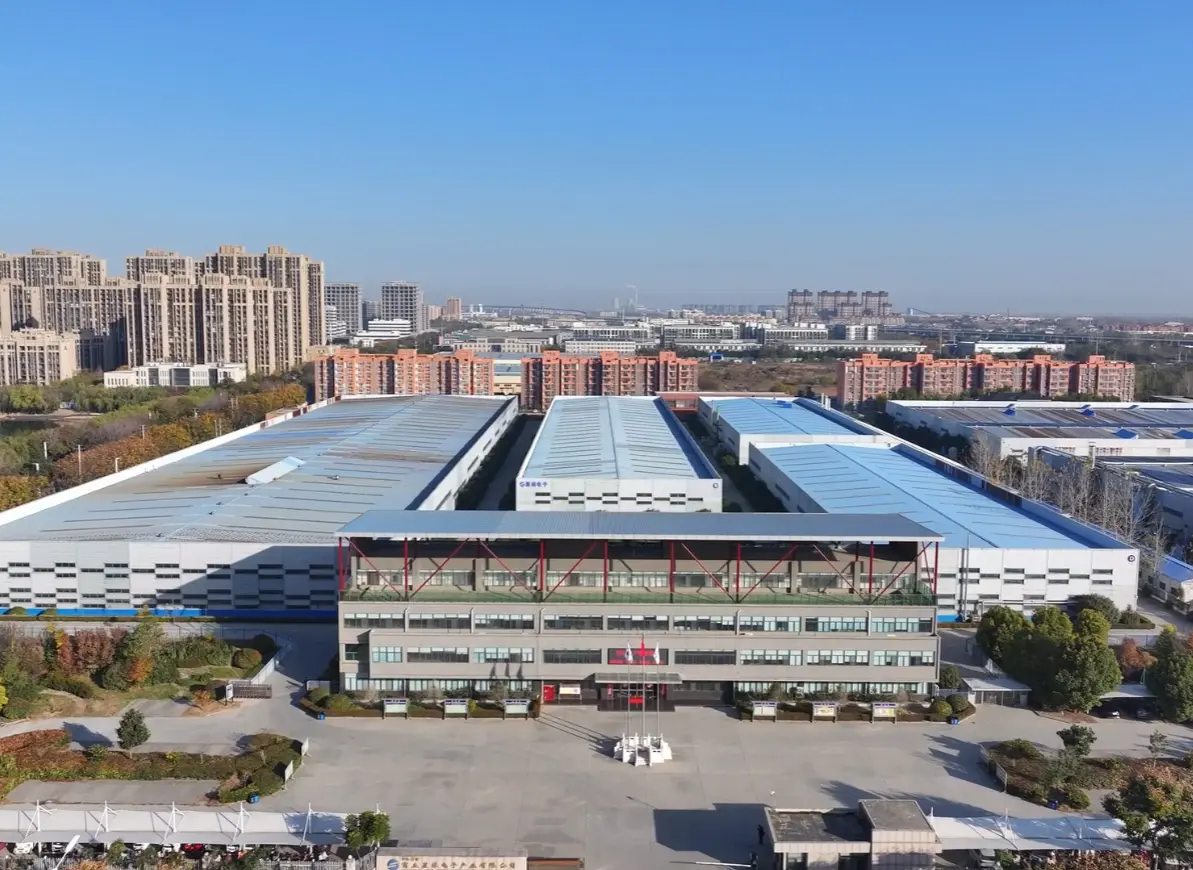
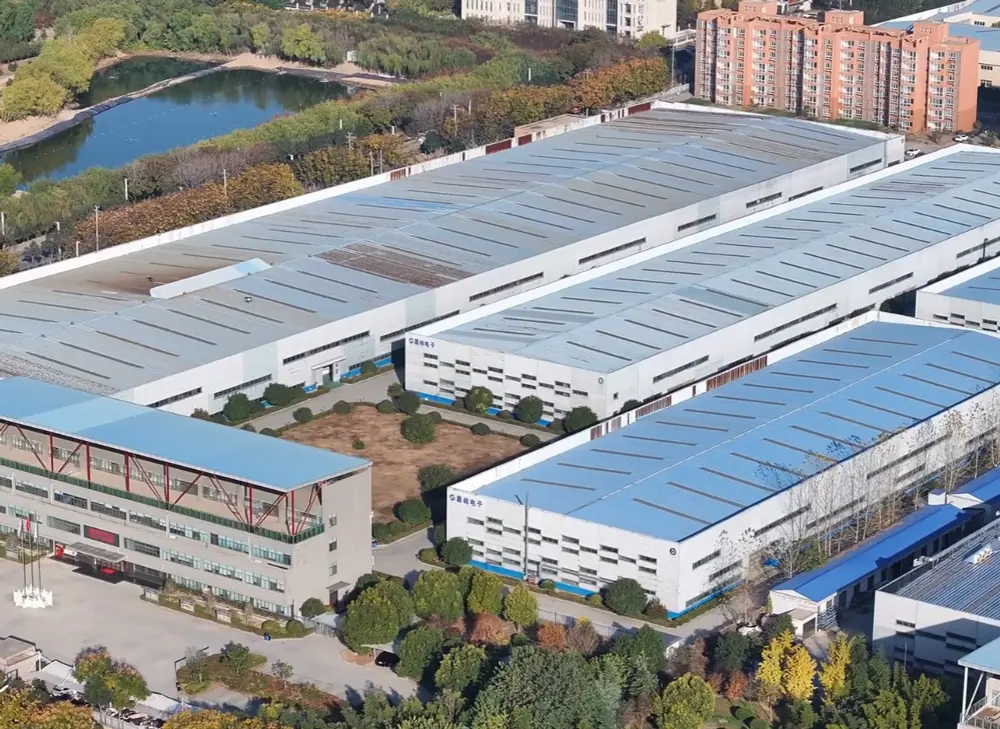
Inside Zhejiang Laysun Magnetics Ltd.: Where 25+ years of rare-earth engineering meets modern smart manufacturing.
Founded in 1999, Zhejiang Laysun Magnetics Ltd. has evolved from a pioneering regional manufacturer into a national high-tech leader in the rare-earth permanent magnet industry. Our manufacturing headquarters, spanning a state-of-the-art 100,000 square meter facility in Suining, Sichuan, represents the integration of industry experience with Industry 4.0 technology.
By using automated vacuum induction melting, close-looped hydrogen decrepitation, and jet milling, we control the particle distribution of the NdFeB alloy at a microscopic level. Our annual output capacity of 5,000 tons of high-grade neodymium magnets ensures that we can handle large-scale global contracts without compromising quality or lead times.
Our commitment to tech innovation includes advanced Grain Boundary Diffusion (GBD) technology, which significantly increases intrinsic coercivity ($H_{cj}$) while reducing the need for costly heavy rare earth elements like Dysprosium. This approach translates to more stable pricing and better mechanical performance for our clients.
How customized magnetic structures enable modern technologies, from micro-scale consumer products to heavy industrial equipment.
Joint servo motors require highly precise, lightweight NdFeB ring magnets with multi-pole magnetization to ensure smooth torque profiles and high angular resolution.

High-efficiency outrunner brushless motors require optimized magnetic performance to minimize weight, maximize torque density, and prolong battery life.

Sintered blocks designed for drive motors must exhibit exceptional thermal stability at temperatures over 180°C, high coercivity, and high corrosion resistance.

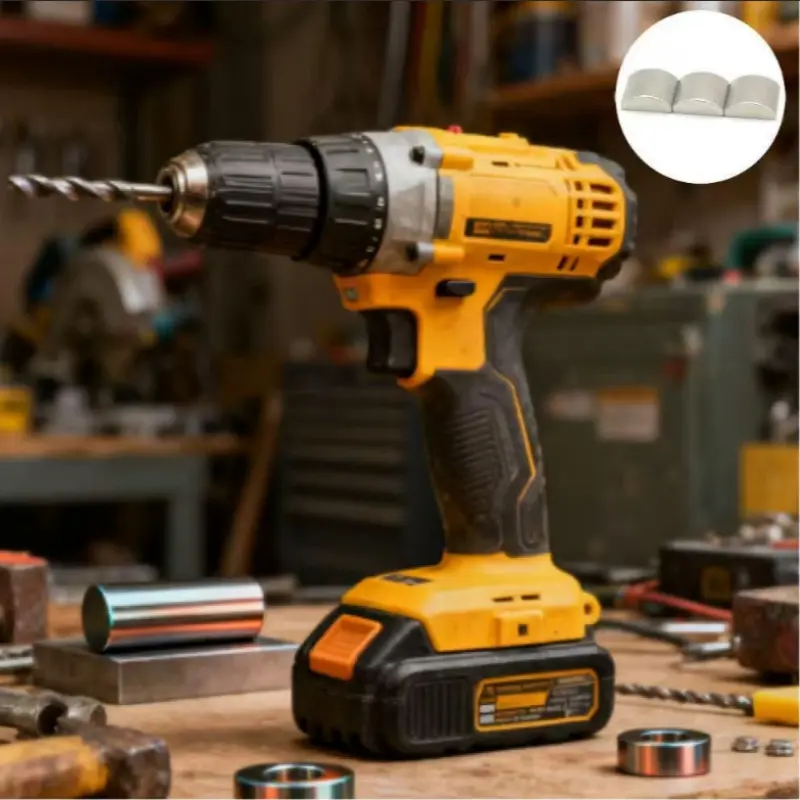
From cordless drills to heavy-duty magnetic lifters, our magnets provide high structural integrity and drop resistance, ensuring dependable performance in rugged environments.
Ultra-thin magnetic rings and blocks engineered for smartphone wireless chargers, high-fidelity speakers, and camera voice coil motors (VCMs).

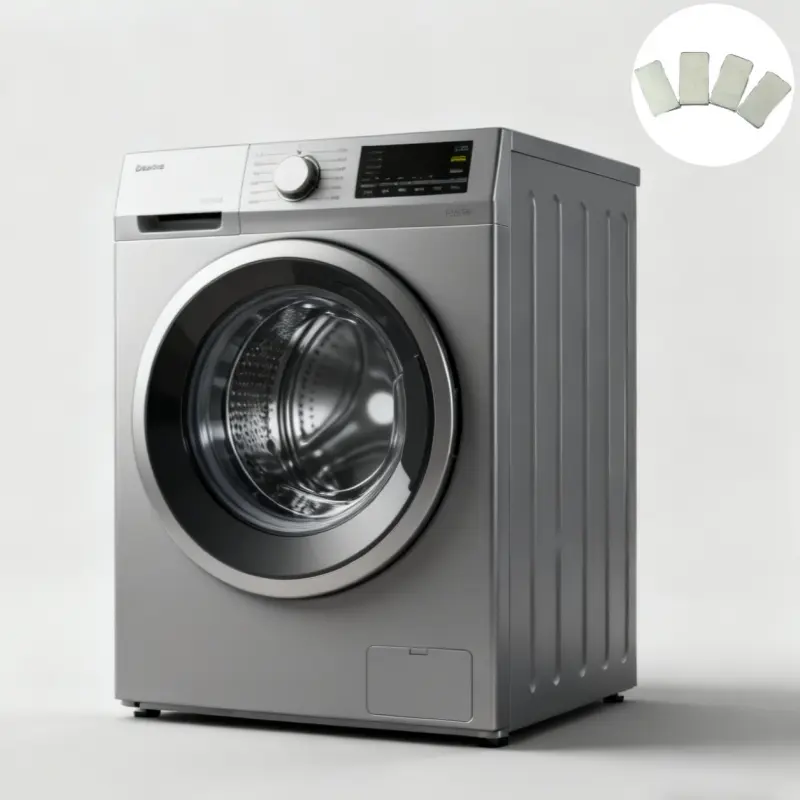
High-efficiency compressors in modern inverter air conditioners and refrigerators rely on our high-performance NdFeB permanent magnets to reduce energy consumption.
Our quality system is verified by international standards bodies, certifying reliability for safety-critical systems.
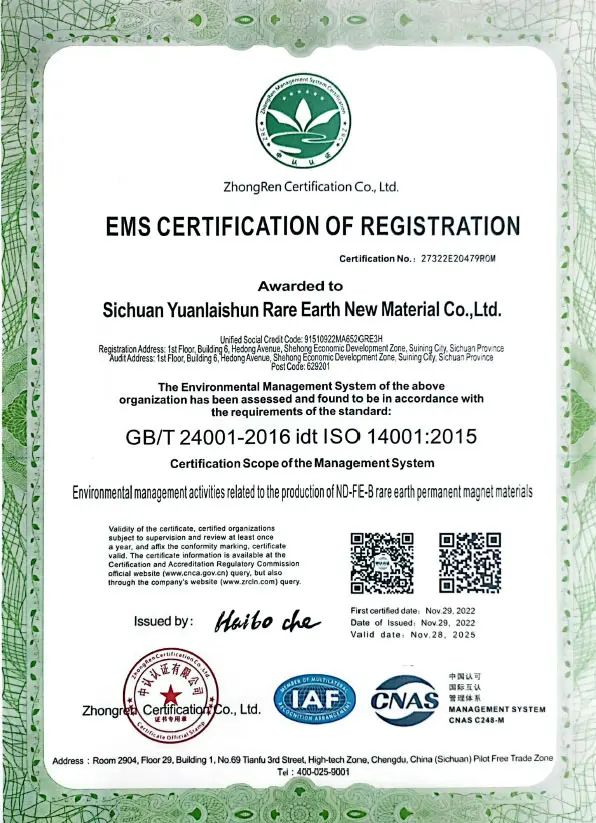
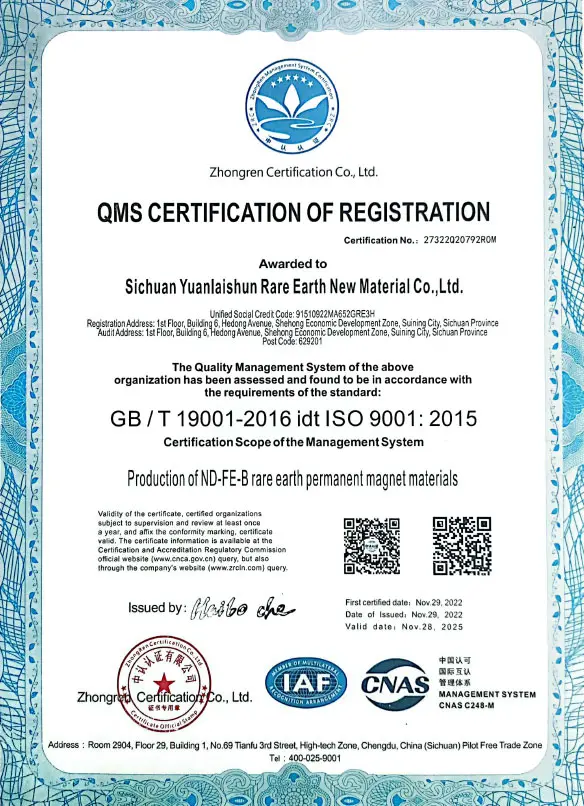
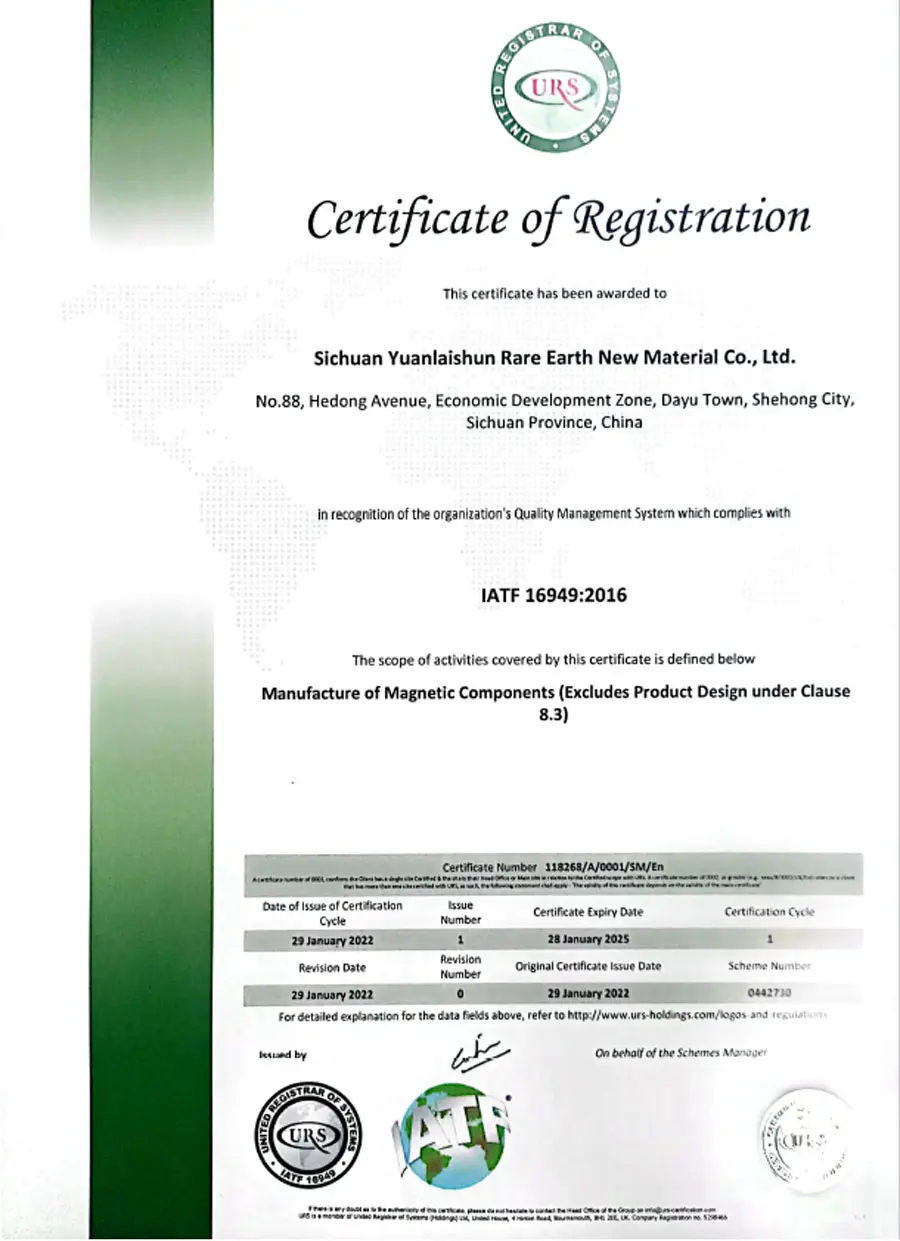
To support global supply chains, our operations follow strict international quality protocols. Our certified production lines are compliant with ISO 9001 and ISO 14001, and we supply specialized industries with certifications including API 6D, API 607, and CE.
Technical answers to common engineering and sourcing questions regarding permanent magnets and magnetic assemblies.
Explore our range of sintered blocks, MagSafe circles, voice coil motor magnets, and multi-pole components designed for electric motors and smart electronics.
Our engineering team assists with material grades, mechanical sizing, simulation runs, and custom tooling configurations.
Leave your business email and project parameters below, and one of our rare-earth magnet engineers will contact you within 24 hours.
 Laysun Magnetics