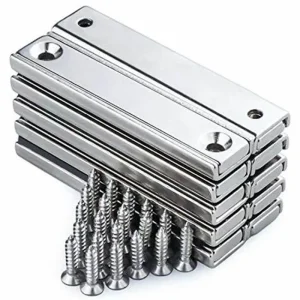
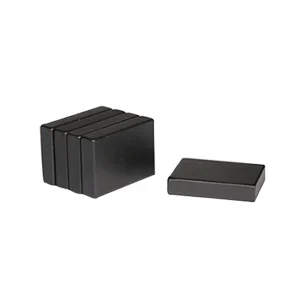
Premium Sintered Magnetic Solutions
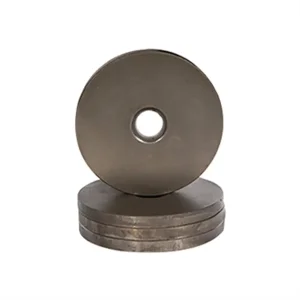
The rapidly changing landscape of clean energy generation, high-precision robotics, and automotive propulsion has shifted the design criteria for permanent magnets. The core challenges in modern electrical machines are no longer resolved simply by utilizing larger magnet configurations. Instead, the solution lies in controlling the magnetic properties of nanomaterials. Sintered Neodymium-Iron-Boron (NdFeB) magnets, configured with tailored nanostructures, stand as the pinnacle of these design paradigms.
Sintered NdFeB magnets operate under the principles of ferromagnetic domain pinning and nucleation. The primary magnetic phase, $\text{Nd}_2\text{Fe}_{14}\text{B}$, exhibits extremely high uniaxial magnetocrystalline anisotropy. However, the presence of macroscopic defects, sharp grain corners, or poorly dispersed secondary phases can severely degrade performance. High-performance design requires optimization of these factors at the nanostructure level:
The global commercial landscape demands reliable, large-scale supply chains for custom magnetic nanomaterials. As industries transition away from high-carbon footprints, the demand for high-performance NdFeB magnets has grown exponentially. Organizations require factories capable of outputting thousands of tons per annum while maintaining precise control over batch consistency.
In electric vehicle traction motors, wind turbine generators, and robotic actuators, magnetic materials operate in demanding environments marked by high mechanical stress and elevated operating temperatures (exceeding $180^\circ\text{C}$). Standard grade magnets suffer irreversible demagnetization under these conditions. Customizing magnetic properties at the nanoscale allows exporters to deliver high-temperature grades (such as EH, AH, or UH) with minimal heavy rare earth content, reducing dependencies on volatile raw material markets and reducing costs for tier-1 industrial integrators.
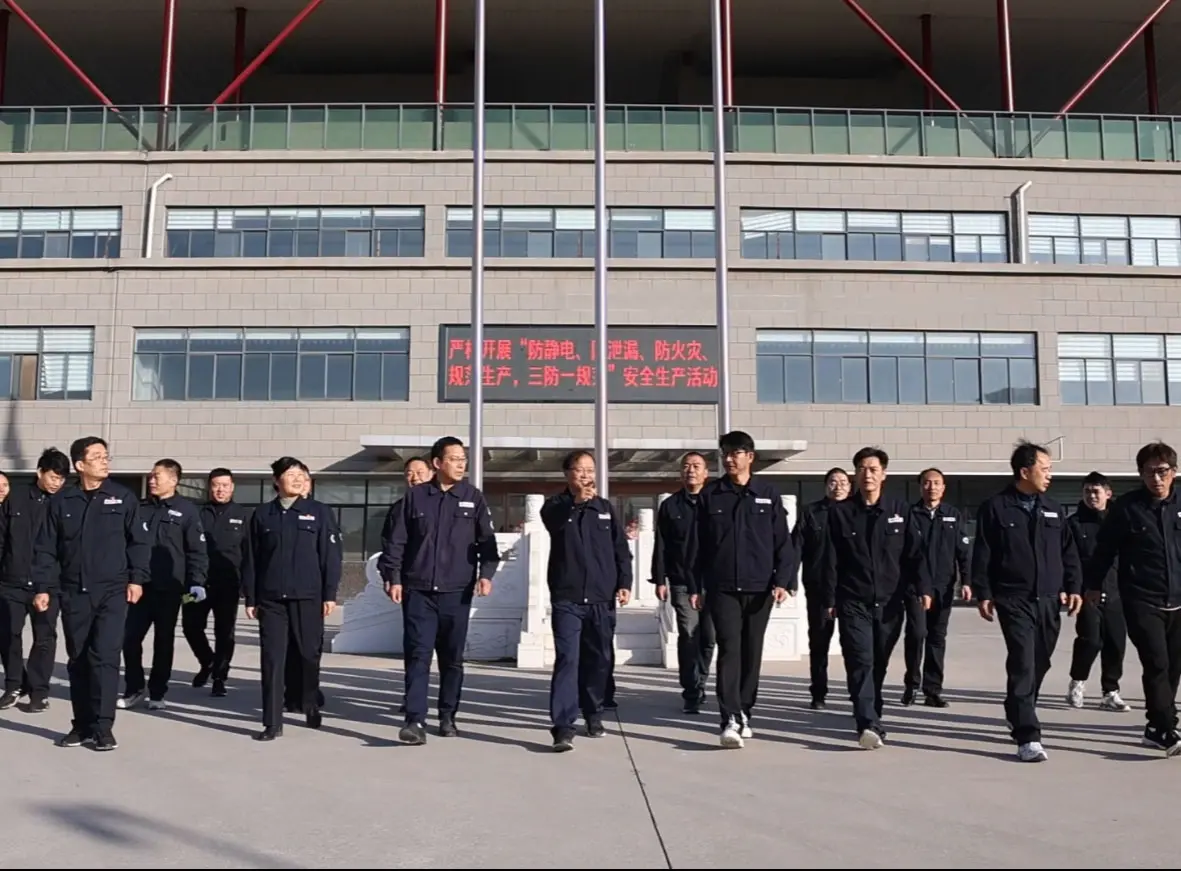
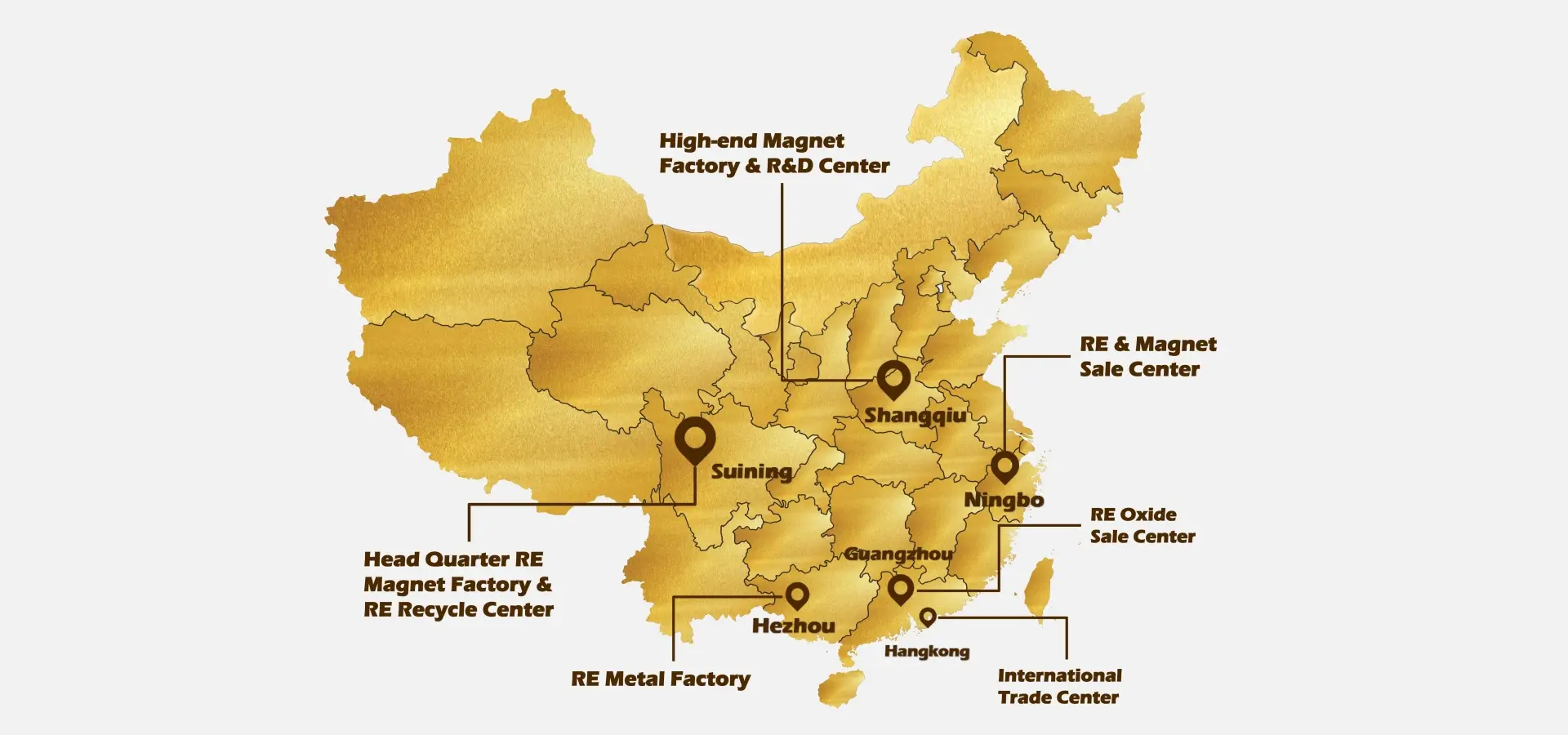
Established in 1999, Zhejiang Laysun Magnetics Ltd. has grown to become a national high-tech leader in the rare earth magnet manufacturing industry. Over more than two decades, we have optimized our vertically integrated factory located in Suining, Sichuan. Our facilities cover a total production footprint of 100,000 square meters.
With an annual production capacity of 5,000 tons of rare earth permanent magnets, we manage the entire production process under one roof—from raw material melting and strip casting to hydrogen decrepitation, jet milling, magnetic field alignment, sintering, machining, and coating. This level of process integration ensures that every batch meets the precise specifications required by our global partners.
Industrial engineering demands tailored solutions designed for specific local operating environments. Below are some of the key application areas where custom magnetic nanostructures are applied:
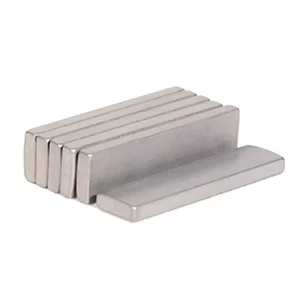
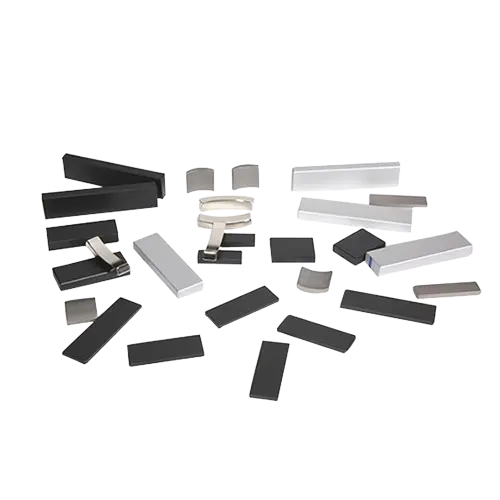
For EVs and hybrid powertrains, we supply sintered NdFeB blocks with high operating temperatures and low thermal demagnetization coefficients to ensure reliable torque output over the vehicle's lifecycle.
Electric Power Steering (EPS) requires highly stable multi-pole magnetic rings with uniform flux distribution to eliminate steering vibration and ensure safety.
Compact, high-torque robotic joints require lightweight magnets with maximum energy product ($(BH)_{max}$) values exceeding 50 MGOe, enabling agile movement in small packages.
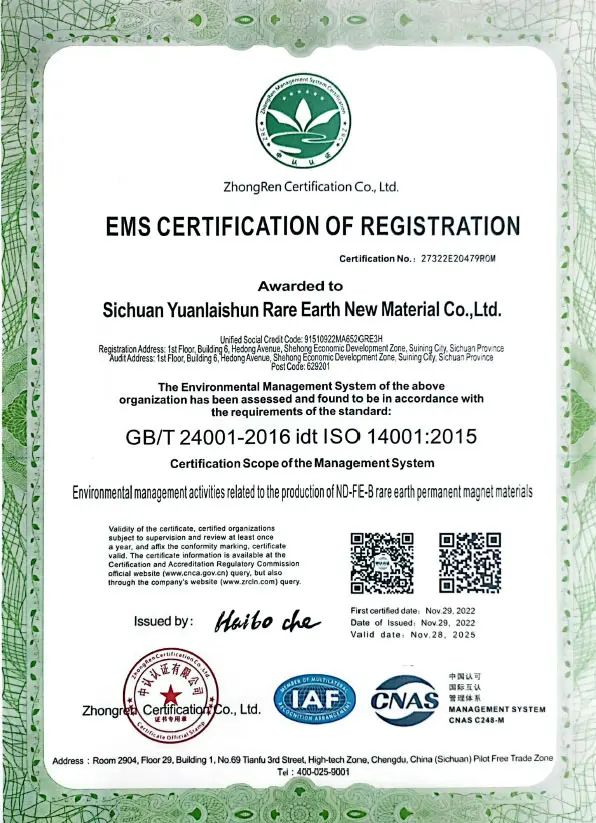
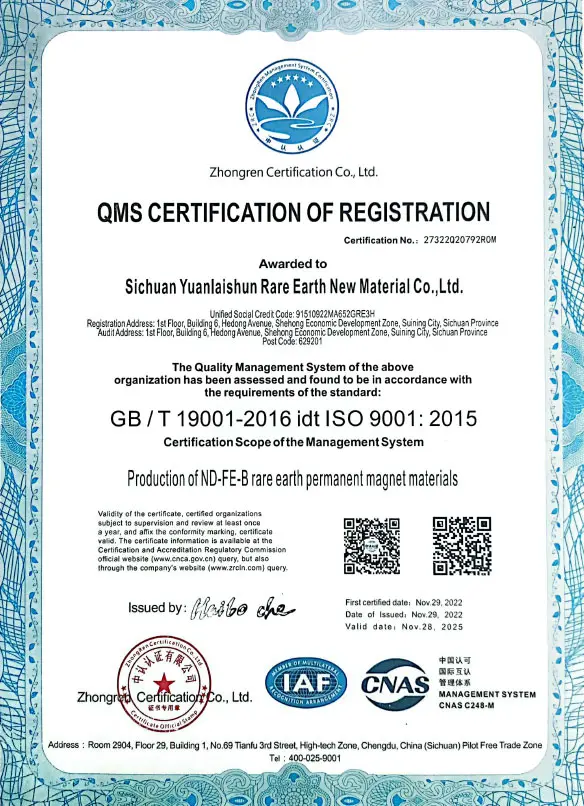
Exporting high-technology products requires strict adherence to international standards and regulatory frameworks. Zhejiang Laysun Magnetics complies with global environmental and quality directives. Our production operates under a strict Quality Management System certified to IATF 16949 (automotive sector standard), ISO 9001, and ISO 14001. All products conform to EU RoHS, REACH, and other environmental regulations.
Our global supply network is supported by partnerships with shipping and air freight providers, enabling cost-effective, timely delivery. We ensure all magnetic shipments comply with international transport guidelines, including IATA regulations for magnet safety during transit.
Laysun Magnetics' technology roadmap focuses on minimizing the use of heavy rare earths (HRE-Free technology) while achieving high thermal limits. As the demand for greener production processes grows, our materials science laboratory is developing recycled NdFeB magnets that maintain up to 98% of the magnetic performance of virgin materials. Concurrently, we are working on optimizing advanced dual-main-phase (DMP) alloys designed to prevent intergranular corrosion in marine and offshore wind power installations.
Headquartered in Hangzhou, China, with manufacturing bases in Sichuan, Zhejiang Laysun Magnetics Ltd. operates global sales and support networks to serve customers across Europe, North America, and Southeast Asia.
For inquiries regarding our custom magnetic properties, grain boundary diffusion capabilities, or to request a price list for custom magnetic materials, please reach out to our engineering support team.
Expert Engineering Solutions
 Laysun Magnetics