Select industrial-grade neodymium permanent magnets customized with optimized remanence ($B_r$), coercivity ($H_{cj}$), and corrosion protection layers.
A technical examination of material physics, grain structural adjustments, and critical engineering trade-offs.
Modern industrial components rely extensively on tailored permanent magnets to yield maximum performance within shrinking physical envelopes. Neodymium-Iron-Boron (NdFeB) compounds, which constitute the core focus of Zhejiang Laysun Magnetics Ltd., offer the highest power density of any commercially available magnetic material. However, deploying them successfully in harsh configurations requires a comprehensive grasp of custom magnetic properties.
The primary performance indicators of a custom magnet are defined by its magnetic hysteresis loop (B-H loop). Customizing a magnet is not merely about achieving high remanence ($B_r$) or extreme intrinsic coercivity ($H_{cj}$). It involves a precise balance of the chemical composition, grain boundaries, and physical geometries:
By altering the stoichiometry of the $Nd_2Fe_{14}B$ tetragonal crystalline structure during the vacuum induction melting stage, our metallurgists customize these variables for precise application matching. High-temp environments (e.g., EV traction motors, wind turbines) require enhanced $H_{cj}$ to withstand dynamic demagnetization fields, even if it slightly reduces the overall $B_r$.
In the past, raising thermal resilience meant adding dysprosium to the master alloy melt, which compromised remanence and escalated costs. Today, Zhejiang Laysun Magnetics utilizes Grain Boundary Diffusion (GBD). This process deposits Dy or Tb vapors/pastes onto the surface of sintered NdFeB blocks, followed by targeted heat cycles. The heavy rare earths selectively diffuse along the crystal grain boundaries instead of penetrating the grains. This results in highly localized magnetocrystalline anisotropy at the boundary junctions, providing a huge boost in coercivity ($H_{cj}$) with negligible loss in remanence ($B_r$).
Founded at the turn of the millennium, Zhejiang Laysun Magnetics Ltd. has evolved from a targeted technical workshop into a globally recognized leader in the fabrication of rare earth permanent magnet systems. Driven by core tenets of Quality, Credibility, Technology, and Innovation, we service the cutting-edge requirements of multinational corporations across Europe, the Americas, and Southeast Asia.
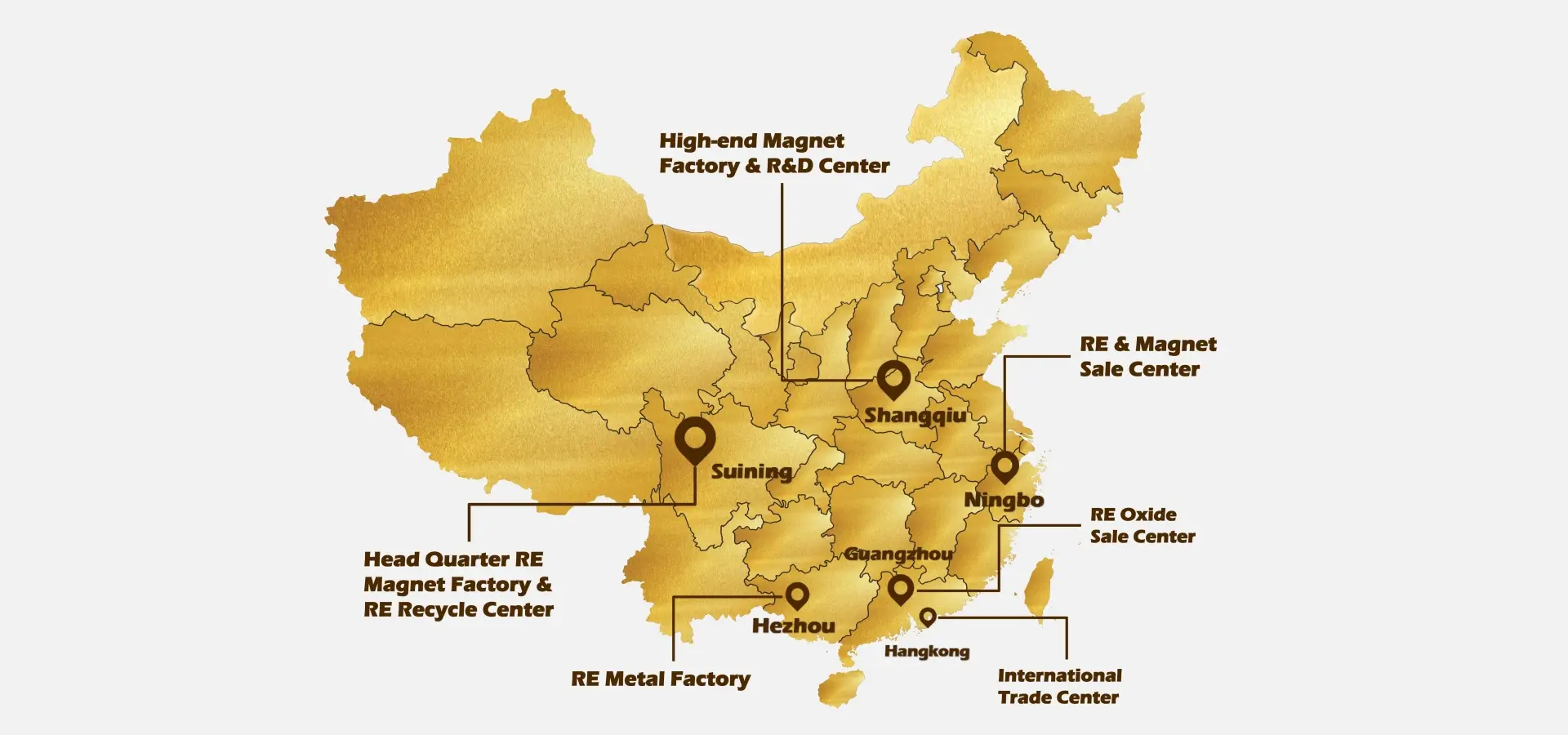
Our centralized manufacturing facilities, located in Sichuan and Hangzhou, utilize automated vertical integration. We operate from a state-of-the-art 100,000 square meter factory staffed by more than 300 technical professionals, yielding an annual capacity of 5,000 tons of custom sintered NdFeB materials.
Our product lineup meets strict automotive, aerospace, and energy sector standards. We support various industries from initial magnetic circuit simulation to large-scale commercial manufacturing.
The shift toward sustainability, localized application engineering, and severe operating limits.
Due to the supply volatility and high cost of Heavy Rare Earth Elements (HREEs like Dysprosium and Terbium), global engineering teams are focusing on reducing HREE content. Modern research centers on optimizing high-temperature performance through microstructure manipulation and specialized intergranular phase engineering rather than heavy chemical additions. This trend makes grain boundary diffusion and grain refinement key techniques for Tier-1 industrial buyers.
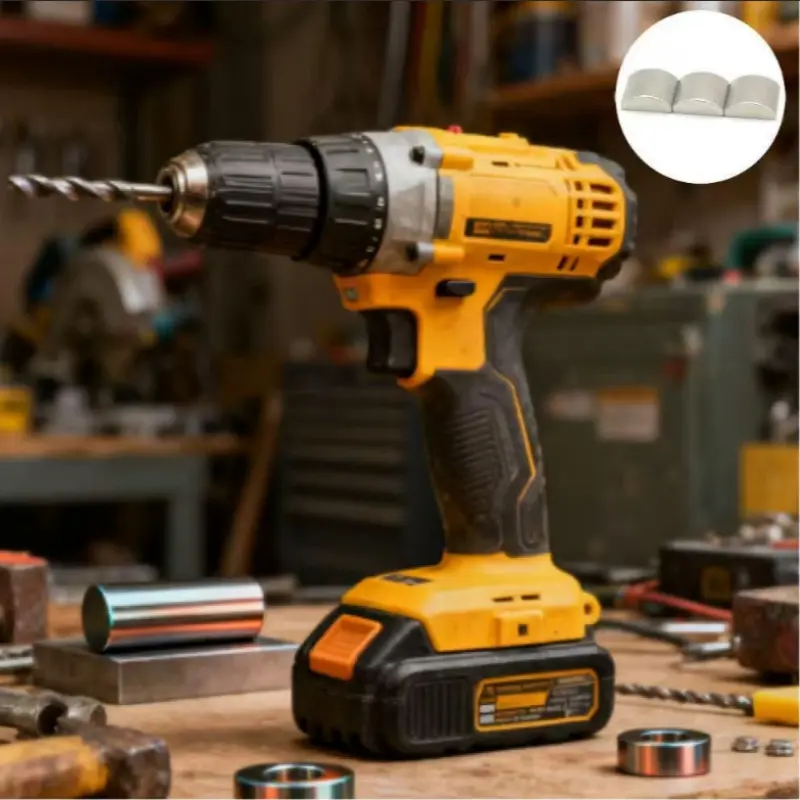
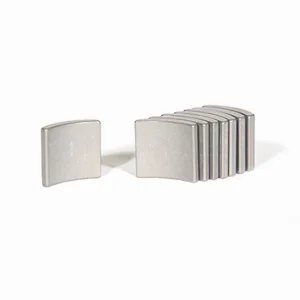
In electric vehicle traction motors, permanent magnets operate under severe mechanical forces and fast-changing electromagnetic fields that cause internal heating. Sintered NdFeB blocks for these systems must exhibit excellent physical stability and low eddy-current losses. Segmented magnets featuring thin polymer boundaries are increasingly used to break up eddy current loops, preventing localized overheating and thermal demagnetization.
Because NdFeB is prone to oxidation in humid or acidic environments, protective coatings are essential. The market has shifted from basic electroplated zinc to advanced surface treatments:
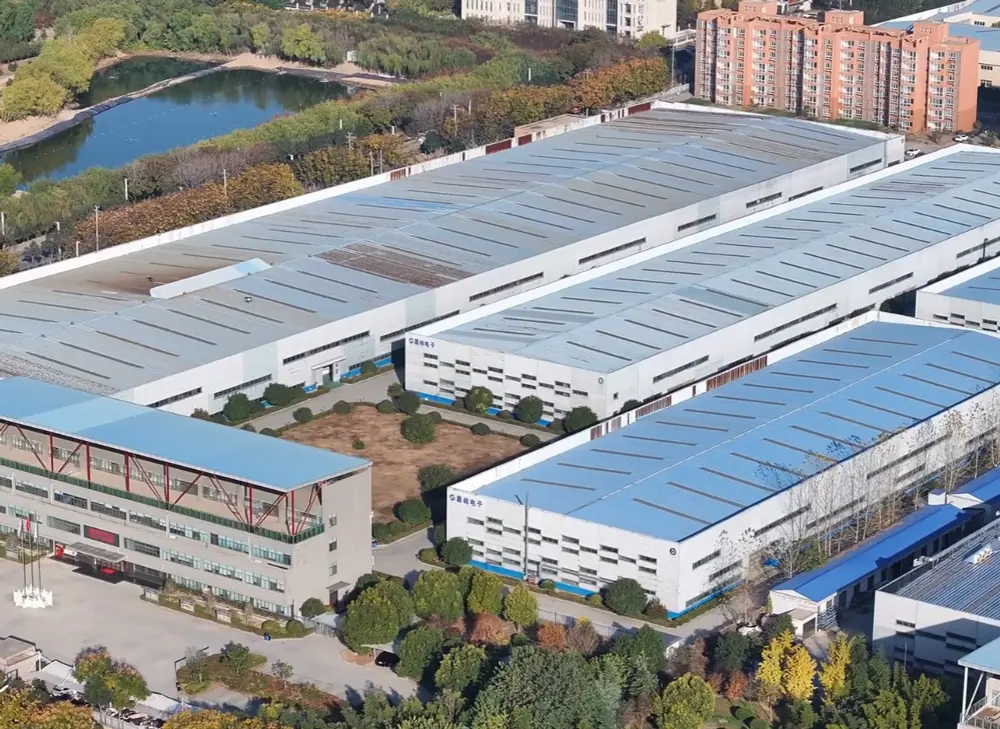
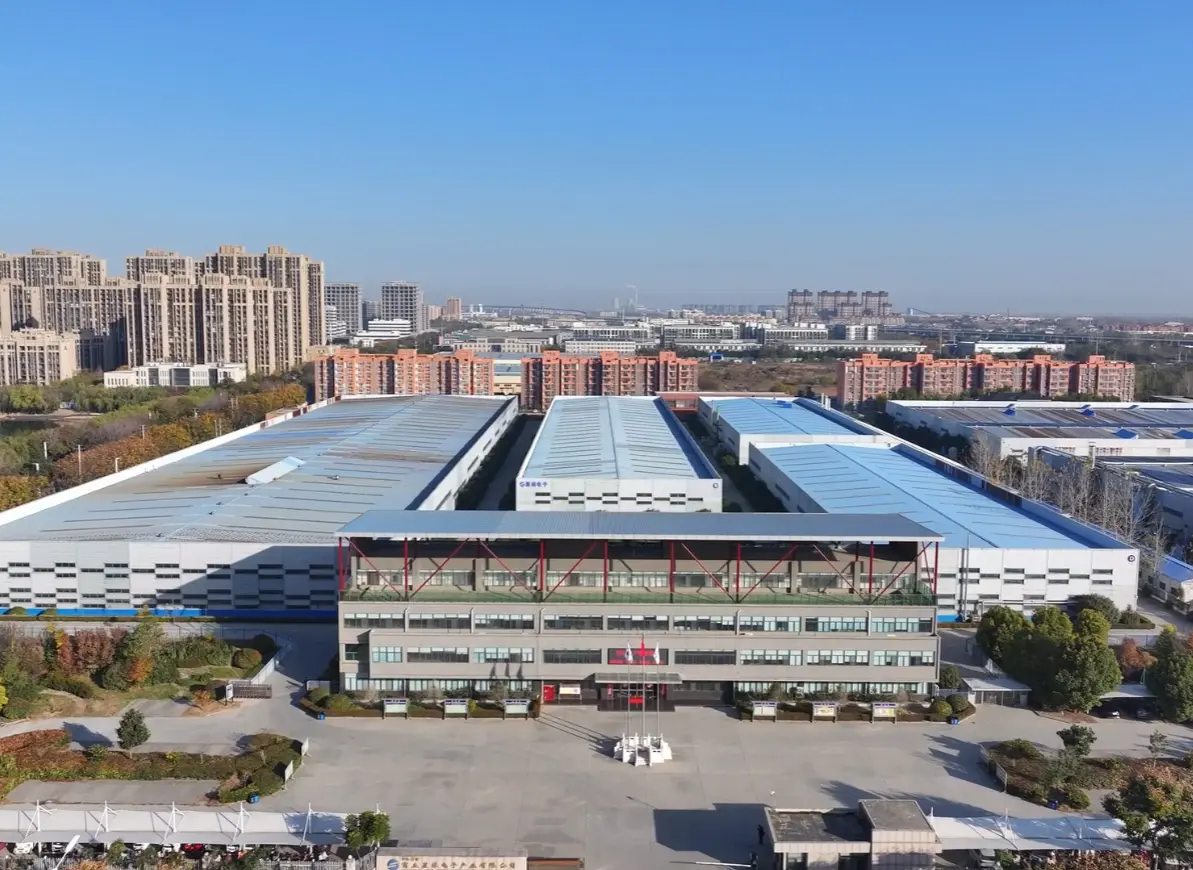
How our smart manufacturing facility in Suining, Sichuan, lowers costs and ensures consistent material supply.
Global procurement teams face challenging parameters: they must secure low unit costs while ensuring uninterrupted supply chains. Zhejiang Laysun Magnetics addresses these concerns by basing primary manufacturing in Suining, Sichuan. This location offers significant geopolitical and infrastructural advantages:
Sichuan's clean energy grid provides stable, low-cost hydropower. This reduces the carbon footprint of our energy-intensive sintering process, helping buyers meet ESG metrics.
Proximity to key domestic rare earth mines and refinement centers ensures stable raw material pricing and access, shielding our clients from sudden global market shifts.
Industry 4.0 automation links our raw powder processing, magnetic field alignment, pressing, sintering, and final slicing, ensuring high dimensional accuracy and consistency.
For international procurement departments, qualifying a raw material source is a rigorous process. Quality issues can lead to motor field failures or assembly recalls. When evaluating potential suppliers, focus on these critical benchmarks:
From aerospace robotics to green energy propulsion, rare earth permanent magnets drive modern technology.
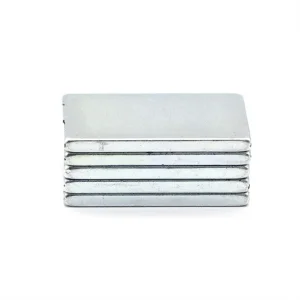
Hard disk drives and phone camera autofocus modules rely on voice coil motors, which require highly uniform magnetic fields. Even minor magnetic field variations can degrade track-seek speeds or autofocus stability. Zhejiang Laysun Magnetics supplies precision-ground, ultra-thin NdFeB blocks with protective platings to meet these strict design tolerances.
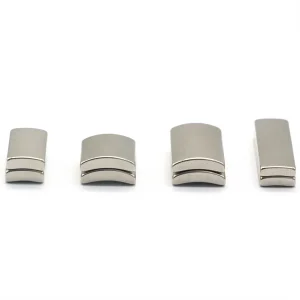
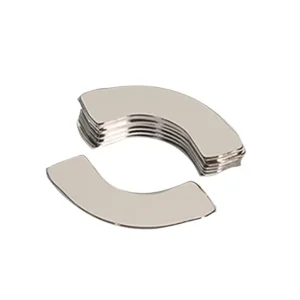
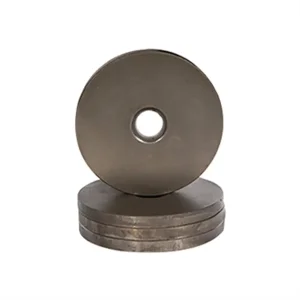
EPS motors provide steering assistance, making component reliability critical for passenger safety. Sintered NdFeB ring magnets or segment geometries used in EPS systems must perform consistently across wide temperature ranges, typically from -40°C to +150°C. These systems demand tight dimensional tolerances, high coercivity, and detailed eddy current modeling.
We maintain strict adherence to global safety and quality standards across all production stages.
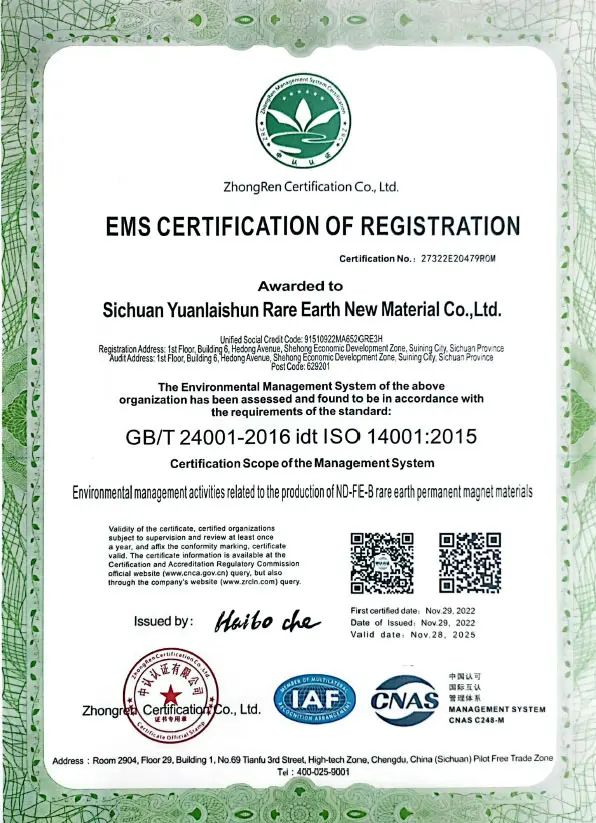
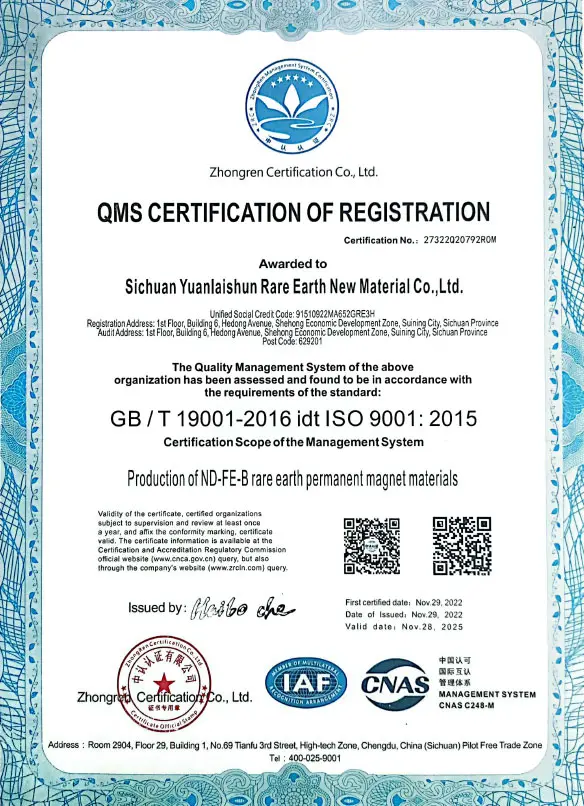
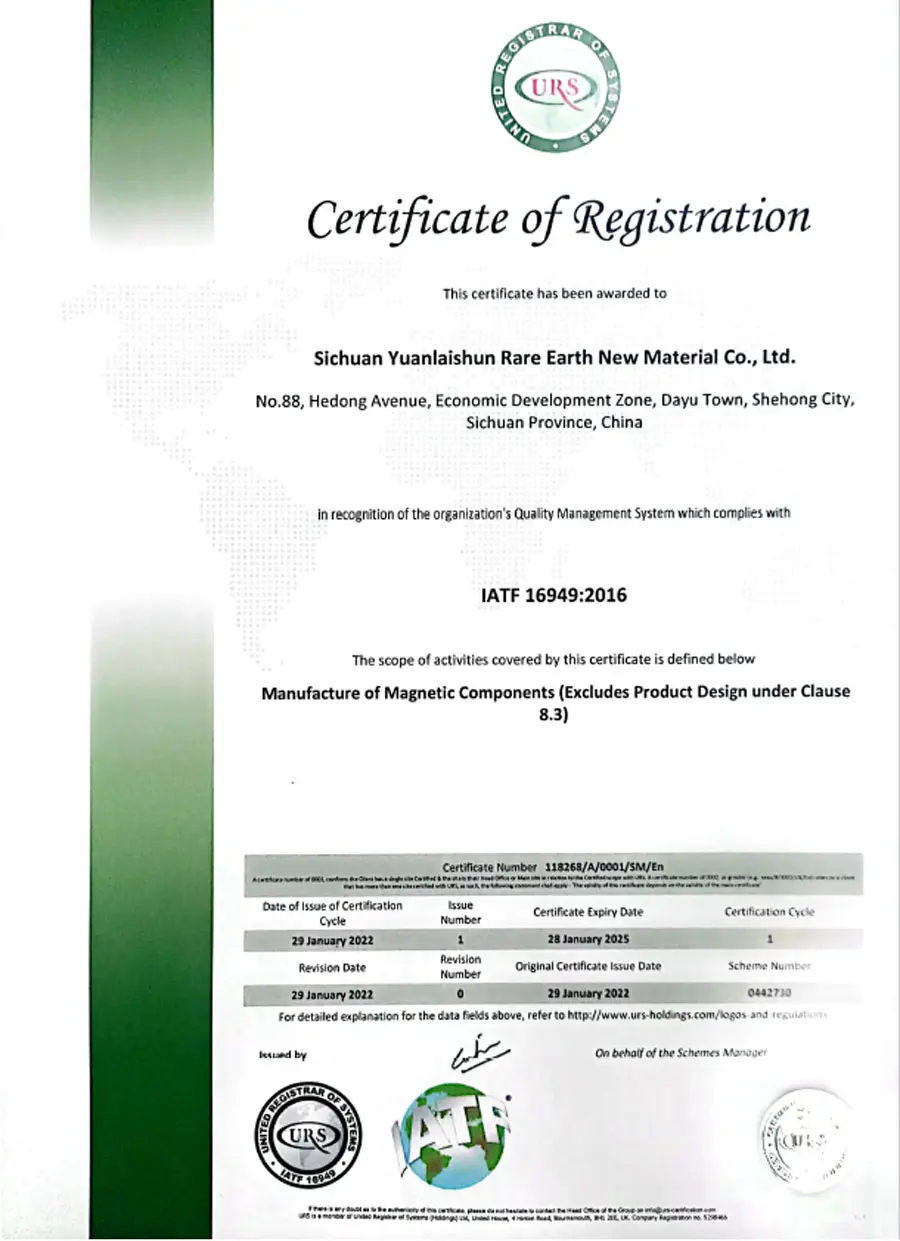
Our manufacturing facilities operate under comprehensive quality management frameworks. We hold certifications including API 6D, API 607, CE, ISO 9001, ISO 14001, ISO 18001, and TS credentials to ensure consistent product performance.
Headquartered in Hangzhou, China, Eneroc and Laysun Magnetics are building worldwide subsidiaries and offices to serve our customers.
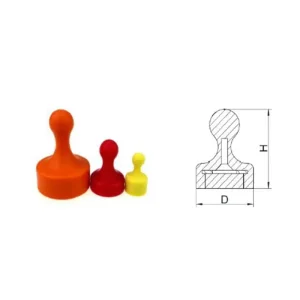
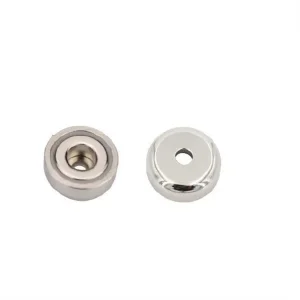
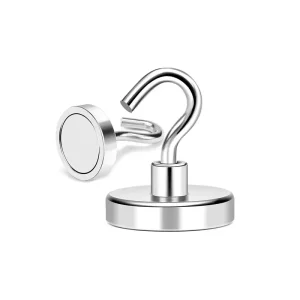
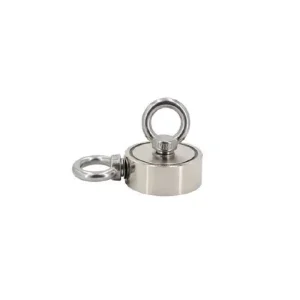
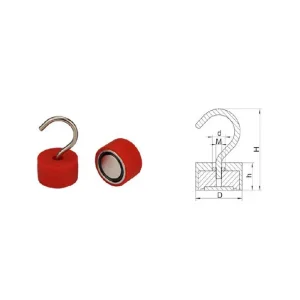
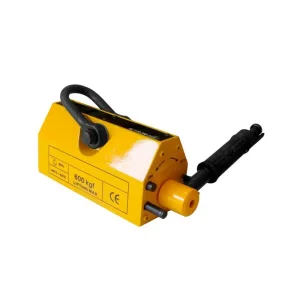
Highly durable pot magnets, hooks, lifters, and custom magnetic sub-assemblies for industrial handling and manufacturing.
Technical inquiries regarding NdFeB properties, sourcing requirements, and operating thresholds.
We customize magnetic properties by modifying the chemical composition and refining the grain structure. We adjust the ratio of neodymium, iron, and boron, and incorporate heavy rare earths like Dysprosium (Dy) or Terbium (Tb). Our advanced Grain Boundary Diffusion (GBD) technology increases intrinsic coercivity ($H_{cj}$) with minimal loss to remanence ($B_r$). We also apply precise sintering and heat-treatment profiles to optimize the grain boundary structure.
Standard neodymium magnet grades (N-series) operate up to 80°C. For higher operating temperatures, we add heavy rare earths to create highly stable grades: M-grade (up to 100°C), H-grade (up to 120°C), SH-grade (up to 150°C), UH-grade (up to 180°C), EH-grade (up to 200°C), and AH-grade (up to 220°C).
Standard alloying mixes heavy rare earths throughout the magnet's main crystal matrix. GBD selectively diffuses Dysprosium or Terbium along the grain boundaries of sintered blocks. This concentrates the heavy rare earths where thermal demagnetization starts, boosting coercivity by 30% to 50% while preserving high remanence.
For high-corrosion environments, epoxy coatings provide excellent resistance to moisture, salt spray, and mild chemical solvents. For automotive application components, we recommend double-layer coatings like nickel-copper-nickel (Ni-Cu-Ni) plus an epoxy topcoat, or zinc plus an epoxy topcoat. In vacuum or cleanroom environments, aluminum physical vapor deposition (PVD) is preferred to prevent outgassing.
Procurement teams should verify: batch-to-batch flux consistency (remanence within ±2%), irreversible loss testing under simulated temperatures, and salt spray test ratings (SST). Additionally, verify that the supplier has certified quality control standards (IATF 16949 / ISO 9001) and in-house testing equipment like permeameters and scanning electron microscopes.
Our Sichuan facility uses local clean hydropower, lowering energy costs and reducing carbon emissions during production. It is also close to domestic rare earth mining centers, securing raw material access and shielding clients from global price volatility.
Sintered NdFeB magnets are manufactured by pressing and sintering raw powders under vacuum, offering high magnetic energy densities ($(BH)_{max}$ up to 52 MGOe). Bonded NdFeB magnets mix magnetic powder with polymer binders, allowing for complex geometries and direct injection molding, though at a lower magnetic density (typical $(BH)_{max}$ under 12 MGOe).
We minimize eddy current losses by segmenting the magnets. Sintered blocks are sliced into thin laminations and bonded back together using a high-temperature epoxy insulating adhesive. This structure blocks the path of eddy currents, reducing heat buildup and protecting the magnet from thermal demagnetization.
Get in touch with our engineers for custom magnetic performance calculations, material selection, or volume price quotes. We reply within 24 hours.
 Laysun Magnetics