Top 10 Magnetic Saturation Materials for Global Buyers

Time:2026-10-03 Author:Sophia
0%

Choosing the right material begins with understanding Magnetic Saturation, not simply comparing price or maximum flux density. A buyer may inspect a polished datasheet, yet overlook temperature, frequency, geometry, or repeated loading. Those details can change performance inside a transformer, motor, sensor, or shielding assembly.

Richard M. Bozorth, a leading authority on ferromagnetism, described the practical limit clearly: “The magnetization of a ferromagnetic material approaches a saturation value.” This principle remains useful for modern procurement. Once a core approaches saturation, inductance can fall, current can rise, and heat may build quickly. The result is sometimes a quiet efficiency loss. It can also become an expensive redesign.

This guide examines ten Magnetic Saturation materials used by global buyers, including silicon steel, ferrites, powdered iron, and advanced alloy systems. Each option has a different balance of permeability, saturation flux density, cost, temperature stability, and manufacturing flexibility. There is no universal winner.

Context matters.

Real selection requires more than laboratory figures. A material performing well at 25°C may behave differently beside a hot winding. A compact component may saturate earlier because of a narrow magnetic path or an air gap. Supplier testing can also vary in method and reporting detail. That creates uncertainty, and buyers should acknowledge it.

The comparisons ahead focus on practical evidence, technical trade-offs, and dependable sourcing questions. They are intended to support careful decisions, not replace prototype testing or qualified engineering review.
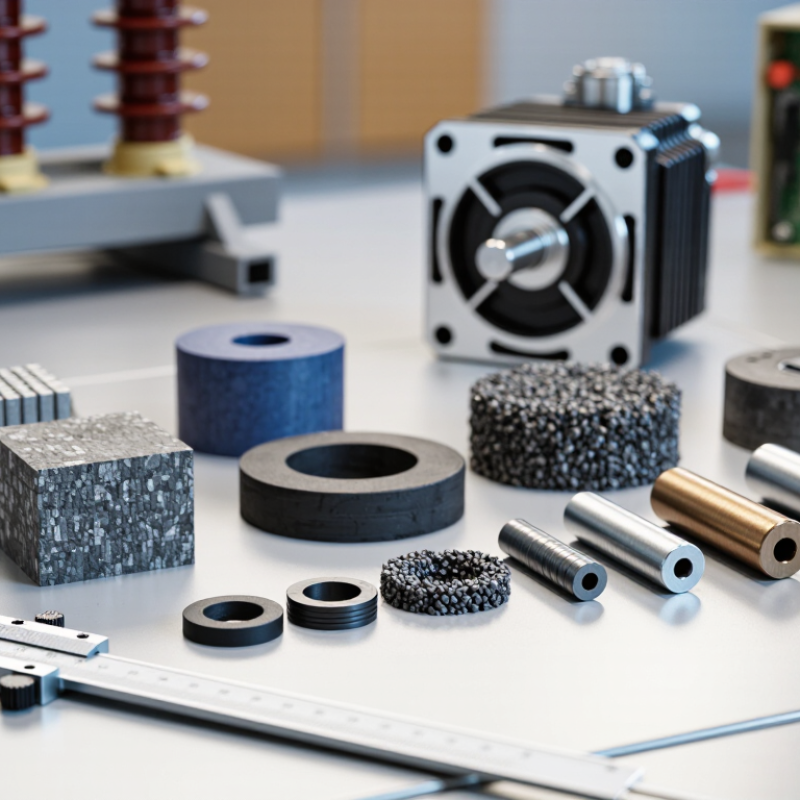
Top 10 Magnetic Saturation Materials for Global Buyers

What Magnetic Saturation Means in Material Selection

Magnetic saturation is the point where a material cannot carry much more magnetic flux. Beyond it, current rises sharply while useful output barely improves. For global buyers, this value matters more than a material’s name. The practical ten include pure iron, silicon steel, iron-cobalt, nickel-iron, ferritic stainless steel, permalloy, nanocrystalline alloy, amorphous alloy, hard ferrite, and alnico. Their typical saturation flux densities range from about 0.35 tesla in ferrite to above 2.3 tesla in iron-cobalt alloys.

High saturation supports smaller motors, transformers, and inductors. Silicon steel often reaches 1.8–2.1 tesla, while pure iron can approach 2.15 tesla under suitable processing. Iron-cobalt offers higher saturation, but its cost and machining requirements can weaken the business case. Nickel-iron and permalloy usually saturate near 0.6–1.0 tesla, yet they excel where low coercivity and shielding matter. Performance is not a single number. Grain direction, heat treatment, frequency, temperature, and stress can change the result.

Supply risk also belongs in material selection. The U.S. Geological Survey Mineral Commodity Summaries 2024 reported 2023 global production near 230,000 metric tons for cobalt and 350,000 metric tons of rare-earth oxide equivalent. Those figures show why buyers should compare recycled content, processing location, and qualification evidence. IEA’s Global Critical Minerals Outlook 2024 also highlights concentrated refining capacity. A high-saturation alloy may look ideal on paper, but a fragile supply chain can quietly defeat that design. Test the actual grade. Datasheets are not always enough.

Top 10 Magnetic Saturation Materials for Global Buyers

What Magnetic Saturation Means in Material Selection

Magnetic saturation is the point at which a material reaches nearly its maximum magnetization and additional applied field produces little further increase. The values below are representative room-temperature saturation flux densities (Bsat) in tesla; actual performance varies by composition, grade, heat treatment, frequency, and operating conditions.

How Magnetic Saturation Materials Are Classified

Magnetic saturation materials are best classified by composition, magnetic response, and operating conditions. Saturation is not a separate material family. It describes the point where added magnetic field produces little further magnetization. Buyers should compare saturation flux density, coercivity, permeability, and core loss together.

Soft iron and silicon steel usually provide high saturation and low cost for motors, transformers, and magnetic yokes. Nickel-iron alloys offer high permeability but often reach saturation at different field levels. Ferrites have lower saturation than metallic alloys, yet they resist electrical losses at high frequencies. Amorphous and nanocrystalline alloys combine fine structures with strong magnetic performance. Their processing requirements can raise procurement risk.

Permanent magnet materials form another useful group. Rare-earth magnets generally deliver high energy density, while ceramic magnets trade strength for lower cost and better corrosion resistance. Temperature changes can reduce usable saturation or remanence. Check the full temperature range.

A practical classification should also include shape and manufacturing route. Laminated sheets reduce eddy currents. Powder cores support complex geometries. Cast, sintered, and bonded materials behave differently under stress. Testing can disagree. Supplier data may use different field strengths, sample sizes, or measurement standards. Request hysteresis curves, density, tolerances, and test conditions before comparing ten material grades. A clean table can mislead. Real equipment may saturate near an air gap, sharp corner, or overheated winding, not inside the laboratory sample.

Top 10 Magnetic Saturation Materials by Key Properties

Top 10 Magnetic Saturation Materials for Global Buyers

Magnetic saturation depends on flux density, permeability, coercivity, and operating temperature. Pure iron offers very high saturation, making it useful for strong DC magnetic paths. Low-carbon steel provides good saturation at a lower cost, but its losses can rise under changing fields. Silicon steel reduces eddy-current loss in electrical cores. Nickel-iron alloys deliver high permeability, although they usually sacrifice saturation strength. Cobalt-iron alloys reach exceptional saturation and suit compact, high-power designs. Ferrites resist electrical losses and corrosion, but their saturation is comparatively modest. Neodymium-iron-boron magnets provide strong energy density, while samarium-cobalt performs better at elevated temperatures. Alnico combines stable temperature behavior with moderate coercivity. Amorphous and nanocrystalline alloys offer low core loss and useful permeability.

Properties must match the working environment. A motor core may need low loss, while a magnetic actuator may prioritize saturation density. Check the B-H curve, not only a catalog headline. Temperature, frequency, stress, and machining can change real performance. No ranking is perfect. Production results sometimes disagree with laboratory data. That gap deserves testing.

Tips: Compare saturation flux density at the actual temperature. Ask for measured curves and tolerances. For AC applications, review core-loss data at your operating frequency. For permanent magnets, check coercivity and irreversible temperature loss. Keep a safety margin, because near-saturation operation can increase heat and distortion. Great material choice begins with the complete magnetic circuit.

How Applications Determine the Right Material Choice

Top 10 Magnetic Saturation Materials for Global Buyers

How Applications Determine the Right Material Choice

A ranking can mislead. Application conditions decide the better magnetic saturation material. The practical top ten include electrical steel, ferrite, neodymium-iron-boron, samarium-cobalt, AlNiCo, pure iron, iron powder, sendust, MPP powder, and nanocrystalline alloys. Electrical steel suits motors and transformers because low core loss matters more than peak saturation. Pure iron and iron powder support compact inductors, where high saturation flux density reduces early performance loss. Ferrite remains useful for high-frequency circuits, despite its lower saturation level.

Permanent magnets require a different review. Neodymium-iron-boron offers very high energy density for compact drives, while samarium-cobalt performs better under heat and corrosion stress. AlNiCo handles elevated temperatures but usually needs a larger magnetic volume. The IEA Global Critical Minerals Outlook 2024 reports that China supplies over 90% of refined rare earths and produces more than 90% of permanent magnets. USGS Mineral Commodity Summaries 2024 recorded approximately 350,000 metric tons of rare-earth mine production in 2023. Supply risk therefore belongs in the engineering brief, not only procurement discussions.

Tips: Define frequency, temperature, flux density, and losses before requesting quotations. Ask for tested curves, not only catalog values. Check insulation thickness in powdered cores. Small details matter. One imperfect assumption can distort the whole selection. A material with the highest saturation may still fail through heat, noise, cost, or unstable sourcing.

Top 10 Magnetic Saturation Materials for Global Buyers - How Applications Determine the Right Material Choice

Typical room-temperature values for commonly specified magnetic material families. Actual performance depends on composition, heat treatment, frequency, geometry, temperature, and manufacturing process.
Rank Material Typical Saturation Flux Density
(Bs, T)
Typical Curie Temperature
(°C)
Approx. Electrical Resistivity
(µΩ·m)
Best-Fit Applications Why Buyers Select It Important Trade-Offs
1 Cobalt–Iron Alloy 2.30–2.45 900–950 0.35–0.60 High-power motors, generators, aircraft actuators, compact transformers, magnetic pole pieces Highest saturation capability among widely used soft-magnetic alloys; enables smaller magnetic cores and high force density. High material cost, relatively high hardness, difficult machining, and moderate-to-high eddy-current losses unless laminated.
2 Pure Iron 2.10–2.20 760–770 0.09–0.12 DC electromagnets, magnetic yokes, pole pieces, relays, low-frequency magnetic circuits Very high saturation, low raw-material cost, good availability, and easy forming or machining. Low resistivity causes high eddy-current losses at elevated frequency; magnetic properties are sensitive to impurities and stress.
3 Low-Carbon Electrical Steel 1.60–2.05 720–770 0.15–0.55 Motors, generators, power transformers, magnetic cores, industrial inductors Balanced cost, mechanical strength, permeability, manufacturability, and saturation performance. Higher core loss than premium grain-oriented grades; requires laminations or coatings for AC operation.
4 Silicon Steel, 2–4% Silicon 1.60–2.00 700–750 0.40–0.60 AC motors, distribution transformers, rotating electrical machines, laminated inductors Higher resistivity and lower hysteresis loss than plain iron; established supply chain and scalable processing. Silicon reduces ductility and can lower saturation compared with pure iron; cutting and punching may introduce stress.
5 Amorphous Iron-Based Alloy 1.40–1.65 350–450 1.10–1.50 Energy-efficient distribution transformers, medium-frequency transformers, high-efficiency inductors Very low hysteresis and eddy-current losses because of its thin ribbon form and disordered structure. Lower saturation than conventional electrical steel, limited ribbon thickness, brittleness, and stricter processing requirements.
6 Nickel–Iron Alloy 0.70–1.20 400–600 0.45–0.60 Signal transformers, magnetic shields, precision inductors, current transformers, communication equipment High permeability, low coercivity, and stable magnetic behavior where signal accuracy is more important than maximum Bs. Lower saturation than iron-rich alloys, higher cost than steel, and properties depend strongly on alloy composition and annealing.
7 Nanocrystalline Iron-Based Alloy 1.10–1.35 550–700 1.00–1.50 High-frequency transformers, common-mode chokes, precision current sensors, renewable-energy converters Combines high permeability, low core loss, and better thermal stability than many conventional soft-magnetic materials. Higher cost, ribbon-based geometry, limited mechanical flexibility, and lower saturation than iron or cobalt–iron alloys.
8 Manganese–Zinc Ferrite 0.35–0.55 120–250 104–106 Switch-mode power supplies, power transformers, EMI filters, high-frequency inductors Very high resistivity minimizes eddy-current loss at high frequency; suitable for economical molded or sintered cores. Low saturation, ceramic brittleness, and significant reduction in usable flux density at elevated temperature.
9 Nickel–Zinc Ferrite 0.20–0.40 150–500 105–108 Radio-frequency inductors, antenna components, broadband EMI suppression, high-frequency transformers Extremely high resistivity and useful performance at higher frequencies than most manganese–zinc ferrites. Lower permeability and saturation; ceramic processing requires careful control of dimensional tolerances and mechanical handling.
10 Iron–Silicon–Aluminum Powder Composite 0.80–1.05 500–650 Typically 102–104 DC-output inductors, energy-storage chokes, automotive power electronics, buck and boost converters Distributed air gaps provide good DC-bias tolerance and gradual saturation in compact powder-core designs. Lower permeability than laminated alloys, core loss rises with frequency, and pressing density affects magnetic performance.
Buyer selection note: Choose high-Bs alloys when compact size and high magnetic force are critical; choose laminated electrical steels for low-frequency power equipment; choose amorphous or nanocrystalline alloys for low-loss AC operation; choose ferrites for high-frequency insulation and low eddy-current loss; and choose powder composites when stable DC-bias performance is required.

Global Buyer Factors: Standards, Supply, Cost, and Quality

Top 10 Magnetic Saturation Materials for Global Buyers

Global buyers should compare magnetic saturation materials by application, not by datasheet strength alone. Common options include silicon steel, pure iron, iron-cobalt alloys, nickel-iron alloys, manganese-zinc ferrite, nickel-zinc ferrite, powdered iron, sendust, amorphous alloys, and nanocrystalline alloys. Each responds differently to frequency, temperature, mechanical stress, and production volume.

Standards make comparisons more reliable. Buyers should request measured saturation flux density, core loss, permeability, coercivity, and temperature data. IEC and ASTM methods can support consistent testing, while RoHS and REACH documentation may be required for international shipments.

Check the test frequency and sample shape carefully. A value measured at 1 kHz may not predict performance at 100 kHz. Small details matter.

Supply stability can change the real cost. Silicon steel and ferrites often offer broad availability, while iron-cobalt and nanocrystalline materials may face tighter capacity and longer lead times. Ask for batch records, dimensional tolerances, coating information, and inspection reports. Quality is not only a high magnetic value. It also includes clean edges, stable composition, and repeatable processing. I have seen buyers choose the cheapest powder, then pay more for rejected cores and production delays. That experience still needs balance: supplier claims should be verified through independent testing, because even a polished report can hide unsuitable test conditions.

FAQS

What does magnetic saturation mean?

It is the point where more magnetic field adds little extra magnetization. Not a material family. It describes operating behavior.

How should buyers classify magnetic saturation materials?

Compare composition, magnetic response, shape, and operating conditions. Review saturation flux density, permeability, coercivity, and core loss together. One number rarely tells the whole story.

Which materials suit motors, transformers, and magnetic yokes?

Soft iron and silicon steel often provide high saturation at relatively low cost. Laminated sheets can reduce eddy-current losses. Edges still need careful inspection.

When are ferrites a practical choice?

Ferrites usually have lower saturation than metallic alloys. They resist electrical losses at high frequencies. A small ferrite core may still overheat under poor design conditions.

What changes when operating frequency increases?

Material performance can change sharply with frequency. A result at 1 kHz may not predict behavior at 100 kHz. Always request frequency-specific core-loss data. Small details matter.

How do temperature and air gaps affect saturation?

Temperature changes can reduce usable saturation or remanence. An air gap, sharp corner, or overheated winding may saturate first. The laboratory sample may remain unaffected. This is easy to miss.

What manufacturing forms should buyers compare?

Powder cores support complex shapes, while laminated sheets reduce circulating currents. Cast, sintered, and bonded materials respond differently to mechanical stress. Shape changes the magnetic path. It is not just packaging.

What test information should suppliers provide?

Request hysteresis curves, density, tolerances, test frequency, sample shape, and test conditions. Batch records and inspection reports also help confirm consistency. Different methods can produce conflicting results. Independent testing is wise.

How do supply conditions affect material selection?

Common materials may offer steadier availability and shorter lead times. Specialized alloys can face tighter capacity and higher procurement risk. The cheapest powder may create rejected cores and delays. I would still verify every supplier claim.

Conclusion

Magnetic Saturation is a critical consideration when selecting materials for transformers, inductors, motors, sensors, and other magnetic components. It describes the point at which a material can no longer significantly increase its magnetization, even when the applied magnetic field continues to rise. This article explains how magnetic saturation affects efficiency, heat generation, power handling, and operating stability. It also introduces major material categories, including soft magnetic alloys, ferrite materials, powdered cores, and specialized high-performance compositions, comparing them by saturation flux density, permeability, core loss, frequency response, and mechanical durability.

The top ten materials are evaluated according to practical application requirements rather than a single performance ranking. Buyers can select the most suitable option by considering frequency, temperature, magnetic strength, size, and expected service life. For global purchasing, material choice must also reflect international standards, documentation, supply continuity, production consistency, testing capability, total cost, and quality control. A balanced evaluation of technical performance and sourcing reliability helps buyers achieve dependable results across different operating environments.


Sophia

Sophia

Sophia is a dedicated marketing professional with an exceptional depth of knowledge about her company's products and services. With a keen understanding of market trends and customer needs, she crafts insightful blog posts that not only inform but also engage readers, enriching the company’s online......