In 2026, neodymium magnets remain essential in motors, speakers, sensors, and renewable energy equipment. Their compact size hides significant material value. When products fail, these magnets should not automatically enter ordinary scrap bins. They can pinch fingers, damage equipment, and attract nearby metal objects. That matters.
Neodymium Magnet Recycling usually begins with careful identification and separation. Technicians may check product manuals, labels, coatings, and magnet condition before dismantling equipment. A clean magnet is easier to sort than one covered with steel, adhesive, or electronic waste. Some magnets are cracked, corroded, or bonded permanently inside assemblies. Not always. Their recovery can require specialized tools and controlled handling.
Reliable recycling depends on trained personnel, documented procedures, and facilities equipped for rare-earth recovery. Experienced operators may demagnetize, remove coatings, and process the material through approved refining systems. Collection records can help verify where recovered magnets go. Regional requirements and facility capabilities differ, so current guidance should be reviewed before shipment. A responsible recycler will explain accepted materials, packaging expectations, and contamination limits clearly.
The process is not perfectly uniform. Some older products offer excellent recovery potential, while others make separation expensive or impractical. This article examines practical recycling routes, safety considerations, preparation steps, and realistic recovery outcomes for 2026. It also considers a common oversight: recycling performance depends not only on technology, but on better product design and earlier collection.
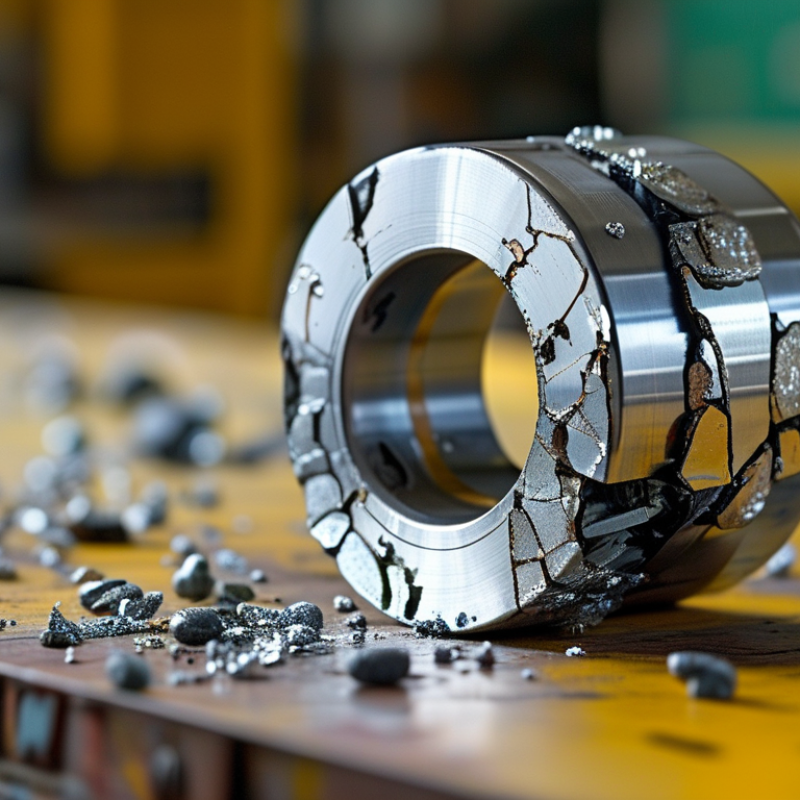
How to Recycle Neodymium Magnets in 2026?
A useful recycling plan starts by defining the NdFeB feedstock correctly. It contains about 30 wt% rare earths, nearly 1 wt% boron, and balance iron. These figures describe a typical composition, not a guaranteed recipe. The rare earth fraction commonly includes neodymium and praseodymium, with smaller amounts of other elements. Coatings, adhesives, steel housings, and dirt can change the measured weight.
The label can mislead.
At a recycling site, technicians should separate magnets from motors, assemblies, and mixed scrap before processing. They record incoming weight, remove visible attachments, and collect representative samples. Laboratory testing can confirm rare earth, boron, iron, oxygen, and contaminant levels. A strong magnetic response does not prove high rare earth content. That assumption causes poor purchasing decisions.
Physical preparation may include dismantling, controlled demagnetization, crushing, and fine screening. Operators need dust control, protective equipment, and procedures suited to brittle magnetic material. The prepared powder can then enter a suitable recovery route, such as hydrogen-based decrepitation or chemical separation. Process selection depends on particle size, coating residues, oxidation, and the required product purity. Small changes matter.
Our first estimate was wrong.
A practical record should show feedstock composition, moisture, contamination, processing losses, and recovered mass. Without that data, a claimed recovery rate may look better than it is. Independent sampling and chain-of-custody records improve confidence, especially when recycled material enters new magnet production.
| Data Dimension | Typical Value or Range | What It Means for Recycling | Practical Recycling Consideration |
|---|---|---|---|
| Feedstock identity | Sintered neodymium–iron–boron magnet scrap | Permanent-magnet material mainly based on an iron-rich Nd-Fe-B matrix. | Identify the material before processing because coatings, adhesives, steel attachments, and mixed magnet types can change the treatment route. |
| Rare-earth content | Approximately 25–32 wt% | Usually dominated by neodymium; some formulations also contain praseodymium and smaller amounts of dysprosium or terbium. | This high rare-earth concentration makes separated magnet scrap a valuable secondary feedstock for hydrometallurgical, pyrometallurgical, or direct-reuse routes. |
| Boron content | Approximately 0.8–1.2 wt% | Boron is essential to the Nd2Fe14B magnetic phase but is present at a much lower concentration than iron or rare earths. | Boron may report to process residues or require separation control during chemical recovery; it is generally not the primary target product. |
| Iron content | Approximately 65–73 wt% | Iron is the balance of the alloy after rare-earth elements, boron, and minor additions are considered. | Iron-rich process streams should be managed to reduce acid consumption, limit impurity loading, and improve rare-earth selectivity. |
| Minor alloying elements | Commonly about 0.5–8 wt% in total, depending on composition | May include cobalt, copper, aluminum, gallium, niobium, zirconium, and other formulation-dependent additions. | These elements can affect leaching behavior, phase formation, corrosion resistance, and the purity of recovered rare-earth products. |
| Typical coating materials | Nickel-copper-nickel, zinc, epoxy, or other protective coatings | Coatings are not part of the desired NdFeB alloy and can introduce nickel, copper, zinc, carbon, or polymer contaminants. | Remove or account for coatings before chemical processing when high-purity rare-earth products are required. |
| Feedstock moisture and cleanliness | Dry, oil-free, and visibly clean material is preferred | Water, cutting fluids, adhesives, and dirt increase handling risks and may interfere with size reduction or leaching. | Use sorting, drying, and degreasing as pre-treatment steps; keep reactive fine powder away from ignition sources. |
| Preferred sorting basis | Magnet type, coating, size, source, and visible attachments | End-of-life hard-disk magnets, traction-motor magnets, loudspeaker magnets, and manufacturing swarf may have different compositions and contamination levels. | Separate clean production scrap from post-consumer assemblies to improve consistency and reduce processing costs. |
| Direct reuse route | Possible when the magnet remains physically intact and its performance is verified | Preserves the original alloy and avoids converting the material into chemical intermediates. | Demagnetization, corrosion, cracking, coating damage, and unknown magnetic properties must be evaluated before reuse. |
| Hydrogen decrepitation | Hydrogen absorption can embrittle NdFeB and produce a friable powder | The method can support coating removal, demagnetization, and powder preparation for powder-based recycling. | Hydrogen handling requires controlled equipment, ventilation, monitoring, and strict ignition prevention. |
| Mechanical size reduction | Cutting, crushing, or milling; particle size depends on the downstream process | Smaller particles provide greater surface area for leaching but can increase oxidation, dust generation, and fire risk. | Use enclosed equipment, dust control, grounding, and appropriate procedures for reactive metallic powders. |
| Hydrometallurgical recovery | Acid leaching followed by impurity removal and rare-earth separation | Rare earths can be dissolved and recovered as salts, oxalates, carbonates, or other intermediates depending on the process. | Acid selection, liquid-to-solid ratio, temperature, redox conditions, and downstream separation determine recovery and purity. |
| Pyrometallurgical processing | Thermal treatment, reduction, selective volatilization, or alloy-based separation | Can process contaminated or mixed scrap but may require high energy input and careful control of oxidation and emissions. | Use suitable gas treatment and residue management; the exact flowsheet depends on the feedstock and target product. |
| Direct powder or alloy recycling | Powder is conditioned and used to produce new magnet material | Potentially retains more of the original material value than complete elemental separation. | Requires tight control of oxygen, particle size, composition, contamination, and magnetic performance. |
| Main recovered products | Rare-earth salts or oxides, iron-bearing residues, and reusable magnet powder or alloy | The product form depends on whether the process prioritizes elemental recovery or direct magnet manufacturing. | Define the target specification before selecting the recycling route because purity requirements strongly affect process design. |
| Key safety risks | Strong magnetic fields, sharp fragments, combustible fine powder, hydrogen, acids, and alkaline reagents | NdFeB scrap can create both physical and chemical hazards during dismantling and processing. | Use non-sparking tools where appropriate, local exhaust ventilation, suitable personal protective equipment, chemical controls, and documented emergency procedures. |
| Recommended data to record | Mass, source, composition, coating, contamination, particle size, and processing history | A consistent material record improves yield calculations and helps select the correct treatment route. | Record recovered product mass and assay results so material balance, rare-earth recovery, and residue generation can be evaluated. |
Sort magnets by grade, coating, size, and contamination level. Different grades contain different rare-earth proportions. Mixed batches reduce recovery accuracy.
Keep grades such as N35, N42, and N52 in separate containers. Record each grade carefully. Do not guess.
Separate nickel-plated, epoxy-coated, zinc-coated, and uncoated magnets. Damaged coatings need special attention. Dark, brittle surfaces may indicate exposed metal.
Separate large blocks, small discs, and powder-like fragments. Tiny pieces can hide inside plastic trays. Check corners and seams.
Remove oil, adhesive, screws, plastic, and metal dust. Contaminated material can reduce recovery efficiency. Some debris is surprisingly hard to see.
Strong magnetic fields can attract steel fragments and damage equipment. Demagnetize magnets before cutting, crushing, or shredding. Use trained operators.
Use a controlled method suitable for the coating. Possible methods include abrasion, chemical stripping, or thermal treatment. Ventilation and dust collection are essential.
Record grade, coating, dimensions, weight, and contamination level. Store materials in labeled, dry containers. Good records help correct imperfect sorting.
Magnets may crack during coating removal. Thermal treatment can oxidize metal or create irritating fumes. The process is not perfectly uniform.
Send sorted material to a qualified recycler with suitable equipment. Confirm its handling requirements beforehand. A rushed handover can spoil careful preparation.
Neodymium Magnet Recycling in 2026 begins with understanding the material being processed. Typical NdFeB magnets contain approximately 30 wt% rare earth elements, about 1 wt% boron, and iron as the balance, although their exact composition varies by grade. Recyclers should first sort magnets according to grade, coating type, dimensions, and contamination level. This classification improves safety, process selection, and recovery accuracy. Before mechanical treatment, magnets should be carefully demagnetized and their coatings removed or separated to reduce risks and improve material quality.
The best recycling route depends on the feedstock. Clean, intact magnets may be suitable for direct reuse, while fragmented or lower-quality material can be treated through hydrogen decrepitation or hydrometallurgical processing. Each method should be evaluated according to energy use, contamination, particle condition, and desired product quality. Reliable results require measuring the recovery of neodymium, praseodymium, dysprosium, and terbium in both weight percentages and recovered kilograms. This data supports process optimization and provides a clear basis for evaluating recycling performance.

 Laysun Magnetics