China Top Neodymium Magnet Applications for Global Buyers begins with a practical question: where does magnetic strength create measurable value? Neodymium Magnet Applications now support electric vehicle motors, wind-turbine generators, industrial automation, speakers, sensors, magnetic separators, and compact medical equipment. China remains a major manufacturing center, offering broad grade selection, custom shapes, surface coatings, and large production capacity.
Dr. Masato Sagawa, a pioneer of NdFeB magnet technology, said, “I wanted to make a permanent magnet that was stronger than samarium-cobalt.” His work explains why neodymium magnets became important in smaller, lighter, and more efficient machines. A motor using high-grade NdFeB magnets can deliver strong torque inside a compact housing. A coated disc magnet may appear simple, yet its performance depends on grade, temperature, plating, tolerances, and assembly design.
Buyers should examine more than price. N35, N42, and N52 grades do not perform equally under heat or mechanical stress. Nickel, epoxy, and zinc coatings also suit different environments. Ask Chinese suppliers for test reports, dimensional drawings, coating details, and batch traceability. Samples matter.
Small details decide success.
A low-cost magnet can fail early in a humid factory or high-temperature motor. That risk is easy to underestimate. Even experienced buyers may choose strength before checking demagnetization limits. This article examines leading China Neodymium Magnet Applications and the purchasing factors behind dependable global sourcing. It also recognizes an uncomfortable point: no magnet is ideal for every design, budget, or operating condition.
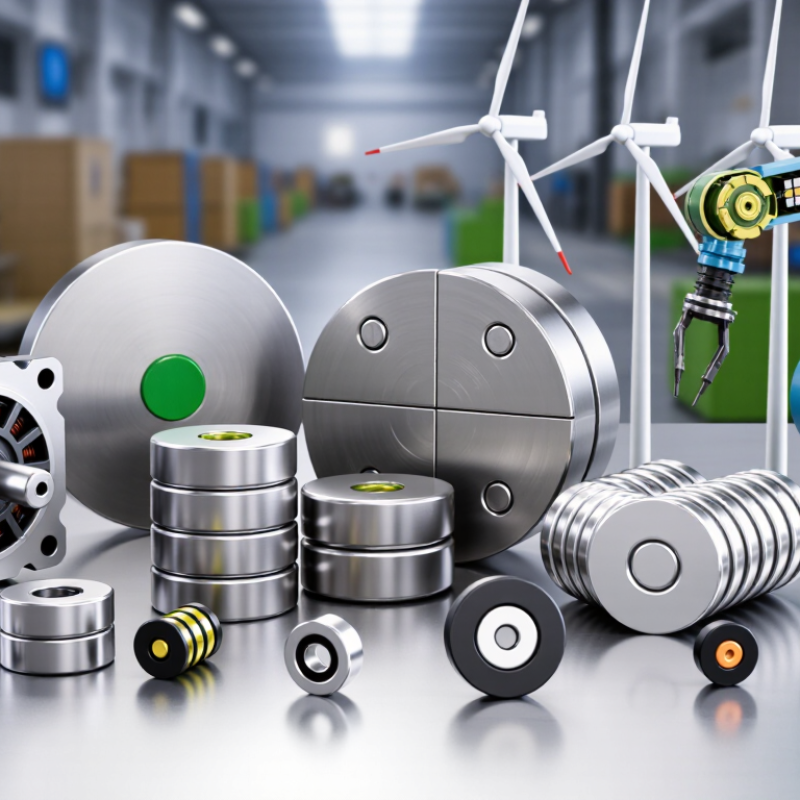
Neodymium magnets are permanent magnets made mainly from neodymium, iron, and boron. Their Nd₂Fe₁₄B structure delivers exceptional magnetic strength in a small volume. This high energy density explains their popularity in compact motors, sensors, speakers, magnetic separators, and generators.
The U.S. Department of Energy identifies NdFeB magnets as important materials for electric vehicle traction motors and wind turbines. The International Energy Agency’s Global Critical Minerals Outlook 2024 also reports that permanent magnets are expected to drive much of future rare-earth demand growth. Their strength reduces motor size and weight. That matters inside an electric vehicle, where every kilogram affects efficiency.
China remains a major manufacturing center for rare-earth materials and finished magnetic components, making it important for global buyers. Practical applications include traction motors, industrial automation equipment, medical instruments, computer drives, and household appliances. However, “stronger” is not always better. A magnet exposed to heat, corrosion, or mechanical shock can lose performance. Surface coatings, operating temperature, tolerances, and magnetic orientation require careful specification. The U.S. Geological Survey’s Mineral Commodity Summaries 2025 continues to classify rare earths as strategically important mineral resources, but supply figures and market conditions can change. Buyers should verify test reports, coating thickness, dimensional accuracy, and actual working temperature before approving production. Small details matter.
Neodymium magnets are permanent magnets made primarily from neodymium, iron, and boron. Their high magnetic energy density enables compact designs in electric motors, generators, sensors, loudspeakers, magnetic couplings, hard disk drives, and industrial automation equipment.
The chart shows typical maximum recommended operating temperatures for common sintered NdFeB grade families. Standard grades are widely used in general-purpose devices, while H, SH, UH, and EH grades are selected for progressively higher-temperature applications. Exact limits depend on the magnet’s geometry, coating, operating environment, and supplier specification.
China’s leading neodymium magnet applications span automotive, renewable energy, automation, electronics, and medical equipment. In automotive motors, magnets support compact traction systems, electric power steering, pumps, and braking components. Engineers often select high-temperature grades for areas exposed to heat, vibration, and oil. A small design change can affect motor efficiency.
Wind turbines use large permanent magnets in direct-drive generators. These magnets reduce mechanical complexity and may lower maintenance demands in offshore environments. However, salt spray creates a serious corrosion risk. Buyers should review coatings, sealing methods, magnetic tolerance, and test records before approving production samples.
Industrial robots, servo motors, magnetic couplings, sensors, speakers, and hard disk systems also depend on precise magnetic performance. In sourcing work, I have found that dimensional accuracy matters as much as strength. A magnet can meet its rated energy product yet fail during assembly because of chipped edges or unstable plating. Medical devices require additional control over cleanliness, temperature behavior, and traceability. Consumer electronics usually need thinner shapes and consistent batch performance.
China’s manufacturing base offers broad shaping, coating, and magnetizing capabilities. Still, price alone is a weak purchasing guide. Buyers should request drawings, tolerances, operating temperatures, corrosion tests, and lot-based inspection data. Some specifications remain incomplete until the magnet works inside the final device. That detail is easy to overlook.
China’s neodymium magnets serve motors, sensors, speakers, magnetic separators, and compact holding systems. Global buyers should match magnet grades to working conditions, not only maximum magnetic strength.
N35 often suits general fixtures and light industrial assemblies. N42 or N52 can provide stronger force in smaller spaces. However, a higher grade is not automatically better. It may increase cost without improving performance.
Temperature matters just as much. Standard grades can lose stability in hot motors or near heat sources. Temperature-resistant grades, such as those with H, SH, or UH ratings, are safer for demanding environments.
Buyers should also check coating requirements. Nickel coatings work well indoors, while humid locations may require stronger corrosion protection. Shape affects results too. A thin disc, block, and ring magnet create different holding patterns. Test the actual assembly.
Tips:
Define the air gap, load direction, operating temperature, and surface material before ordering. Request measured pull-force data, dimensional tolerances, and coating information. Small gaps can change performance dramatically. For outdoor use, salt spray testing is worth considering. Do not rely only on catalog values. Real assemblies often behave differently, especially when steel thickness, vibration, or misalignment is involved. One overlooked detail can force an expensive redesign.
China’s neodymium magnet applications range from motors and sensors to magnetic fixtures and compact generators. The correct shape depends on available space and magnetic direction. Discs suit sensors and speakers. Blocks fit motors and holding systems. Rings support rotary assemblies, while countersunk magnets simplify screw mounting. Custom shapes are possible, but tooling costs and dimensional tolerances need early discussion.
Coating selection should match the working environment. Nickel-copper-nickel is common for indoor assemblies and general industrial use. Zinc can suit dry environments with moderate exposure. Epoxy coatings offer better protection against moisture, but edges remain vulnerable to impact. Stainless-steel shells may be considered for demanding conditions. A bright surface is not proof of durability. Check coating thickness, adhesion, salt-spray results, and operating temperature.
Quality control should cover more than surface appearance. Buyers should request grade data, magnetization direction, dimensions, pull force, and temperature limits. China-based suppliers commonly operate under ISO 9001 systems, while automotive programs may require IATF 16949 controls. Inspection reports should identify sampling methods and test equipment. Batch traceability matters. It can reveal whether performance changes between shipments. One easily missed issue is packaging: strong magnets may arrive chipped after careless separation. Clear drawings, approved samples, and pre-shipment inspection reduce this risk, though they cannot replace sensible application testing.
Neodymium magnets serve motors, sensors, speakers, magnetic fixtures, and compact generators. For international buyers, the application defines the required grade, shape, coating, and temperature resistance. A supplier should explain these choices, not simply quote the highest magnetic strength. Ask for drawings, tolerances, operating temperatures, and expected service conditions before requesting a final price. In my purchasing experience, unclear specifications create more delays than production itself. Test the sample.
Tips: Request a sample lot and compare its dimensions, pull force, surface finish, and magnetization direction. Check whether test reports identify batch numbers, measured values, and calibrated equipment. Reliable factories can explain inspection steps and provide traceable production records. Do not rely on polished websites or unusually low prices. A remote video audit can reveal packaging, labeling, and storage practices, although it cannot replace an independent inspection. Ask for coating data when magnets face moisture or salt air. Small details matter.
Before placing an international order, verify communication, lead times, packaging, customs documents, and after-sales procedures. Use a written specification sheet signed by both sides. It should cover acceptable defects, replacement terms, and inspection timing. A capable supplier will discuss limitations honestly, including brittle edges, coating damage, and performance loss at excessive heat. I would compare two or three trial suppliers rather than choosing from price alone. My own evaluation can be imperfect; shipment feedback often exposes assumptions that factory samples hide. Keep records.
They mainly contain neodymium, iron, and boron. Their compact structure creates strong magnetic force. Small size, strong pull.
They support motors, sensors, speakers, generators, medical instruments, and household equipment. They also appear in magnetic separators and computer drives.
Their high energy density can reduce motor size and weight. Lower weight may improve vehicle efficiency. The benefit depends on correct design.
Discs suit sensors and speakers. Blocks fit motors and holding systems. Rings support rotary assemblies. Countersunk shapes simplify screw mounting.
Not always. Heat can reduce magnetic performance. Confirm the actual working temperature before production approval. The published limit may not match real conditions.
Nickel-based coatings suit indoor and general industrial use. Zinc can fit dry environments. Epoxy offers stronger moisture protection, but edges may still chip.
Request grade data, magnetization direction, dimensions, pull force, and temperature limits. Check coating thickness and adhesion. A bright surface proves little.
Strong magnets can chip when they touch during transport. Use separators and protective packaging. Pre-shipment inspection helps, but application testing remains necessary.
Discuss tooling costs, tolerances, and magnetic direction first. Approve drawings and samples before production. Customization is useful, but rushed decisions can become expensive mistakes.
Neodymium Magnet Applications span many industries because these compact, high-strength magnets provide excellent magnetic performance while allowing products to remain smaller and more efficient. In China, common uses include motors and generators, automation equipment, sensors, speakers, magnetic separators, renewable energy systems, medical devices, and consumer electronics. Each application requires careful selection of magnet grade, size, shape, temperature resistance, and magnetic orientation to achieve reliable performance and service life.
Global buyers should also consider the most suitable shapes, such as discs, blocks, rings, and custom assemblies, along with coatings that protect magnets from corrosion. Clear quality standards, dimensional accuracy, surface finish, and consistent testing are essential when comparing suppliers. During international purchasing, buyers should evaluate manufacturing capabilities, inspection procedures, technical communication, packaging, delivery reliability, and documentation. A qualified Chinese supplier should be able to recommend an appropriate solution based on operating conditions while maintaining stable quality across repeated orders.

Laysun Magnetics